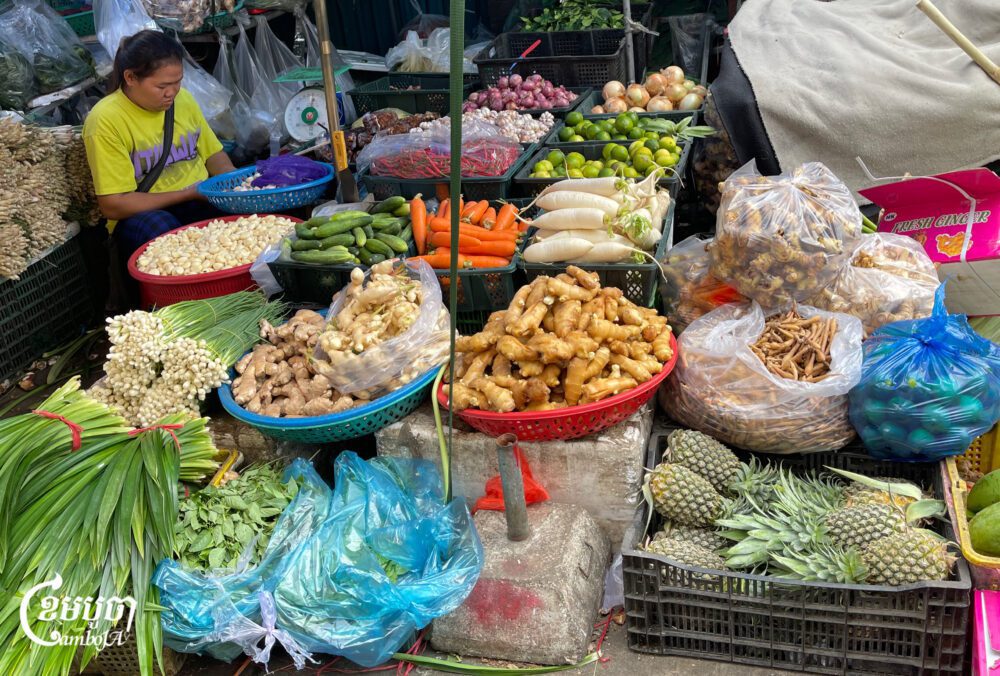
Cambodia imposed a ban on the import of Thai fruits and vegetables at all border checkpoints—a move analysts say could boost the value of Cambodian agricultural products. Farmers, however, claim the benefits might not be immediate as crops, such as fruits, take time to harvest.
Interior Ministry spokesperson Touch Sokhak confirmed that all land border crossings with Thailand have been closed to imports of Thai agricultural goods as of June 17, noting that the closure led to hundreds of trucks stranded, as well as those heading to third countries via Cambodian checkpoints.
“The closure of Cambodia’s land border checkpoints is not a declaration of war or an act of hostility toward Thailand,” he asserted.
“It is Cambodia’s legitimate right as a sovereign and independent state under international law, seeing that everything began with Thailand, particularly [the act by] its military,” Sokhak said.
General Department of Immigration director-general Sok Veasna told a local media outlet on Tuesday that an import ban on Thai fruits and vegetables was imposed at land border checkpoints crossing with Thailand at 9 a.m.
The ban by Cambodia was implemented following the expiry of a 24-hour ultimatum by Senate president Hun Sen to Thailand to fully restore the border operating hours amid escalating border tensions following a fatal military clash on May 28.
Last week, Cambodian leaders pressured Thailand to restore the operating hours to normal, which Thailand unilaterally changed, by putting in place strict measures such as halting internet bandwidth and electricity imports from Thailand, and banning Thai broadcasts.
Kun Nhim, director-general of the General Department of Customs and Excise (GDCE), told CamboJA News that the Daung International Border Crossing and Cham Yeam International Border Crossing in Battambang and Koh Kong province, respectively, are the main entry points for vegetables and fruits from Thailand.
Bilateral trade with Thailand amounted to $1.87 billion between January and May this year, GDCE data showed. Of that, Cambodia exported $395 million worth of goods to Thailand, while imports totaled $1.48 billion, indicating a trade deficit of around $1.1 billion.
In Banteay Meanchey, its deputy governor Ly Sovannarith said Thai agricultural products were not allowed to pass through all the border gates into Cambodia when the 24-hour deadline expired.
“We are not heavily impacted because our province has a strong agricultural sector where we can cultivate vegetables and fruits ourselves,” he said.
“We will encourage increased cultivation of agricultural products to meet local demand. We can also import from other countries if necessary,” Sovannarith said. “I believe we have enough fruits and vegetables to supply Banteay Meanchey.”
He viewed the ban on Thai agricultural imports as an opportunity for Cambodia but a “heavier economic burden” on Thailand.
Regarding the return of migrant workers, Sovannarith said provincial working groups are on standby to facilitate and transport workers to their respective provinces if there is a mass return of Cambodians from Thailand.
“About 300 workers returned from Thailand yesterday,” Sovannarith said.
Chhin Rathanak, spokesperson for Koh Kong province, said their governor ordered a ban on the import of Thai agricultural products starting at 6 a.m. on Tuesday.
“We can rely on our local agricultural products. Some vegetables are coming from Phnom Penh to supply the province,” he said. “We hope our farmers will raise their vegetable harvest following the ban on Thai agricultural imports.”
Meanwhile, Choeun Tithya, a farmer who grows curly wrap bok choy in Takeo province, told CamboJA News that the ban could potentially help Cambodian farmers access the local market. However, the shift in support for local agricultural products has yet to gain significant momentum, he said.
He said the demand for curly wrap bok choy has increased from the usual one ton to 1.3 tons today (June 17), and is selling at 1,000 riel per kilogram. “We hope our vegetables will become more affordable and people will buy all of them,” he said.
But, Tithya was concerned that if the import ban prolongs, local prices could rise sharply. If that happens, consumers may instead turn to vegetables imported from Vietnam, he warned.
“We’re hopeful, but we’ll have to wait and see. We don’t expect this ban to last. Once the border reopens, everything might return to normal,” he added.
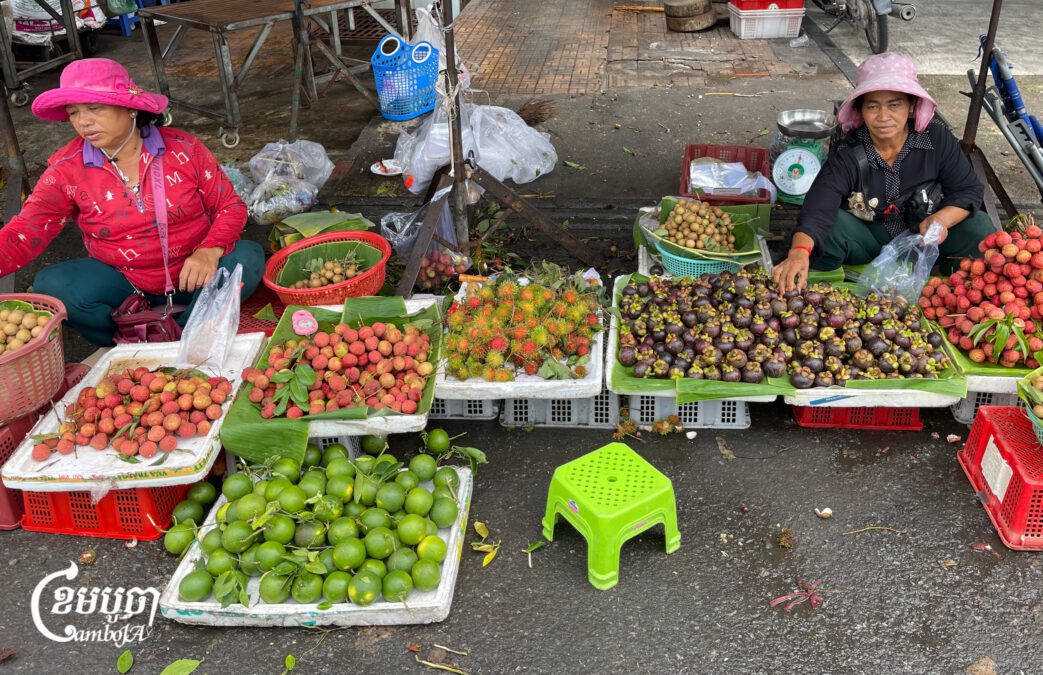
Hong Vannak, an economic analyst at the Royal Academy of Cambodia, told CamboJA News that the ban is a positive step. He said given the scale of bilateral trade between the countries, Thailand—particularly its farmers who grow produce for export to Cambodia—stands to lose significantly.
At the same time, the ban presents an opportunity for Cambodia, he opined, as it could encourage local farmers to invest more in fruit and vegetable production, and shift public attitudes in supporting locally grown crops.
Conversely, Vannak said the situation could negatively impact Cambodian farmers—especially those along the border who rely on Thai markets to export their produce—seeing that Cambodia also exports fruits and vegetables to Thailand.
“Thailand will lose more than we do,” he said. “But if the border issue is resolved quickly, the immediate agricultural benefits for our farmers may not materialize right away, as some crops—especially fruits—take time to grow.”
On a positive note, Vannak said “even without Thai imports, Cambodia still has alternative markets, such as Vietnam and China”.
Pen Sovicheat, spokesperson for the Ministry of Commerce, told CamboJA News that the fruit and vegetable import ban will not lead to shortages in Cambodia, as it also imports from Vietnam, China, and the United States.
“The concern about a lack of fruits and vegetables is unnecessary—we have other sources to replace Thai imports,” he said.
He explained that while most local crops are organic and grown on a smaller scale, Cambodia still needs to rely on imports to meet large-scale demand.
“We may have lost one market, but we are working hard to export to other destinations,” he said. “We’re also encouraging local businesses that previously imported from Thailand to start buying from local farmers instead.”
According to Preah Vihear Provincial Deputy Governor Kim Chanpanha, over 1,000 families, or about 3,000 people have moved to a temporary shelter due to security concerns.
“Residents living near the disputed border area are worried about their safety. They left on their own accord and came to our designated safety center,” he said.
The provincial administration established a temporary shelter approximately 100 kilometers from their location in Choam Ksan district, near the border dispute area, with food provided by the authorities and the Red Cross.
Chanpanha said the only functioning checkpoint is the An Ses border crossing, which connects to Ubon Ratchathani province in Thailand.
People are normally allowed to access the market on Tuesdays and Thursdays — but due to rising tensions, it is only open on Thursdays now. The situation along the border remains calm at the moment, he added.