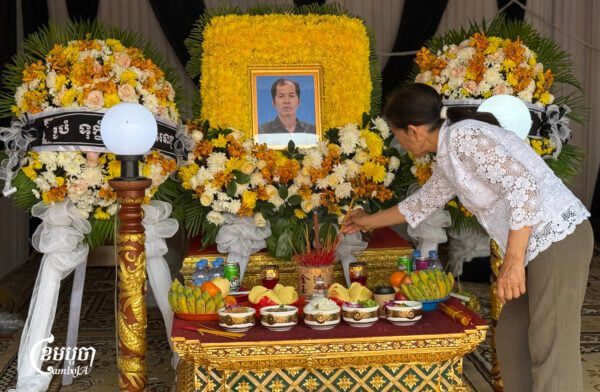
An analyst said that the dissolution of the Thai parliament to avoid a no-confidence vote is likely to prolong the Cambodia-Thailand border conflict which has killed Cambodian civilians, including infants, and injured many.
Despite the dissolution of the parliament, Thai forces continued firing on Cambodian territory, expanding into the coastal area in Koh Kong only hours after U.S. President Donald Trump spoke to both sides regarding a ceasefire.
On Friday, artillery and mortar attacks targeted multiple areas in Oddar Meanchey and Banteay Meanchey provinces, with reports of toxic smoke released into villages, according to National Defense Ministry spokesperson Maly Socheata. The attacks, including airstrikes, were ongoing at the time of writing.
The Thai King issued a royal gazette on Friday morning announcing the dissolution of the Thai parliament which paves the way for a general election in the next 45 to 60 days.
Anutin Charnvirakul is Thailand’s third prime minister since August following the removal of his predecessor from office.
Asia-Pacific geopolitical analyst Seng Vanly said the dissolution of the parliament allowed Anutin to “avoid censure” while his government faced a collapsing minority coalition, looming no-confidence vote, and weak popularity amid the border conflict.
“It is more likely to prolong tensions because caretaker governments face less parliamentary scrutiny, and Anutin has every electoral incentive to remain on the hardline until voting day. Any ceasefire is likely to be tactical and fragile, not a real political settlement,” he said.
Vanly mentioned that without strong U.S pressure on Bangkok, Cambodia loses an important source of leverage and it must lean more on ASEAN and China, including international laws, instead of waiting for Washington to force Thai concessions.
“Today’s crisis follows the same pattern: the border is as much about Bangkok politics as it is about the actual line on the map,” he said.
He cited that historically, disputes with Cambodia about Preah Vihear from 2008 to 2011 are tools to mobilise nationalism, attack governments, or justify interventions.
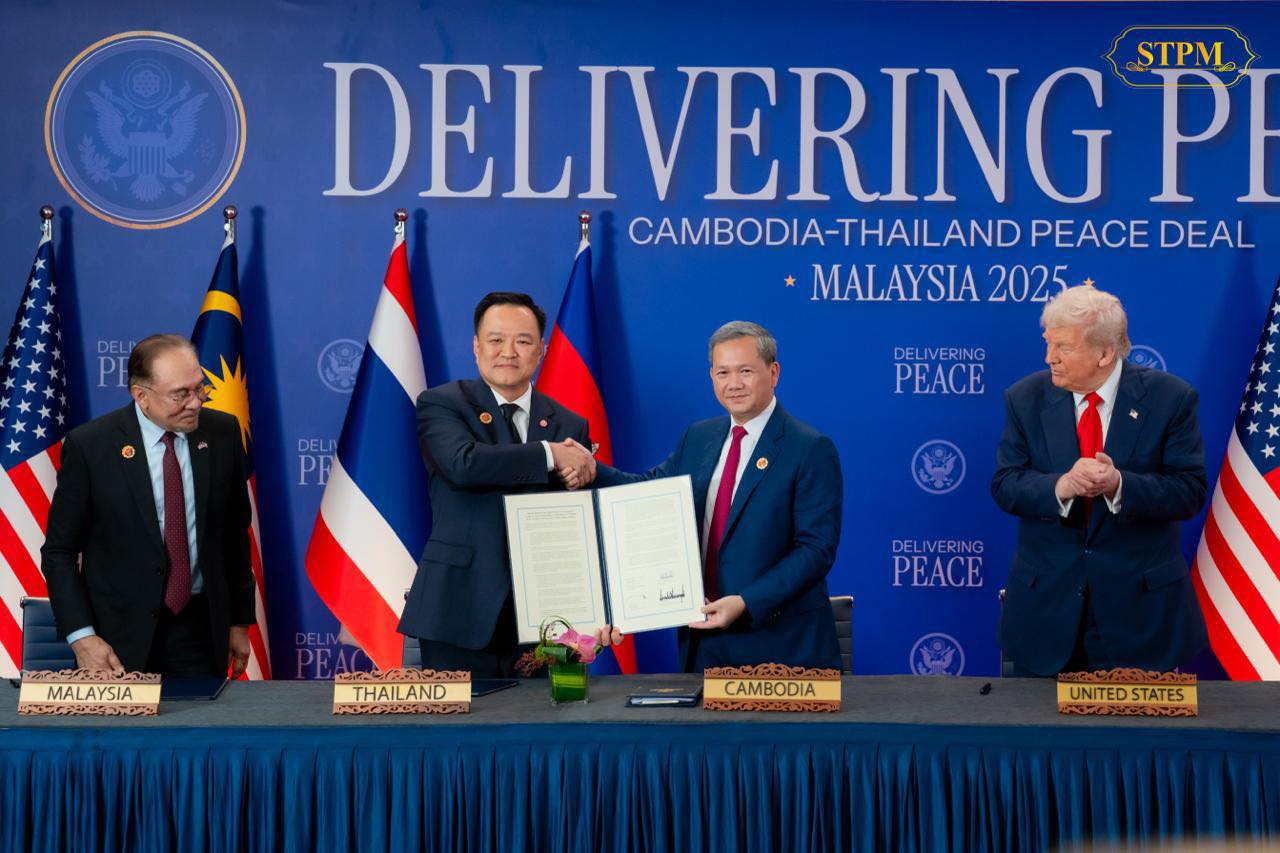
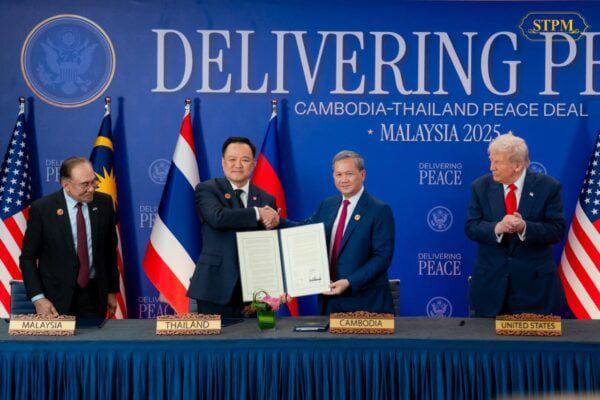
During the phone conversation, Trump said that he secured an agreement from Prime Minister Hun Manet and Anutin, noting that “they have agreed to cease all shooting effective this evening”.
But Anutin later posted that Thailand will continue its military action. Meanwhile, Hun Manet proposed that the U.S. and Malaysian agencies use satellite imagery from the day of the first clashes and the following 24 hours to determine which side opened fire first, saying Cambodia is ready to cooperate fully.
The fragile ceasefire, touted by Trump as a peace solution, has collapsed. Renewed fighting, which began Sunday with both sides trading blame, has outlasted the July clashes and spread well beyond earlier flashpoints, with more than a dozen fronts active along the 817 km (508 miles) shared border.
Government spokesperson Pen Bona declined to comment on the dissolution of Thailand’s parliament calling it an internal affair, but said Cambodia adheres to peaceful means of settlement.
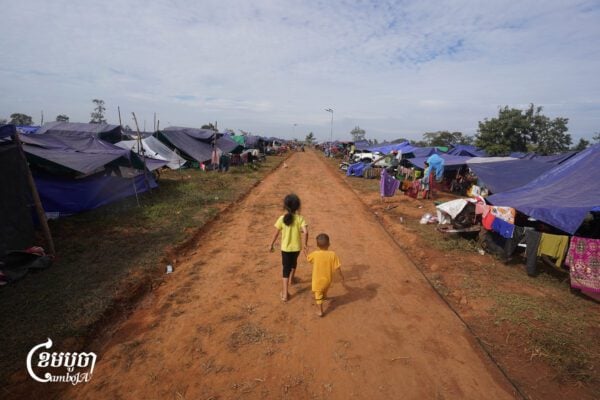
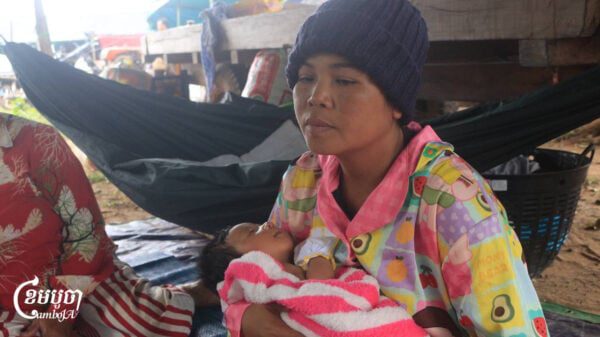
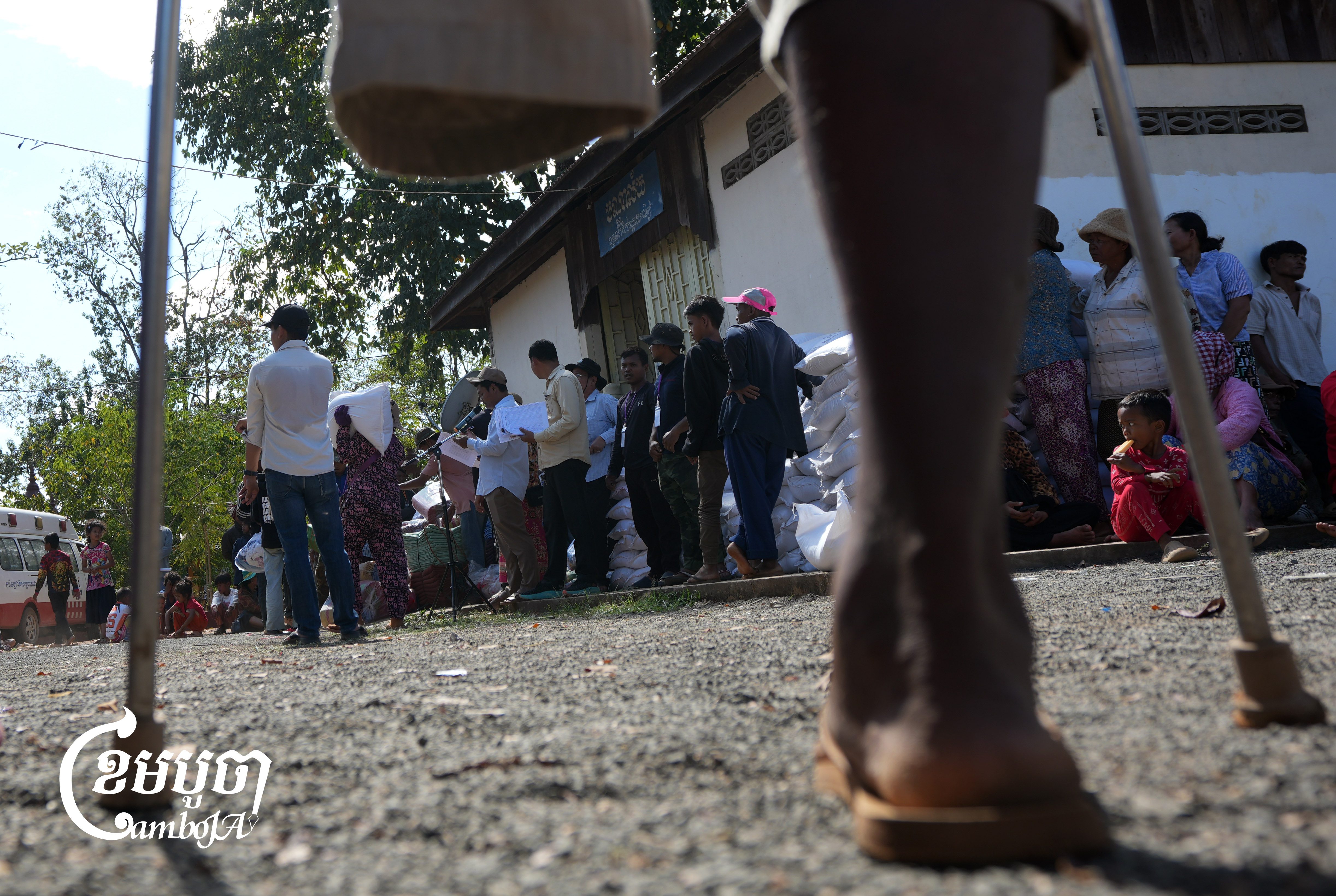
Since fighting resumed on December 7, a total of 112,648 families—representing 379,047 people—have been displaced across Preah Vihear, Oddar Meanchey, Banteay Meanchey, Battambang, Pursat, Koh Kong, and Siem Reap provinces, according to the Ministry of Interior. Women and children make up nearly 77% of the total number, and 909 schools have been closed, affecting more than 216,000 students.
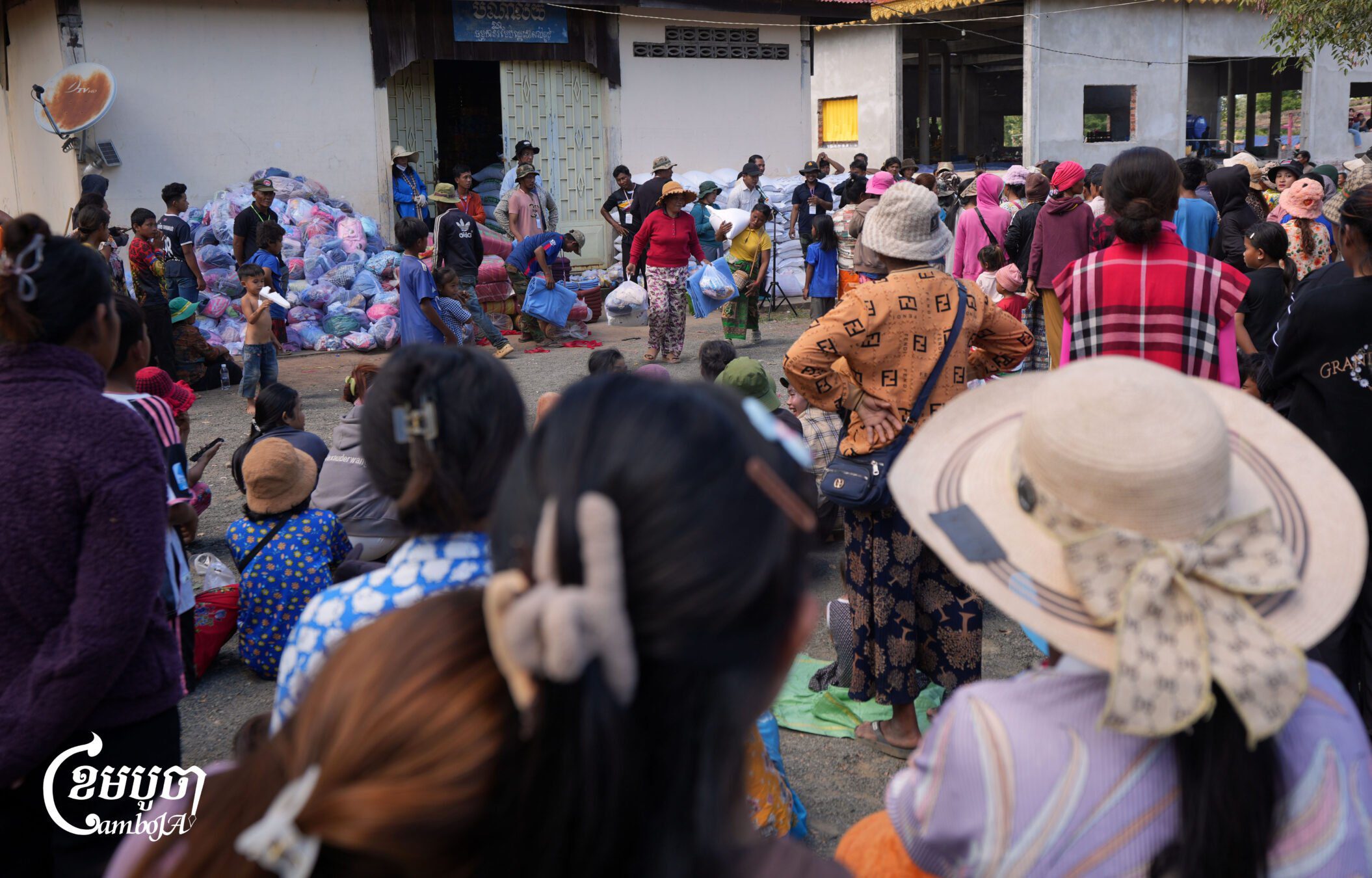
Tang Kimchou, 55, a farm worker living in Preah Vihear’s Choam Ksan district, said she evacuated with her six family members on December 8–the second time they had to flee. They are now staying in the camp but living conditions are very difficult there, especially sleeping and eating.
“On the day [we fled], a bomb fell on the east side of my house. One of the shells hit a soldier’s wife and injured her face. Four bombs were dropped in my area on December 8,” she said.
“My husband shouted that the bombs were falling. I also saw them. The explosion was loud and
shot flames in every direction,” Kimchou said.
She yearns for peace because her rice fields have not been harvested yet and she still owes the bank, sharing that she has no idea how she will pay back. During the evacuation, she asked someone for a ride and paid them 100,000 riel (about $25) to get to the camp.
“I don’t want to see wars happening again,” she lamented.
(Additional reporting by Sok Sreymey)