Listen to the audio version of this article (generated by AI).
Two garment factories in Phnom Penh face fines and other penalties after the Environment Ministry said inspections found they burned fabric scraps in boilers and emitted air pollutants above legal limits.
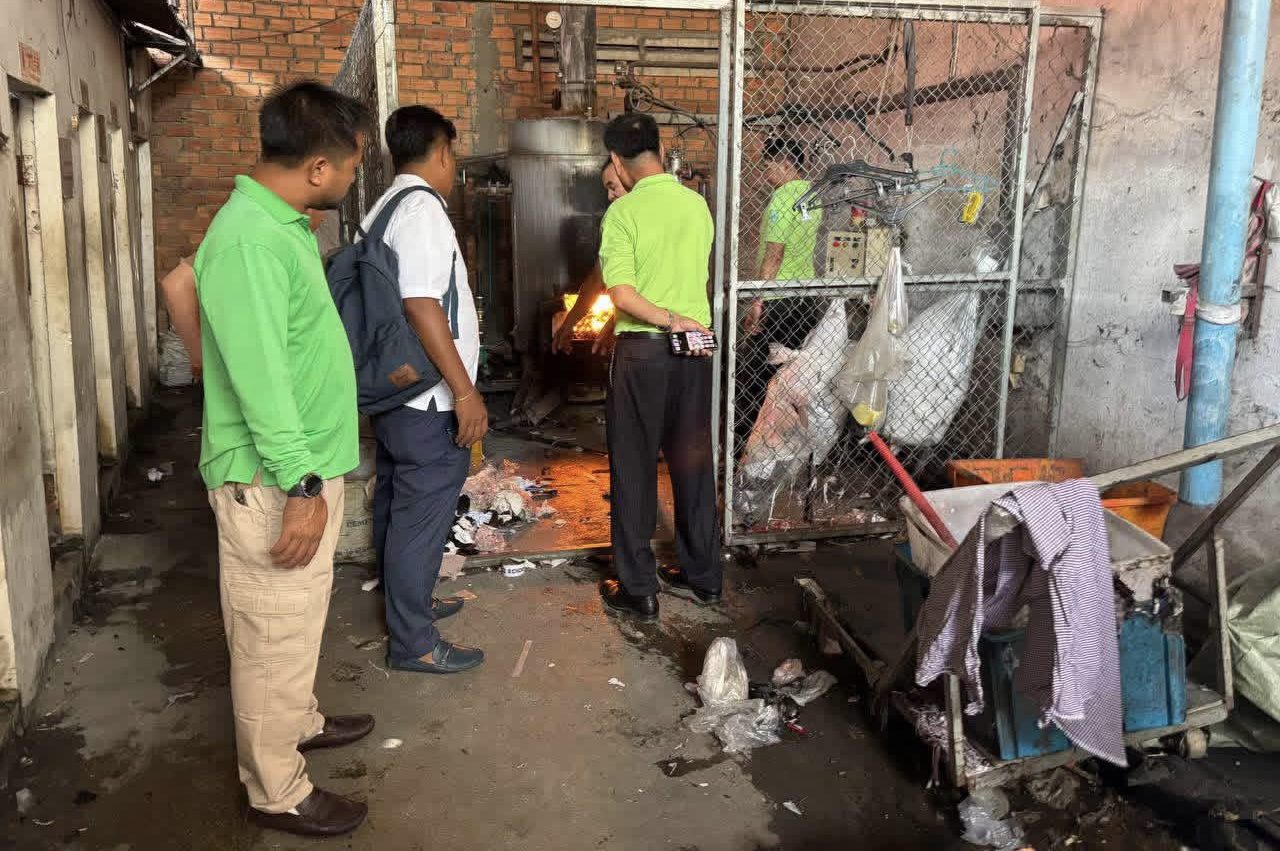
Inspection teams from the ministry’s General Department of Environmental Protection and the Phnom Penh Department of Environment visited the factories Tuesday following pollution complaints.
The factories, Chinese-owned XSLJ (Cambodia) Garment Co. Ltd. and Yun Jian Garment Co. Ltd., are located in Meanchey District.
The ministry said Yun Jian Garment burned about 10 kilograms of fabric scraps a day in a boiler that lacked an air pollution control system. It also accused the company of failing to prepare an environmental protection agreement and obtain a required waste discharge permit.
Yongjian Cai, chairman of Yun Jian Garment, disputed the findings.
“They inspected our boiler and found nothing harmful. We do not burn fabric scraps. We burn firewood, and our equipment is properly installed,” he said through a translator, adding that inspectors found no pollution affecting nearby residents or the environment.
The ministry said XSLJ Garment burned about 3,000 kilograms of fabric scraps a day. A second boiler burned 10 to 15 cubic meters of firewood daily while also using diesel fuel.
Although the factory had installed a smoke filtration system, preliminary testing found emissions from its boiler smokestacks exceeded Cambodia’s legal limits, the ministry said. Officials also said the company had prepared an environmental protection agreement but had not obtained the required waste discharge permit.
XSLJ Garment did not respond to requests for comment sent to the phone number listed in the public business registry. Kaing Monika, deputy secretary-general of the Textile, Apparel, Footwear and Travel Goods Association in Cambodia (TAFTAC), also could not be reached for comment.
The burning of textile offcuts and other production waste has long raised environmental concerns in Cambodia’s garment industry. Researchers and rights groups have documented cases of factories and brick kilns using fabric scraps as a low-cost fuel, linking the practice to harmful air pollution and, in some cases, global apparel supply chains serving major international fashion brands.
Firewood used to fuel industrial boilers has also drawn scrutiny over concerns that demand contributes to illegal logging and deforestation.
Environment Ministry spokesperson Khvay Atitya said the ministry had investigated 29 environmental pollution cases across the country and multiple sectors this year, including violations involving inadequate emissions control systems and the improper discharge of wastewater.
Atitya said that burning fabric scraps without appropriate pollution control systems is prohibited under Cambodia’s environmental regulations.