
The U.S. Department of State on Tuesday quietly released its long-delayed report on human trafficking, placing Cambodia in the lowest Tier 3 for the fourth straight year and, for the first time, labeling it a “state sponsor” of trafficking.
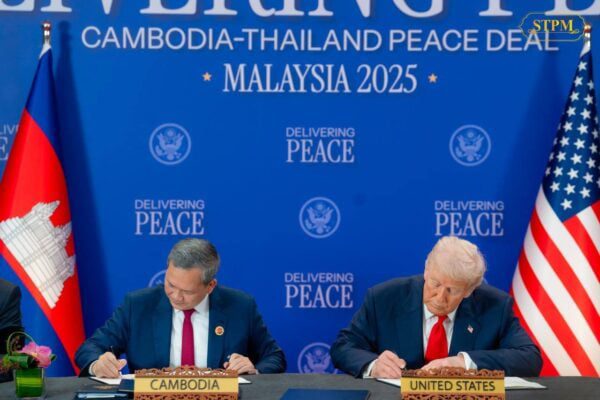
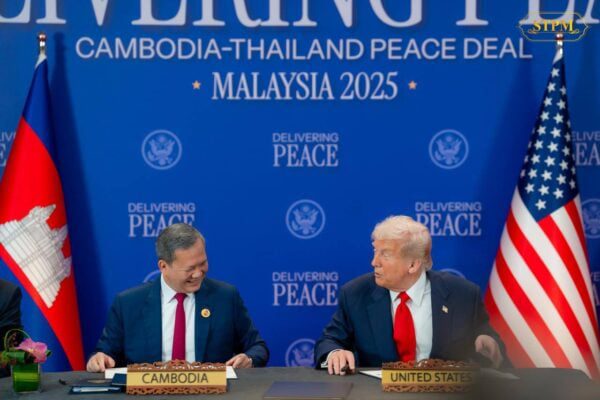
Officials have so far given little response to the designation, which follows Cambodia’s recent nomination of Donald Trump for the Nobel Peace Prize. The U.S. Embassy in Phnom Penh posted the report on its website but has not promoted it on social media or issued a press release, as it did in previous years. The release came before the U.S. federal government shutdown Wednesday forced the embassy to scale back operations.
The report, issued three months past its original deadline, also comes amid reports that the Trump administration rolled back anti-trafficking efforts, which the White House dismissed as “nonsense.”
Officially the 2025 Trafficking in Persons (TIP) report, it details trafficking conditions and response efforts in the U.S. and more than 185 countries.
Tier 3 status indicates Cambodia does not fully meet the department’s minimum standards to combat trafficking and is not making significant efforts to do so. Nineteen other countries were also designated Tier 3 this year, while 12 – including regional neighbor Myanmar and longtime ally China – join Cambodia in being considered to have a documented “pattern or practice” of human trafficking that makes them state sponsors, according to the State Department.
U.S. criticism focused on Cambodia’s long-documented harboring of the online scam industry and its reliance on forced labor, which researchers and investigators have said involve complicity by senior officials.
“Senior government officials intimidated victims and witnesses of forced labor in online scam operations and civil society actors working to expose scam-related human trafficking, and impeded investigations into human trafficking in online scam centers,” the State Department said in its country-specific section of the report.
It added that senior Cambodian officials and advisors “financially benefited from the forced criminality and forced labor of trafficking victims, including through their private ownership of facilities and properties that housed these operations.”
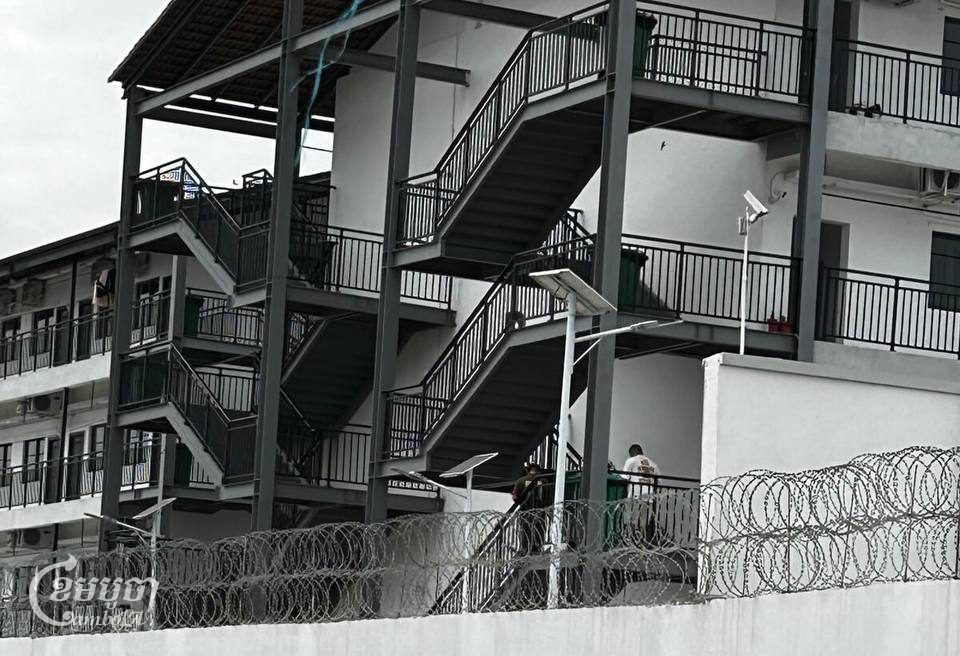
As many as 350 large-scale scam compounds are reportedly operating across Cambodia, Winrock International says, relying on coerced or forced labor from some 150,000 people from more than 22 countries and generating $12 billion to $19 billion annually.
The illicit network also extends into Laos and Myanmar, with an estimated total of more than 300,000 people trafficked into forced criminality across the three countries.
In its latest sanctions targeting suspected casino fronts and syndicate heads behind Cambodia’s scam networks, the U.S. Treasury Department said Americans lost more than $10 billion last year to Southeast Asia-based scams.
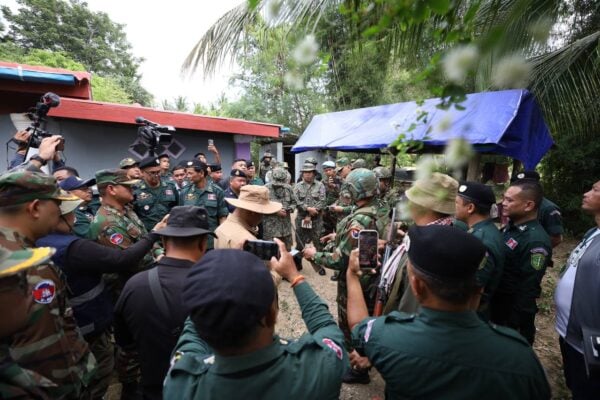
Earlier this year, following rising international pressure, Prime Minister Hun Manet ordered a nationwide crackdown on scam rings. The operation has largely targeted smaller operations, leaving major suspected compounds with alleged links to officials and elites, including U.S.-sanctioned senator Ly Yong Phat, largely untouched.
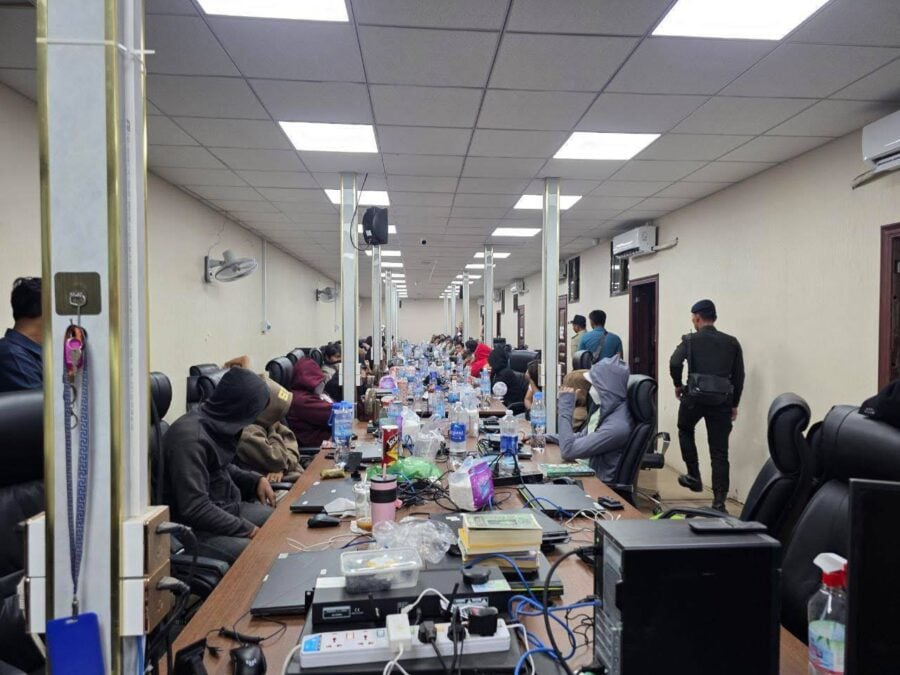
The TIP report noted that despite the prevalence of trafficking in scam operations, the Cambodian government has never arrested or prosecuted a suspected compound operator or owner and has failed to prosecute the sanctioned official.
It added that while Phnom Penh has taken limited steps, such as cooperating with foreign governments on investigations, it has not reported prosecuting any labor traffickers since 2022.
Thailand, whose relations with Cambodia remain strained after a deadly border clash in July, issued an arrest warrant for tycoon and senior Cambodian official Kok An over alleged scam links earlier this year. Cambodia’s Anti-Corruption Unit, meanwhile, this week brought a case only against a group of mid-level police officers accused of taking bribes from Thai scam operators in Poipet, the same enclave where compounds tied to Kok are based.
“Looking at the Cambodia TIP Report narratives going back many years, the top finding is invariably egregious and widespread complicity with trafficking by senior government officials,” said Jacob Sims, a visiting fellow at Harvard University’s Asia Center and analyst of transnational crime networks in Cambodia and the region.
He said the state sponsor label is justified and long overdue.
Sims noted the alleged lapses in Cambodia’s counter-trafficking efforts are not limited to scam operations but extend across all case types. He described the state-sponsorship of trafficking as a system in which culpable local elites pave the way for transnational criminals, mostly Chinese syndicates, to establish scam hubs and exploit Cambodia’s naturalization process.
The report also highlighted other trafficking concerns, including abuses affecting Cambodian migrant workers, forced marriages and sex trafficking.
“The difference with scam operations is that their scale and technological footprint have allowed the evidence of state involvement to grow to the point of being undeniable,” Sims asserted.
Local journalists who covered the scam industry and its ties to politically connected elites have previously been imprisoned on charges authorities said were unrelated to their reporting, such as incitement.
Authorities have long denied complicity in the scam industry or neglecting law enforcement duties.
Government entities such as the National Police’s anti-trafficking department and the National Committee for Counter Trafficking have faced criticism for failing to adequately screen potential trafficking victims, dismissing complaints as “labor disputes” and conducting raids described by observers as largely performative.
National Police spokesperson Chhay Kim Khoeun, Interior Ministry spokesperson Touch Sokhak and Anti-Human Trafficking Department director Sok Sambou did not immediately respond to requests for comment.
Government spokesperson Pen Bona referred reporters to Chou Bun Eng, permanent vice chair of the National Committee for Counter Trafficking, who did not immediately respond to a request for comment.
The U.S. Department of State urged Cambodia to step up enforcement and accountability, calling for the investigation and prosecution of traffickers, including officials, alongside meaningful penalties. It recommended better screening of potential victims, expanded protections and services for domestic and foreign victims, and freer operation for civil society and journalists.
Traditionally, the Tier 3 and state sponsor status opens the door for more retaliatory actions directly from the U.S. president, such as cuts to foreign assistance – which the Trump administration largely already slashed to Cambodia this year by dismantling USAID.
Asked whether new U.S. sanctions on Cambodian officials allegedly complicit in trafficking are now expected, Sims said it is not a foregone conclusion, but the state sponsor label signals that there “may be an appetite” for further measures.
“In other words, the […] label is not a silver bullet, but it’s a meaningful step in the right direction,” he added.
Note: This article was updated Thursday at 2:30 p.m. to confirm the U.S. Embassy in Phnom Penh had posted the TIP report on its website but had not issued a press release or promoted it.