Listen to the audio version of this article (generated by AI).
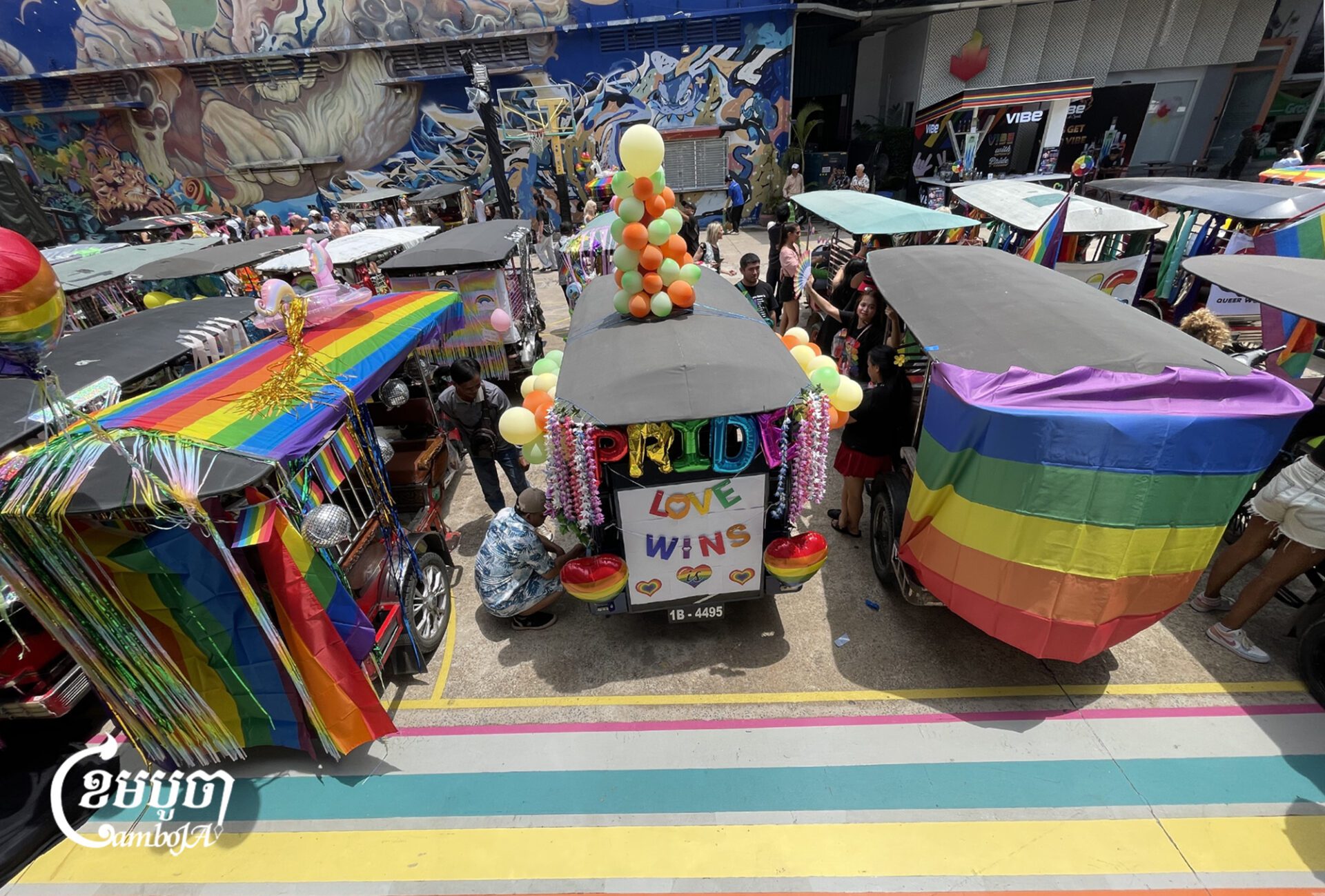
Cambodia joined France on Tuesday in sponsoring a U.N. Human Rights Council resolution calling for the global decriminalization of homosexuality, although the Southeast Asian nation does not legally recognize same-sex marriage.
The Cambodian Human Rights Committee (CHRC) announced the move in Phnom Penh during a meeting with the U.N. human rights office as the council’s latest session continued in Geneva.
Cambodia also announced plans to ratify the U.N. treaty abolishing the death penalty. Deputy Prime Minister and Justice Minister Koeut Rith made the announcement during the Ninth World Congress Against the Death Penalty in Paris this week.
During the meeting, Cambodian officials also raised concerns over alleged human rights and international humanitarian law violations during last year’s border conflict with Thailand.
OHCHR Country Representative Matilda Bogner said she welcomed Cambodia’s continued efforts to promote LGBT+ rights and its plans to ratify the treaty abolishing the death penalty.
The sponsorship, which Cambodia also backed in 2024, comes months after Rainbow Community Kampuchea (RoCK) urged the government to legally recognize same-sex marriage by amending laws to guarantee equal marriage rights regardless of sexual orientation or gender identity.
RoCK Media Team Leader Tuy Raksmey said the group is also calling on the government to allow legal gender recognition based on self-defined gender identity and strengthen legal protections against discrimination targeting LGBT+ people.
Sreang Chenda, CHRC spokesperson, said the sponsorship reflected Cambodia’s commitment to protecting LGBT+ rights and aligned with the government’s policy of “leaving no one behind.”
He acknowledged Cambodia has yet to recognize same-sex marriage, saying the biggest obstacle remained “public attitudes” and that greater public awareness was needed before such legislation could be adopted.
Former Prime Minister Hun Sen said in 2023 that Cambodia does not allow same-sex marriage but that LGBT+ people “can still love and live with each other without guilt.”
Thailand became the first country in Southeast Asia to legalize same-sex marriage in 2025.
Lim Borin, coordinator of the Sexual Orientation and Gender Identity Project at the Cambodian Center for Human Rights, welcomed the sponsorship but said it should be followed by concrete legal reforms.
“It is encouraging for the LGBT+ community, but we want to see specific legal changes that protect and support them,” he said.