Listen to the audio version of this article (generated by AI).
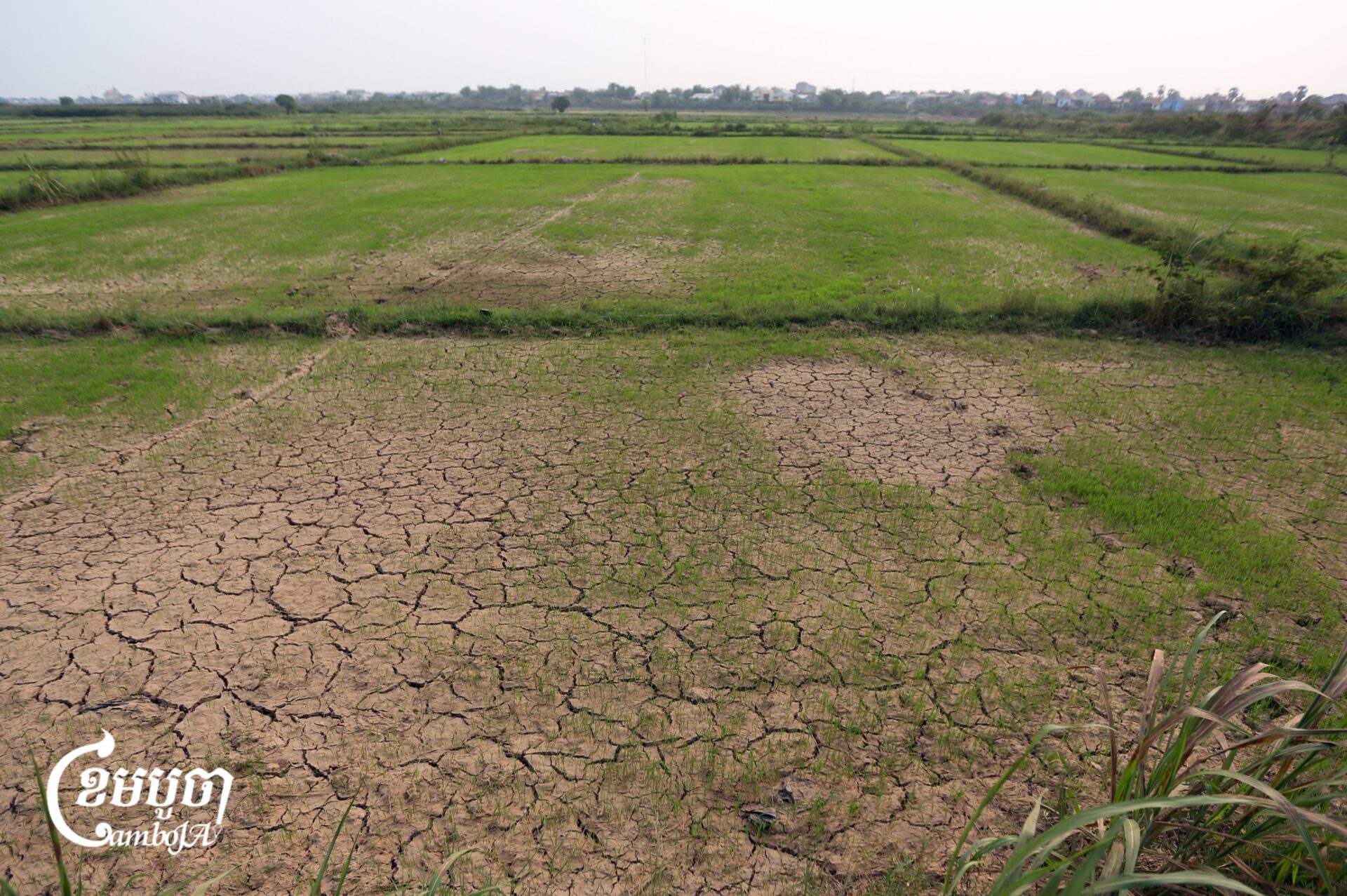
Cambodia is preparing for a potentially prolonged El Niño event that scientists say could raise temperatures, reduce rainfall and worsen drought through early 2027, drawing concerns over food production and water security.
Relevant ministries have been ordered to step up climate preparedness, but farmers and climate experts warn that stronger local action is necessary to protect farmers’ livelihoods.
The World Meteorological Organization said there is an 80% chance of El Niño developing between June and August 2026, and rising to about 90% by the end of the year. The weather pattern is expected to be hotter than normal, have below-average rainfall, drought and increased risks to agriculture across Southeast Asia, including Cambodia.
During a June 26 plenary meeting of the Council of Ministers, Prime Minister Hun Manet ordered relevant ministries as well as national and sub-national authorities to coordinate monitoring, public awareness and emergency response measures to address the El Niño phenomenon.
The Water Resources and Meteorology Ministry was instructed to strengthen weather monitoring and public advisories, while the Disaster Management Committee prepared emergency response and rescue plans. The Agriculture Ministry would work with relevant agencies to secure food reserves and support farmers affected by drought.
The Water Resources Ministry forecasts the probability of El Niño strengthening to 100% in July and peaking in November 2026.
To date, Tai Samnang, a farmer from Takeo province, has yet to receive any comprehensive information about the phenomenon, although he has noticed that it is hotter and rainfall is irregular.
Meanwhile, rice prices remain low while the cost of fertilizer and gasoline are rising, which is very concerning for farmers like him.
For the moment, Samnang said, water is sufficient for farming in Bati district, where he cultivates about six hectares of wet- and dry-season rice.
However, he is worried about the likelihood of Cambodia being affected badly by El Niño as farmers rely on rice cultivation to sustain a living. He said the farming community would benefit greatly if more information is shared by the government on early preparation mechanisms.
“I can only appeal to the government to ensure there is adequate water supply when there is no rain, particularly with the price of rice falling and fertilizer cost rising disproportionately to rice prices,” he said.
Limiter irrigation coverage
Uon Silot, president of Cashew Nut Association of Cambodia (CAC), observed that rainfall has decreased significantly while temperatures have risen.
However, cashew crops have not been severely affected. Cashews begin to flower from October to November and form young pods in January. Since the full scale of the El Niño phenomenon is expected to hit Cambodia starting October 2026 through January 2027, it coincides with the flowering and fruiting cycle of the cashew crop. Without adequate measures, it would impact cashew yields in 2027.
“If there are no adequate measures [now], the yield would be affected in the coming year,” Silot said. “Based on our experience, we can share adaptation methods by teaching farmers in all the provinces.”
“This year, they are using the term Super El Niño’,” he continued. “Cashews actually prefer hotter weather [but] it has to be below 42 degrees Celsius. I worry about the heat rising above 42 degrees like in neighboring countries. Cashew crops will not survive [in] that [temperature].”
He opined that the government should prepare crop seeds in advance of the onslaught of El Niño, noting that certain crops would inevitably lose some of their seed varieties. He also recommended lowering fertilizer prices to help farmers prepare for the phenomenon.
Cambodia has been experiencing “severe heat waves” as a result of the phenomenon since January, with rainfall down about 50% from last year, Water Resources Ministry spokesperson Chan Yutha told local media on June 30.
He warned that dry conditions could persist until early 2027, bringing higher temperatures and worsening water shortages, particularly in rice-growing provinces, such as Battambang, Banteay Meanchey, Oddar Meanchey, Pursat and Kampong Thom.
Yutha is also concerned about water security, saying Cambodia’s existing irrigation system can cover about two million hectares when the entire farmland area measures close to three million hectares.
Khim Finan, spokesperson for the Ministry of Agriculture, Forestry and Fisheries, said they are working closely with the Water Resources and Finance Ministries to develop advance intervention measures to respond to potential droughts, as has been done in previous years.
“We are currently in the monitoring and assessment phase,” he added.

Soth Kimkolmony, spokesperson for the National Committee for Disaster Management, told CamboJA News that they are monitoring El Niño conditions and coordinating preparedness measures with relevant ministries.
While Cambodia is not expected to face a drastic impact, he warned that prolonged drought and water shortages could disrupt agriculture, public health and access to clean water.
“This phenomenon is not just a weather issue; it impacts people’s daily lives in many ways,” Kimkolmony said. “We will work together with relevant ministries to plan, respond and ensure preparedness.”
‘No one is left behind’
Soeung Saroeun, executive director of the NGO Forum on Cambodia, said Cambodia has improved its climate response plans but not at the community level.
“The preparedness is not yet sufficient, especially at the grassroots level because investment in water infrastructure, information sharing, and community response capacity remain limited,” he said.
Saroeun warned that smallholder farmers and other vulnerable communities face the greatest risks from worsening drought and heat, citing gaps in water storage, early warning systems, climate adaptation financing and social protection.
He said future preparedness should prioritize resilience and inclusive planning “to ensure that no one is left behind”.
Responding to CamboJA News, Rebekah Bell, FAO Representative in Cambodia said although the severity of the impacts depend on the timing of the monsoon and intensity, it warned that uneven rainfall could disrupt rice production, livestock, fisheries and rural livelihoods, particularly for smallholder farmers.
“The main concern is that prolonged dry conditions or uneven rainfall distribution could affect rain-fed rice production, other crops, livestock, water and feed availability, fisheries productivity, and rural livelihoods, especially among smallholder and vulnerable farming households.”
Rebekah noted that Cambodia’s preparedness has improved through government investments in irrigation, climate information services, agricultural extension and early warning systems, including the development of the Cambodia Agrometeorological Service with ministries.
Rebekah said national and sub-national authorities are increasingly able to monitor drought conditions and support farmers with technical guidance and emergency response.
“While challenges remain, the country is considerably better prepared today than it was a decade ago.”
However, the agency stressed that structural vulnerabilities remain because large parts of Cambodia’s agriculture is dependent on rainfall and irrigation coverage remains limited.
FAO called for stronger investment in water management, climate-smart agriculture, early warning systems, advisory services, and social protection to strengthen resilience, alongside better coordination among government, development partners and farming communities.