Listen to the audio version of this article (generated by AI).
El Niño is predicted to be more powerful in the future compared to current conditions (2026-2027), with around 1.3 million Cambodian children at risk of climate-related impacts due to El Niño, which can intensify droughts, floods, and other extreme weather events, according to UNICEF.
In Asia Pacific, more than 190 million children in nearly 100 countries are expected to experience “unusually dry or wet conditions” between October and December 2026 due to El Niño.
El Niño causes warming that alters global weather patterns, bringing drought and higher temperatures to some regions while causing heavy rainfall and flooding in others. These extreme conditions can severely affect children’s access to safe water, food, livelihoods, and essential services such as health care and education.
Sanjay Wijesekera, UNICEF Regional Director for Asia and the Pacific, said in a press release that for millions of children across the region, El Niño could compound existing crises. Many families already face climate shocks, conflict, displacement, and economic hardship, and El Niño may further threaten children’s health, nutrition, education, and safety.
“We know this threat is coming, and we still have an opportunity to act,” Wijesekera said. “We cannot wait for water sources to run dry, food to become unaffordable or children to be forced out of school before we respond. Acting now can help keep critical services running and get support to vulnerable children, families and communities before needs escalate.”
UNICEF is working with governments and partners in the region to strengthen early warning systems, pre-position supplies, protect essential services, and build climate resilience. Adequate, timely, and flexible funding—including anticipatory action—is essential to help communities prepare and respond before risks escalate.
The UN body estimated that 3,872 schools and 401 health centers—roughly one-third of the national total—are at risk from disasters, such as severe droughts and floods.
In conjunction with National Day for Disaster Management, Prime Minister Hun Manet instructed relevant ministries and institutions to ensure disaster-risk preparedness as climate hazards intensify, instructing agencies to treat disaster risk management as a core task and implement Cambodia’s 2024–2028 disaster risk reduction plan and early-warning roadmap.
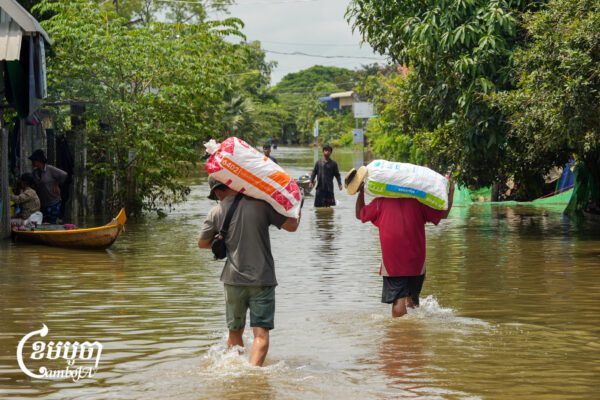
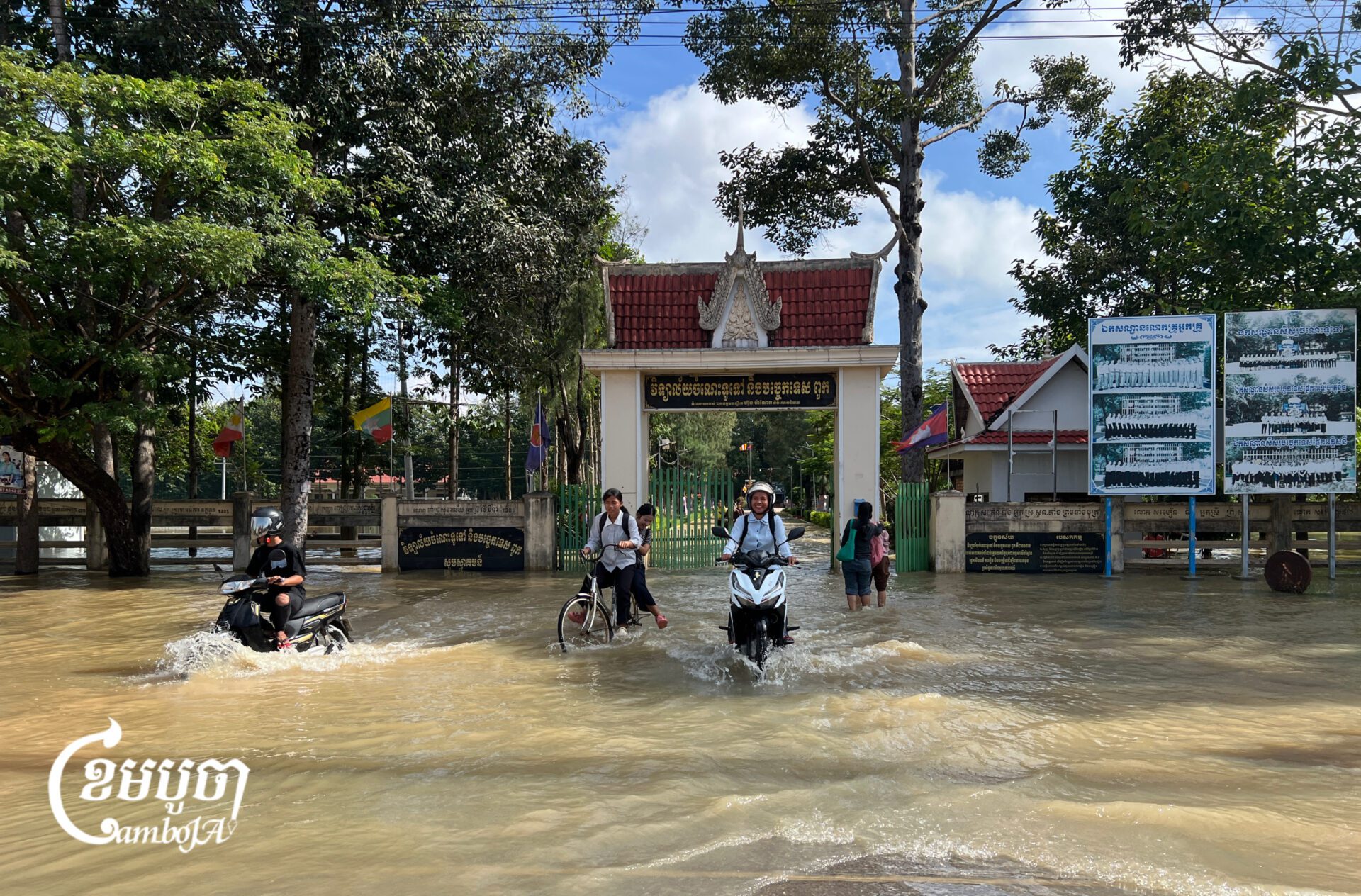
In July, El Niño-linked drought affected nearly 290,000 hectares of rice fields across eight provinces, according to the National Committee for Disaster Management (NCDM). By September 2026, about 150,000 hectares of wet-season rice—around 5% of the country’s three million hectares—were flooded, and over 57,000 families in 10 provinces evacuated.
Thai Thorn, an evacuee living in a temporary shelter provided by the government at Rong Cham village, Sla Kram commune, Svay Chek district, in Banteay Meanchey Province, told CamboJA News that she has heard about El Niño and how it would affect children’s health.
With three small children aged three to 12, she observed first hand how intense temperature made her children ill, compounded by the lack of nutrition which she was not able to afford due to economic hardship.
“My children often have fever when the temperature is high. Because of our economic situation, I can only buy paracetamol to ease their illness,” she said. “At the temporary shelter, we cannot make a good living as there is a lack of opportunity and support for food, medicine, and some living essentials.”
“I want to seek support too but I don’t know how. I need rice and other supplies so we would have enough to eat,” Thorn said.
According to a UN report, undernutrition remains a concern: stunting among children under five has fallen from 32% in 2014 to 22%, but wasting remains at around 10%, with rural and poorer households most affected.
Yi Kimthan, interim country director for Plan International Cambodia, said they are working with the government to provide support to children, such as sanitation and health education, and advocating for children’s rights. He said the government must be well prepared to provide safe shelters to children, medical care, and education opportunities during incidents of natural disasters.
“Plan International is working with the NCDM to create pre-planned policies in response to such disasters. Basically, relevant partners must work together in all sectors such as health, education, water management, as well as agriculture,” he said.
He added that the authorities need to create awareness about the effects of natural disasters on parents so they are also well prepared. For education, school time must be prioritized based on real time effects such as rising heat and advise children to drink enough water and maintain good sanitation and hygiene.
Ros Sotha, executive director of Cambodian Human Rights Action Coalition (CHRAC), opined that natural disasters are threatening children’s lives in Cambodia. Floods, storms and extreme heat have displaced families, damaged infrastructure, disrupted agriculture and livelihoods and placed additional strain on household’s livelihood, especially vulnerable and poor families, he said.
“The effect from disasters can impact children’s health and education. If parents are facing economic hardship, it would also affect their future,” Sotha told CamboJA News. “Therefore, the government must provide support in time.”
“For example, during the recent flooding the government should use funds and carry out pre-planned actions, including moving livestock, reinforcing shelters, or providing supplies before a crisis fully unfolds,” he added. “This can reduce suffering and losses while strengthening community resilience.”
He added that in response to such disasters, the government should prepare before emergency peaks in order to protect lives, maintain essential services, safeguard food and water, and reach the most vulnerable households early.