Summary:
- A planned 376-megawatt hydropower dam on the Srepok River in northeastern Cambodia is expected to displace nearly 4,270 families, with its reservoir projected to flood swathes of indigenous land.
- Backed by tycoon Kith Meng’s Royal Group and Chinese state-linked partners, the project has revived fears of ecological damage and forced relocations long criticized in other Mekong basin dam developments.
- Many villagers say they are being pressured to accept resettlement offers they see as inadequate, citing poor soil, reduced farmland, and minimal compensation as core concerns.
- Environmental and social impact assessments show major gaps in community consultation, with government officials acknowledging the EIA remains incomplete.
For thousands of people living along northeast Cambodia’s Srepok River, upheaval feels inevitable.
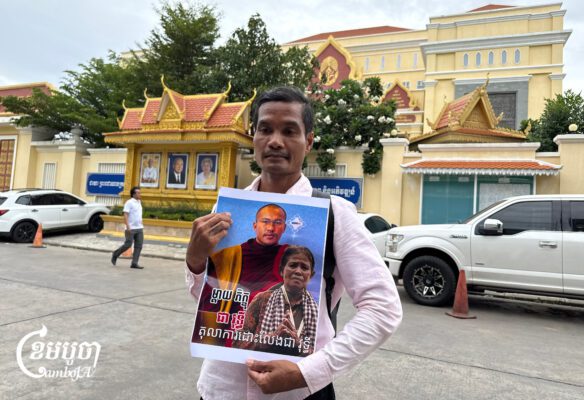
“This is the same thing that happened during the Pol Pot regime, why are they forcing us to move like this,” lamented Thaing Daran, a resident of Kengsan village in Ratanakiri, where the soon-to-be-built Lower Srepok 3 hydropower dam will create a vast reservoir, submerging his community. “It will make villagers even poorer.”
Daran, a Khmer man who lives among the indigenous Bunong and Laotian minorities native to the area, has not been displaced – yet.
But he is part of a generations-old community of subsistence farmers and fishers living along one of the Mekong’s largest tributary systems, facing relocation to make way for hydropower.
After decades on paper, Lower Srepok 3 is finally moving forward, according to a community chief in one of the affected villages, who said officials told him construction will begin later this year.
The 376-megawatt project, backed by around $83 million in confirmed investment, will be the 21st hydropower dam in the “3S Basin”, which spans the Sesan, Srepok, and Sekong Rivers, flowing through Laos, Cambodia and Vietnam. Together, these 3S Rivers drive around 20% of the Mekong’s annual flow, fueling its flood pulse and sustaining the fisheries and farmlands that millions rely on.
Damming them, hydrological researchers say, disrupts the Mekong river system’s natural rhythms. But the government contends such projects are necessary to provide Cambodia’s growing economy with the electricity it needs.
While the project site still remains green, almost 4,270 families facing displacement in Ratanakiri and Mondulkiri from the dam’s nearly 70,000 hectare planned reservoir are being pushed – some say even intimidated – to accept what they call an unjust resettlement deal.
Yet their pleas appear to fall on deaf ears. The dam is being developed by tycoon Kith Meng’s Royal Group, one of Cambodia’s most powerful conglomerates, along with Chinese state-linked utility partners. Across the Mekong, their dams have drawn fire for triggering displacement and ecological damage. Here, residents fear history is repeating itself.
Casualties of a Conglomerate’s Dam
Dotted along the banks of the Srepok River is Nang Bour village, a stilted settlement tucked into Mondulkiri’s sparse forest edge. Its red-dirt roads wind past the spacious wood homes of hundreds of families, many of them indigenous Tumpuan and Ponoun. Throughout the village are rice paddies and cashew orchards, a sacred forest grove, brightly painted pagodas, and the grade schools that serve this remote community. Most residents are subsistence farmers and fishers, deeply tied to the land.
“I will not leave because this is our ancestral homeland,” said Sev Ranchhuon, a community chief in Nang Bour village, which lies directly in the flood zone of the planned Lower Srepok 3 dam (LSP3), or “3A” as labeled in project documents seen by CamboJA News.
Ranchhuon has been among the most outspoken residents pushing back against the resettlement terms. But even he sees the dam as all but inevitable.
“If that project [LSP3] is truly significant and they insist on going ahead, they must provide our villagers with fair and suitable compensation,” he said, citing what he saw as shortcomings in the resettlement deal offered to residents.
Under the plan presented, affected families would be relocated to basic stilt houses with a small plot of farmland on degraded land nearly 50 kilometers away.
Ranchhuon provided CamboJA News with the relocation plans that were presented to him during a September meeting of community representatives, developers, and authorities, to discuss the project and outline the compensation for affected villages in Mondulkiri.
Notably, the resettlement plans are underwritten by a firm listed only as the “Lower Srepok 3 company.”
While the designation is not necessarily inaccurate, it blurs the lines of who is ultimately responsible for compensation. Most locals simply pointed to Royal Group as the lead developer, a fact confirmed by provincial authorities.
Further unpacking the ownership structure offers a better picture of the dispersion of the stakeholders. One key entity, identified in a project brief presentation, is China (Cambodia) Rich International Co., which is on the hook for the nearly $83.2 million commitment to the project.
The company is chaired by tycoon and Royal Group CEO Kith Meng and has other Royal Group executives on its board, according to business registry data.
When the firm shows up in documents, it uses a Royal Group email domain.
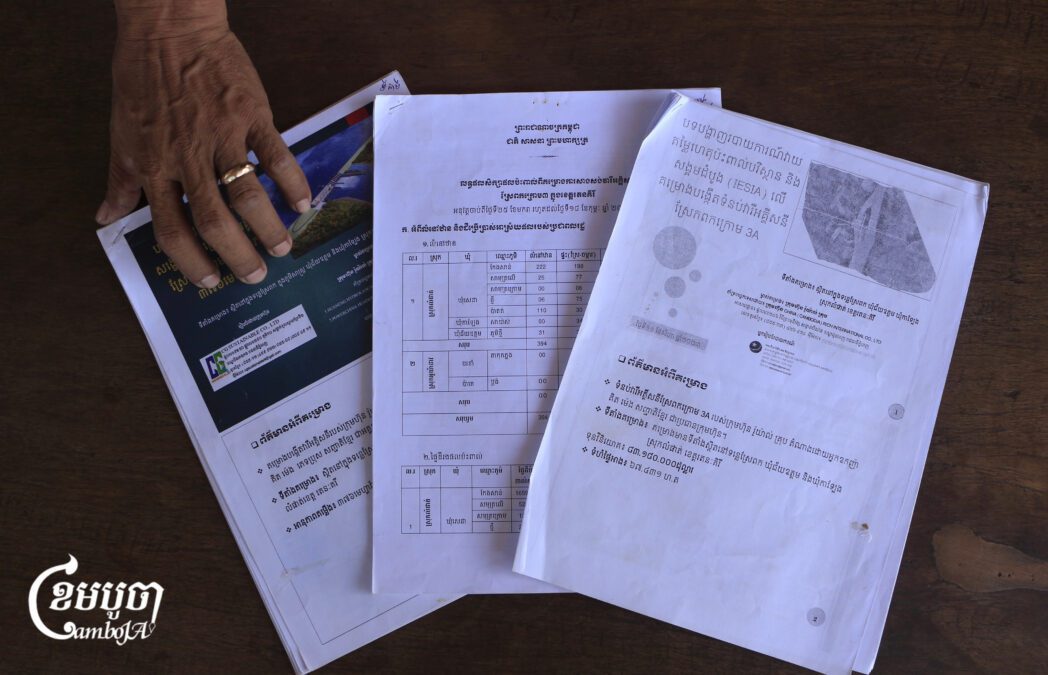
More directly, the environmental impact assessment (EIA) issued earlier this year names Royal Group Power, the conglomerate’s energy arm, as the official project lead.
According to the EIA, there are two Chinese “technical partners”: Huaneng Hydrolancang International Energy Co. and PowerChina Huadong Engineering Co. Together, this team has nudged the long-gestated dam closer to reality.
This also is not the developers’ first time in the hot seat. The same Royal Group–Huaneng partnership built the widely criticized Lower Sesan 2 dam, which displaced hundreds of families and disrupted the Mekong’s flow, according to conservationists.
Still, officials like Ratanakiri governor Nhem Sam Oeun insist construction on LSP3 is nearly ready to begin, pending a bit of “paperwork” with “relevant ministries.” He brushed off concerns about environmental or social fallout, claiming, “There is no serious impact – villagers have consented.” But that does not square with what most residents told CamboJA News.
He also pointed to the project’s promise of more electricity at lower prices as a public benefit that outweighs the costs.
Meanwhile, as LSP3 nears its first shovel turn, another dam proposal upstream on the Sesan – the so-called Lower Sesan 3 – has also lagged behind but is seemingly in feasibility studies.
If both go ahead, as many as 10,000 families across Mondulkiri and Ratanakiri could be affected, said Leang Bunleap, director of the 3S Rivers Protection Network, which assists communities impacted by water diversion projects along the Mekong’s three major tributaries.
Bunleap said many residents were left out of early consultations. “A large share of the affected population did not participate in the research,” he said. “That led to major data gaps and weak community engagement, particularly in Ratanakiri.”
A obtained document that summarizes findings from the LSP3 social impact assessment (SIA) conducted in January 2024 puts the total number of families facing displacement once the dam is complete at 4,266, a figure Bunleap confirmed.
The EIA also appears to back his claims of limited community engagement, a shortfall even the nearly 775-page report presented to stakeholders acknowledges, albeit obliquely.
Royal Group and its subsidiary, China (Cambodia) Rich International Co., did not respond to repeated requests for comment. Nor did Chinese state-owned partners Huaneng Hydrolancang and Powerchina Huadong Engineering. It is unclear whether more capital injections or investments from the Chinese technical partners are in the pipeline.
Local consulting firm CG Sustainability, listed as the EIA’s preparer, also stayed silent, while Kith Meng did not respond to calls to his personal number.
CamboJA News was unable to verify a clear planned deadline for construction or power generation, but Bunleap said developers plan to have electricity flowing by 2029.
The Fine Print: Shallow Offers, Deep Impacts
Nearly 1,400 families across three communes in Mondulkiri stand to lose their homes, farmland, pagodas, ancestral graves and schools to make way for LSP3, according to the impact assessments.
In return, households that meet certain criteria are promised a resettlement offer, though responsibility for compensation and the monetary figures allocated to purchase or build the promised features remains muddled.
Impacted residents will be offered a bare-bones stilt house along with just five hectares of farmland some 50 kilometers from their villages, on a patch of land that was once deforested and later reclaimed by authorities.
Alternatively, families can opt to have their homes dismantled and hauled to the resettlement site. But it appears they must handle the teardown themselves, with developers only footing the transport bill – capped at $200 total.
Similar to indigenous villages in Ratanakiri, most of the communal land slated to be flooded were never issued land titles from the government despite having been surveyed five years ago, according to the Nang Bour community chief Ranchhuon.
The delay tracks with a broader pattern of systemic undertitling of indigenous land in Cambodia that has long left communities exposed to displacement.
For families classified as “separated,” or newlyweds leaving their childhood homes to start their own families, a new house does not appear to be on the table in the current resettlement deal.
For them, the five hectares is slashed to just two, but they are guaranteed the $200 moving stipend and 20 kg of rice per month for one year, less than the average consumption of two Cambodians according to the World Food Program.
But promises of nominal compensation and new beginnings ring hollow for villagers still waiting for clarity and the courtesy of an offer that fully reflects their current assets.
Ethnic Tampuan elder and Nang Bour villager Bour Nut said the promised five hectares are a far cry from the roughly 30 he currently farms for rice.
He also questioned the sense in swapping sturdy, self-built homes for prefab houses on degraded land. “We built a house here that cost hundreds of millions of riels,” he said, “and the new land cannot support rice cultivation.”
Rachhuon, who showed CamboJA News reporters around the relocation site, said the same: the soil is shot and there is no irrigation infrastructure.
The deal promises new schools and pagodas for each village, along with support for wells and long-term fruit trees. But it offers no details on funding, timelines or how much is budgeted to build each house.
Meanwhile, for the approximately 900 families due for displacement in Ratanakiri from LSP3, no resettlement package has been presented to community leaders or individual residents, many households said.
Some have not even been told the full scope of what is coming.
“We’ll leave this land, find higher ground, and when the water dries, we’ll come back,” said Daran, unaware that water levels in the dam’s reservoir would rise and fall too fast for that return.
Others in the province are also betting on their ability to hold their ground.
“They told us to relocate, but we said we won’t go,” said Maing Thy, a 75-year-old woman who owns more than a hectare of cashew trees in Kengsan village. “It does not matter if we live or die – we will stay in our old village.”
Further downstream, families whose farmland lies within the planned reservoir but whose homes are safe from flooding appear to have been offered nothing for their crops. According to the project’s EIA, SIA, and accounts from upstream neighbors, many also appear to have received no formal notice.
“For villagers downstream, they do not mention compensation at all,” said Tha Lev, a resident of Ratanakiri’s Thmey village, who learned as much from speaking with farmers in the north.
Residents and experts alike are also concerned about the environmental toll.
Nut’s fishing yields, once steady, have dropped in recent years. Blocked migration routes from upstream dams are to blame, say researchers.
Brian Eyler, Southeast Asia program director at the U.S.-based Stimson Center and co-lead of the Mekong Dam Monitor, links Nut’s dwindling catch to the growing toll of dams in the 3S Basin. Among the worst offenders is Lower Sesan 2, which he says delivered a major hit to fish migration since it opened in 2018 and slashed Mekong fish stocks by 9.3%, citing WorldFish Center data.
Eyler called the fish ladders there “woefully inadequate,” casting doubt on any effort to install similar features at LSP3. He also shared his predictions for the scale of damage.
“The broader environmental impacts on the Mekong may be relatively small if the dam proceeds, but local impacts are large – and compensation for those is much easier to address,” he said.
If LSP3’s storage exceeds 500 million cubic meters, the dam would start to noticeably disrupt the Mekong’s hydrological systems, Eyler noted – but those figures are still not publicly available. Even if the storage remains lower, he warned, “this dam will likely kill the hydrological cycle of the Srepok River, but it might not translate through to huge impacts on the Tonle Sap or the Mekong.”
The environmental blow may also reach far beyond the Srepok. The reservoir would flood parts of Lumphat and Srepok Wildlife Sanctuaries and the O’Yadaw National Park, raising red flags for biodiversity conservation and protected land management, on top of concerns for the Mekong river system.
Thumbprints Under Pressure and Ministerial Hesitation
Since February, Mondulkiri provincial officials – flanked by police – have been making house calls, collecting thumbprint signatures to greenlight the relocation.
Several villagers said officials warned them they would lose compensation if they refused to thumbprint. Mondulkiri deputy governor Cheak Mengheang denied the claim.
In another case, a local man, who asked to remain anonymous for fear of reprisals, said police summoned him after he posted a Facebook video about the dam. The footage, he said, showed details already shared at a public village meeting. He did not report to the station and later deleted the video.
The local police chief denied summoning him or taking issue with the post.
Amid ongoing pressure to secure approval, consent remains minimal. In Nang Bour village alone, just 29 of 281 families have reportedly agreed to the resettlement offer, according to the village chief Phan Sun, who believes that the holdout may have helped stall momentum.
That community resistance, paired with scrutiny from civil society, may have injected a note of caution. In March, officials from key ministries – including Environment (MOE) and Mines and Energy (MME) – met with the dam developers to review impact assessments.
As many as 15 governmental officials attended the meeting, per a sign in sheet shared with a CamboJA News reporter.
Bunleap, who was briefed on the meetings, said some ministry representatives flagged concerns with the EIA, including incomplete impact assessments for public infrastructure, mining operations and overlapping land concessions, and called for deeper collaborative research.
That pushback came from lower-level officials, and did not reflect any ministerial consensus, he noted. While representatives from the Ministry of Economy and Finance reportedly raised the issue of indigenous resettlement, it’s unclear whether they called for increased compensation or were simply voicing internal concerns about the deal.
Chea Chanthoeun, deputy director of the Forestry Administration at the Agriculture Ministry, also joined the meeting. He confirmed officials flagged the EIA as “incomplete” and that it “has not been approved” as a result.
MOE undersecretary Chin Sokha, listed as a participant, did not respond to request for comment while MME officials Chi Chanreaksmey and Hean Measna declined to comment.
Royal Group assistant director Khinn Remy, whose signature appeared on the sign-in sheet, briefly said, “I’m not involved,” before hanging up.
For some officials, including Mondulkiri deputy governor Cheak Mengheang, LSP3 ultimately aligns with Cambodia’s “long-term vision” for development. He pointed to regional growth and the push for new energy infrastructure.
But on the ground, that idyllic vision does not always translate.
While most soon-to-be displaced families now have access to the national power grid, many cannot afford to use it – instead relying on donated solar panels or limiting electricity use to just a few hours per day.
Meanwhile, at the relocation site, no power lines are visible.
For communities in the floodplain, what comes next depends not only on formal approvals, but also on whether resistance, scrutiny, and missing paperwork can slow the march of concrete.