Listen to the audio version of this article (generated by AI).
A new documentary says European and other international investors helped fuel Cambodia’s microfinance boom but have not taken responsibility for alleged human rights abuses linked to the lenders they financed.
“Debt Inc.,” released Tuesday on YouTube by Ruom Documentary, traces the chain of international institutions and investors behind Cambodia’s microfinance industry. According to Human Rights Watch, the country has the most microcredit debt per capita in the world.
The film builds on a 2025 investigation by journalist Claire Stam into European and international investors that financed Cambodian microfinance lenders accused of pressuring borrowers into selling land, migrating for work and separating from their families to repay debts.
Since the 1990s, governments and financial institutions in Europe and the U.S. have put hundreds of millions of dollars into Cambodia’s microfinance sector, which supporters promoted as a tool to reduce poverty.
In 2022, the sector’s loan portfolio of about $9.4 billion was equal to more than 30% of Cambodia’s gross domestic product, according to a study commissioned by the Cambodia Microfinance Association. Rights groups have linked the sector to widespread over-indebtedness, coerced land sales and other abuses.
A 2022 study commissioned by the German government estimated that more than 167,000 Cambodian households had sold land to repay loans over the previous five years. Journalists and rights groups have also documented food insecurity, child labor and suicides linked to microloan debt.
Kaing Tongngy, a spokesperson for the Cambodia Microfinance Association (CMA), said the association and its members give the highest priority to reports about borrower well-being, debt problems and ethical business practices. He acknowledged the sector faces complex challenges as it grows and said the association, working with the National Bank of Cambodia and development partners, enforces a code of conduct for the banking and financial sector.
“CMA remains committed to constructive, open dialogue with civil society, development finance institutions, and research entities to ensure a transparent, resilient, and human-centric microfinance sector in Cambodia,” he said.
Concerns over debt and alleged abuses came to a head in 2022, when rights groups Licadho and Equitable Cambodia filed a complaint on behalf of 18 borrowers with the Compliance Advisor Ombudsman. The ombudsman is the independent accountability office for the International Finance Corporation, the World Bank Group’s private-sector lending arm.
After investigating, the ombudsman found shortcomings in the IFC’s due diligence, its monitoring of investments and its response to alleged harms, including harms to vulnerable groups and Indigenous Peoples. In June, the IFC board rejected the findings.
Janine Ferretti, the ombudsman’s director general, resigned after the board’s decision, which drew concern and criticism from human rights groups.
Thomas Cristofoletti, who co-directed the film with Robin Narciso, said that the timing of the release was important following the IFC board’s decision. Speaking for both directors, he said they hope the film will help borrowers who say their rights were violated receive urgent and fair compensation.
“In the longer term, we hope its release will prompt greater scrutiny of the responsibility of international investors in Cambodia’s microfinance sector and contribute to meaningful systemic changes in how the sector operates,” Cristofoletti said.
Stam’s latest investigation goes beyond the IFC. She contacted major European financial institutions invested in Cambodia’s microfinance sector, including German state-owned development bank KfW and its subsidiary DEG, Triodos Investment Management, Oikocredit and the Dutch Entrepreneurial Development Bank, known as FMO. Of the institutions contacted, only Oikocredit agreed to an on-camera interview. A representative said the organization is aware of over-indebtedness in the sector and promotes responsible financing and due diligence to address the risks.
The documentary reports that some of the institutions have since stopped investing in the sector, and some have sold their stakes.
In January 2025, FMO, Luxembourg-based Advans Microfinance Network and the IFC sold an 80% stake in Amret, one of Cambodia’s largest microfinance institutions, to Taiwan’s Bank SinoPac for about $543 million.

In the documentary, Marian Ingrams, director of OECD Watch, a global network that promotes corporate accountability for human rights and environmental impacts, said the OECD Guidelines for Multinational Enterprises do not distinguish between types of business relationships when it comes to an investor’s responsibility to address human rights, environmental or corruption-related problems in its value chain.
“As long as there’s a business relationship, then there is a responsibility,” Ingrams said.
She said European financial institutions cannot avoid responsibility simply by selling their stakes. She also said it was disappointing that investors were unwilling or unable to discuss their potential role in harms documented in Cambodia’s microfinance sector.
In a written statement included in the film, KfW said its remaining investment portfolio in Cambodia is winding down. It said the German government will not finance new measures in Cambodia’s microfinance sector. That decision followed an assessment of the market and concerns that intense competition among lenders could contribute to irresponsible lending by some microfinance institutions, banks or their employees.
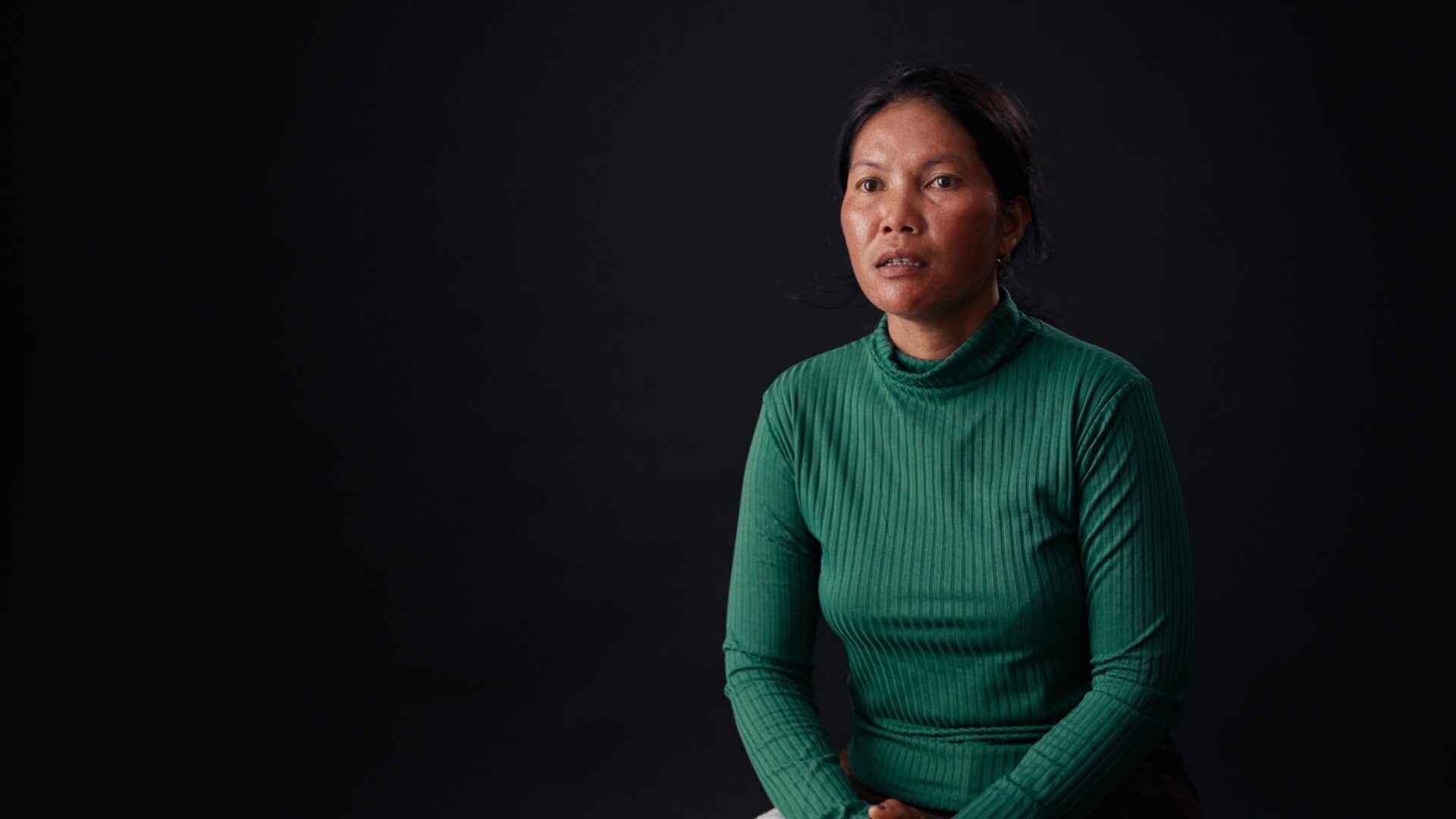
Rochom Sang, an Indigenous Kachok man from Ratanakiri province, said he borrowed $20,000 in 2020 from Prasac Microfinance Institution, which merged with Kookmin Bank Cambodia in 2023 to form KB Prasac Bank. He said he was forced to sell 4 hectares (about 10 acres) of land in 2025 after the lender’s staff repeatedly pressured him to repay. KB Prasac Bank did not immediately respond to a request for comment.
Sang told CamboJA News that investors’ attempts to avoid responsibility were unacceptable.
“This issue affects me personally; I really sold it all and have no land left to farm,” he said. “Those investors said they invested to reduce poverty, but there is no poverty reduction. It only increases poverty further.”
Sang said he also met with the National Bank of Cambodia to discuss his case, but no solution was reached. He called on the investors and the central bank to take responsibility and help resolve the issue.
The National Bank of Cambodia did not immediately respond to a request for comment.
Am Sam Ath, operations director of Licadho, said the documentary highlights what he described as a lack of accountability among foreign investors, including the IFC.
“We see that all of them seem to care only about profit, without considering the resulting issues or human rights violations stemming from their investments,” he said.
He warned that human rights violations and other problems would continue if investors failed to follow their own principles, policies and investment conditions.
Sam Ath urged domestic and foreign investors to work with relevant institutions, particularly the central bank, to protect borrowers’ rights. Where violations occur, he said, investors and financial institutions should be held accountable and the cases resolved through legal channels.
Note: This story has been updated to include comments from Cambodia Microfinance Association spokesperson Kaing Tongngy and to note that Thomas Cristofoletti also spoke on behalf of Robin Narciso, his co-director on “Debt Inc.”