
Thai authorities unilaterally cut border crossing hours on the morning of June 9 at Boeng Trakoun checkpoint, leaving hundreds of Cambodian workers and small traders in limbo. Many fear the ongoing disruption could threaten their livelihood and deepen hardship in already-vulnerable communities.
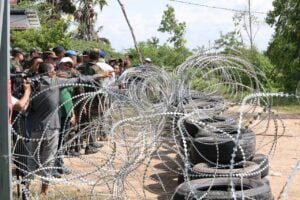
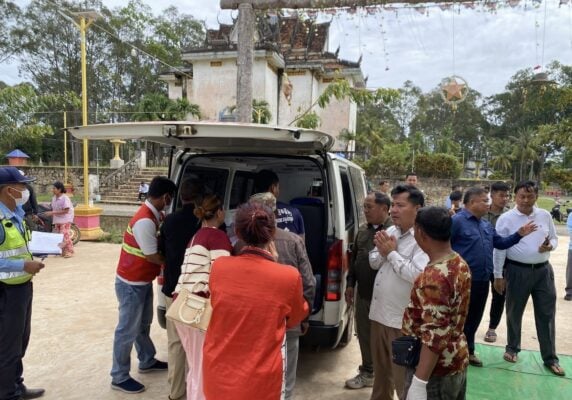
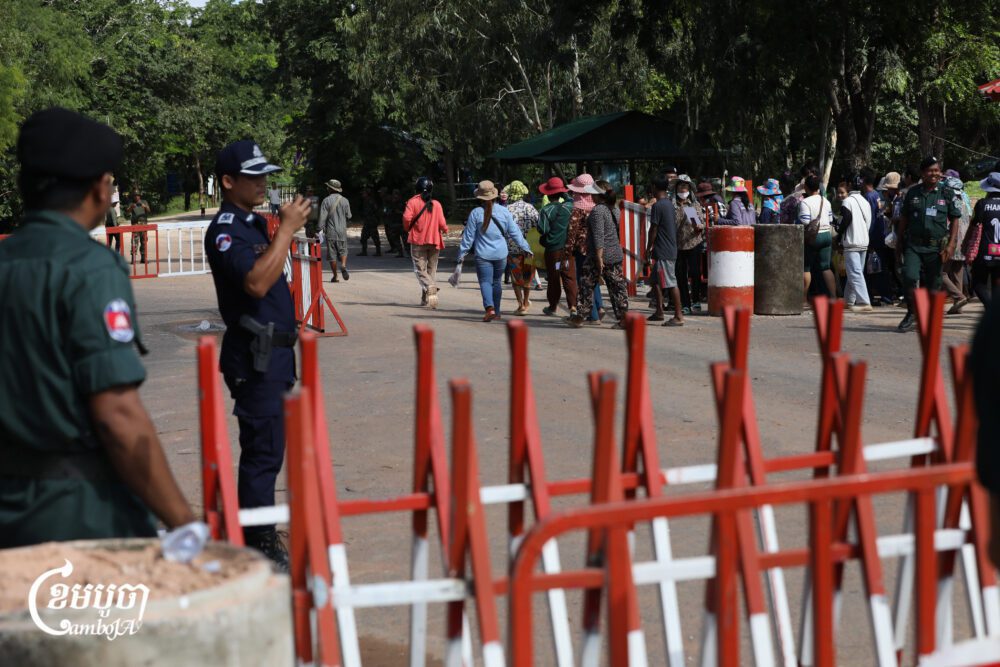
At the Boeng Trakoun border checkpoint in Thma Puok district, Banteay Meanchey province, approximately 200 people were seen waiting to complete the border crossing procedures to enter Thailand.
They were mostly blue collar workers such as hairdressers, construction workers, cassava field workers, and food vendors, who raised concerns about the Thai side closing the crossing after unilaterally changing the operating hours.
Sophanna, 47, originally from Siem Reap province, said she has been working in a hair salon in Thailand for more than 10 years, and is worried about the dispute between Thailand and Cambodia.
Boeng Trakoun is one of the main border gates for villagers and other people to cross to Thailand to sustain a livelihood for their family.
During the confrontation with Thailand, Sophanna returned to Cambodia for a while before deciding to go back to her daily job on Monday, hoping that the situation would resolve peacefully and that everything would go back to normal.
“I don’t know what is going to happen next, but I decided to go back to Thailand today. This issue is actually affecting small vendors like us and those on the Thai side. None of us can earn like before,” Sophanna said before crossing into Thailand.
“I want to see a peaceful negotiation because we are small vendors. We are already struggling to live,” Sophanna said, adding that she earns 300 baht to 1,000 baht (37,000 riel to 123,000 riel) daily, but it is less than that sometimes.
Since the conflict, her hair salon has not had many customers. If the situation worsens, she plans to return to Cambodia, but is not sure what she could do for a living.
“We all rely on the gate [being open], so when the border issue occurred, some of the workers did not have enough food to eat. We have never faced such difficulties in the past,” Sophanna said.
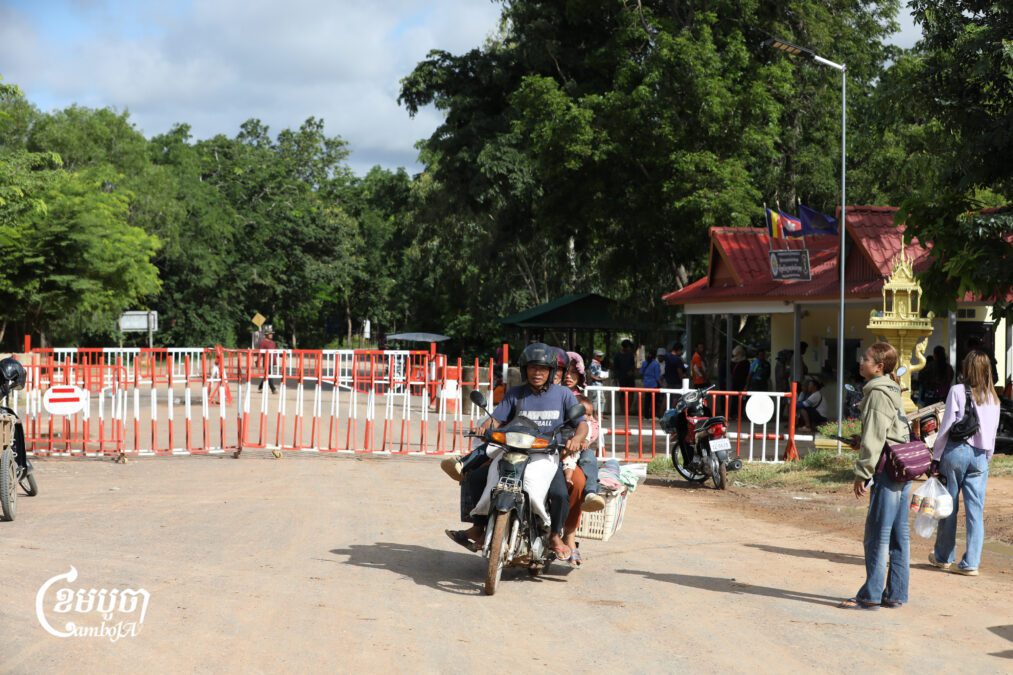
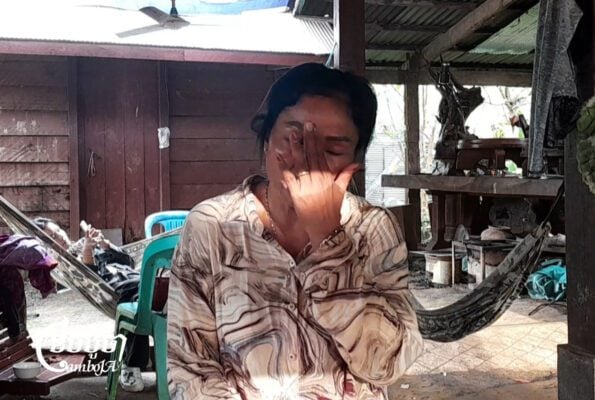
Earlier this morning, another villager, Roeun Ay, 32, told CamboJA News that she was waiting for the border to open as she needed to cross to Thailand to buy things to sell in her village, which is her main source of income. She travels to Thailand daily.
Ever since the change in operating hours, small vendors from both sides have recorded low income, she remarked.
“I buy various foods and products from Thailand to sell in my village. Many of us buy from Thailand. So, please don’t have a conflict because those who are most affected are vulnerable people like us,” she said, hoping the negotiation is smoothly resolved. “Please pity us, think about vulnerable people like us.”
Nhev Thy, 50, was seen hurrying to cross the border to get to her job as a cassava plantation worker in Thailand, where she makes 250 baht (about 30,000 riel) a day, after moving there with her family almost 20 years ago.
Due to changes in the Thai entry and exit timing and visa, she was worried about staying and working in Thailand. Every seven days, she would have to return to the border to renew her border pass. Her children live and study in Thailand.
“We are worried about this issue. If one day they deny entry, we will have to think about the next step but until then we just want to have enough to eat to survive the day. So, we don’t want a conflict,” Thy said.
An officer of Boeng Trakoun Border Checkpoint, who declined to be named, said Thai authorities open the checkpoint at 8 a.m and close it at 12 p.m while the Cambodian side opens the gate at 9 a.m and closes it at 12 p.m.
“The Thai side unilaterally closed the checkpoint without getting a decision from the Cambodian side first,” the officer mentioned. “The information from the Thai side is not clear because they unilaterally implemented it.”
He said the change in operating hours has affected those who cross the border for work or to buy goods in Thailand.
“It really affects their earnings and both countries’ economy,” the officer said, declining to elaborate further about the impact.
Normally, there are 200 to 300 Cambodians entering and exiting the checkpoint daily. They work in Thailand as cassava and sugar cane farm workers while others buy back things from Thailand.
“Most of the goods which go through this checkpoint are cement and grocery,” he said.
Police officers at Boeng Trakoun Border Checkpoint declined to comment and referred questions to civil officers at the checkpoint.
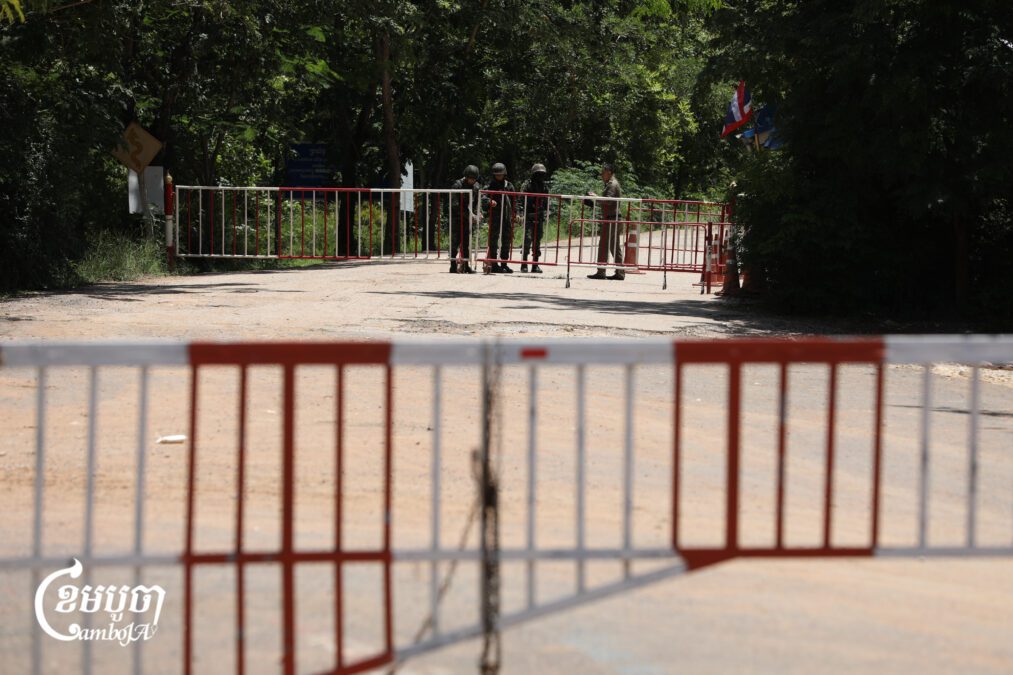
Nhean Lanh, deputy Banteay Meanchey provincial police chief, who helped to administer control at the checkpoint, declined to comment.
Hundreds of Cambodians entered Thailand when the border gate opened at 9 a.m., but between 10 a.m and 12 p.m., not many crossed the border, a police officer told CamboJA News.
Most of them work in Thailand or buy small amounts of goods to sell in Cambodia, he said, noting that the short hours have forced some of them to rush back before the border gate closes.
According to Thai media, a few shops in Thailand have displayed signs barring Cambodians and warning that “they will be harmed if they try to enter”.
Former Prime Minister Hun Sen, who is the current Senate President, pointed out that Cambodia exported more than $1.1 billion worth of goods to Thailand and imported $5.2 billion of goods in 2024, meaning Cambodia’s trade deficit with Thailand was more than $4.1 billion.
In the first five months of this year, Cambodia exported goods valued at over $200 million to Thailand, while imports from Thailand were around $1.5 billion, he said.
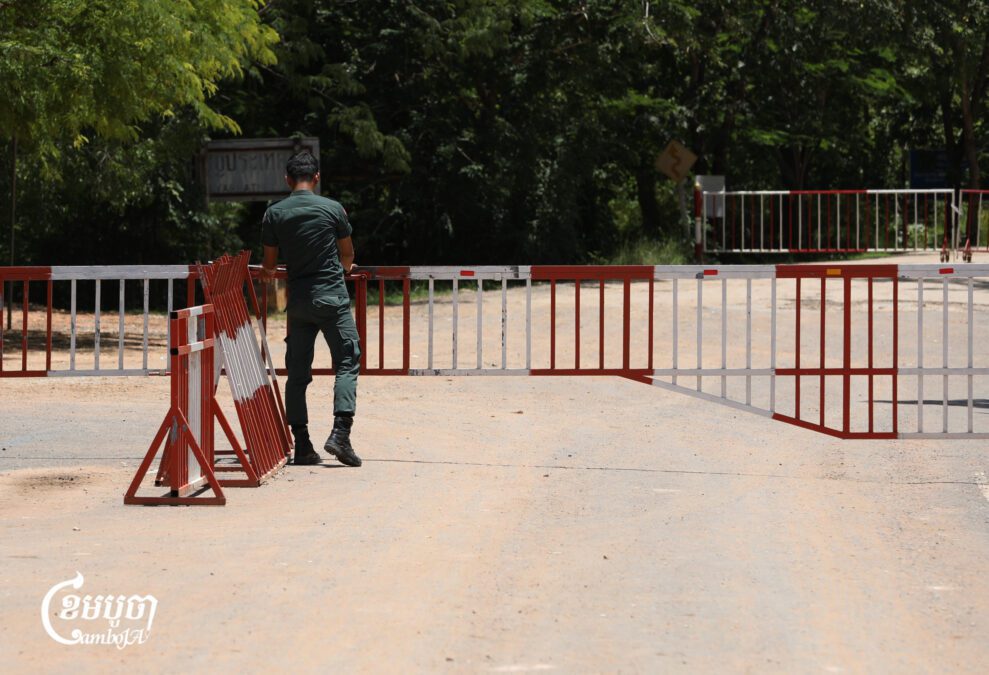
In a latest development, the Ministry of National Defense said Cambodian and Thai military forces met on June 8, deciding to adjust the forces of both sides to return to appropriate areas to reduce the tension and confrontation along the border.
Amid the tension, the Joint Boundary Committee (JBC), a long-standing mechanism for resolving border disputes, is scheduled to discuss the issue in Phnom Penh on June 14.
Cambodia’s Ministry of National Defense issued a press release on June 9 stating that troops have not been withdrawn from areas within its sovereign territories — where the Cambodian army has stationed for a long time.
According to the ministry, preparations by the Cambodian army, including stationing, deployment, and adjustment and mobilisation of forces, are within its jurisdiction and are carried out to defend Cambodia’s territorial integrity.