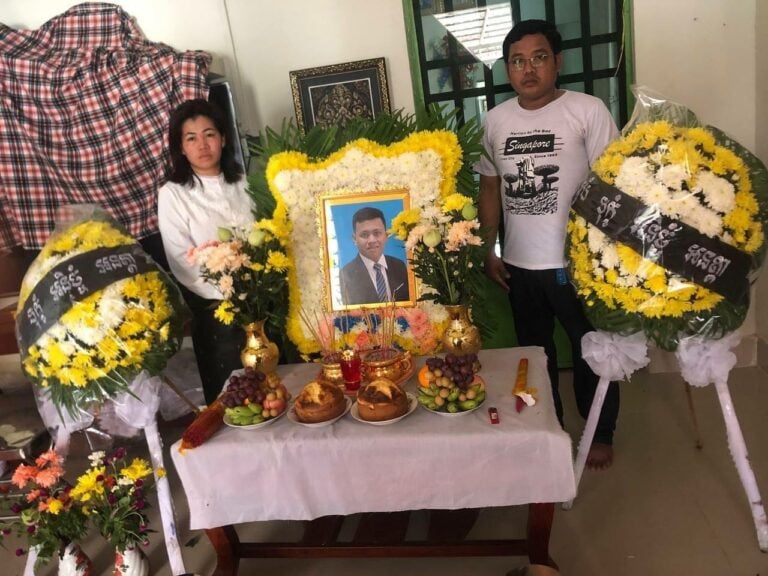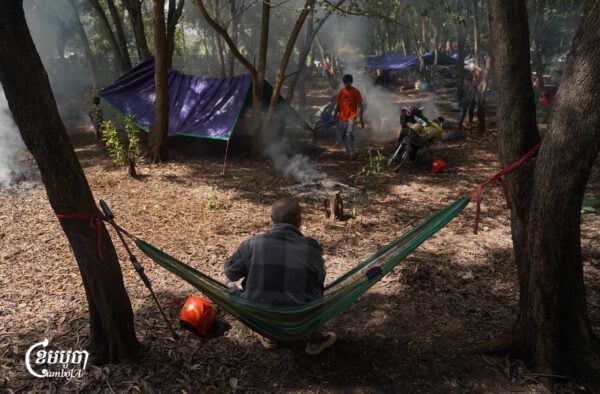

The commeration of National Day of Remembrance on May 20 honors those who died when the Khmer Rouge regime began the 1975 genocide where millions were killed in nearly four years they ruled the country.
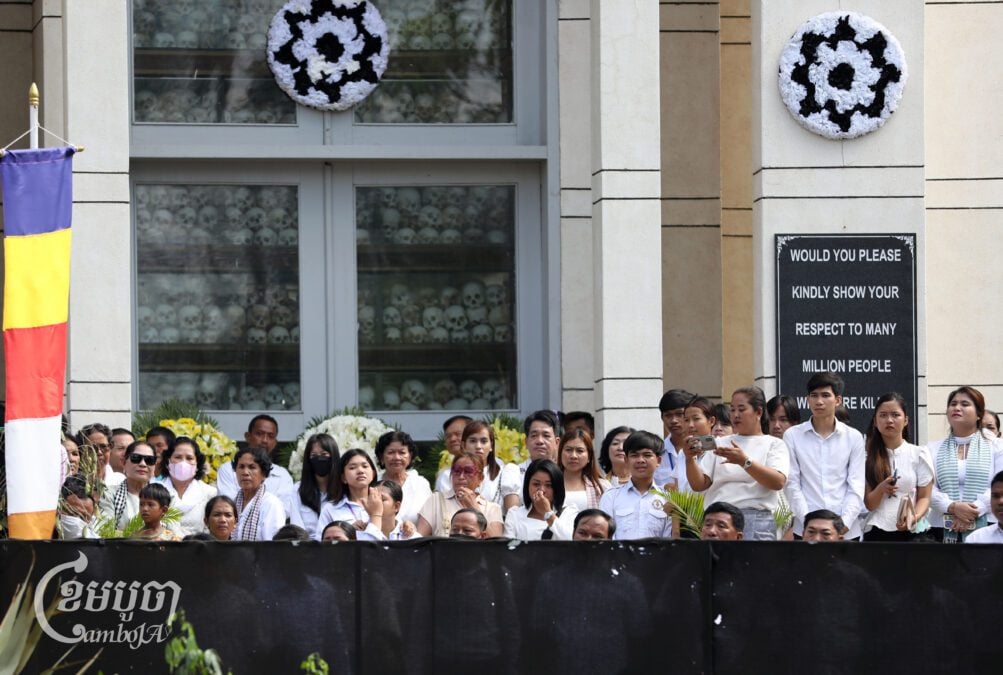
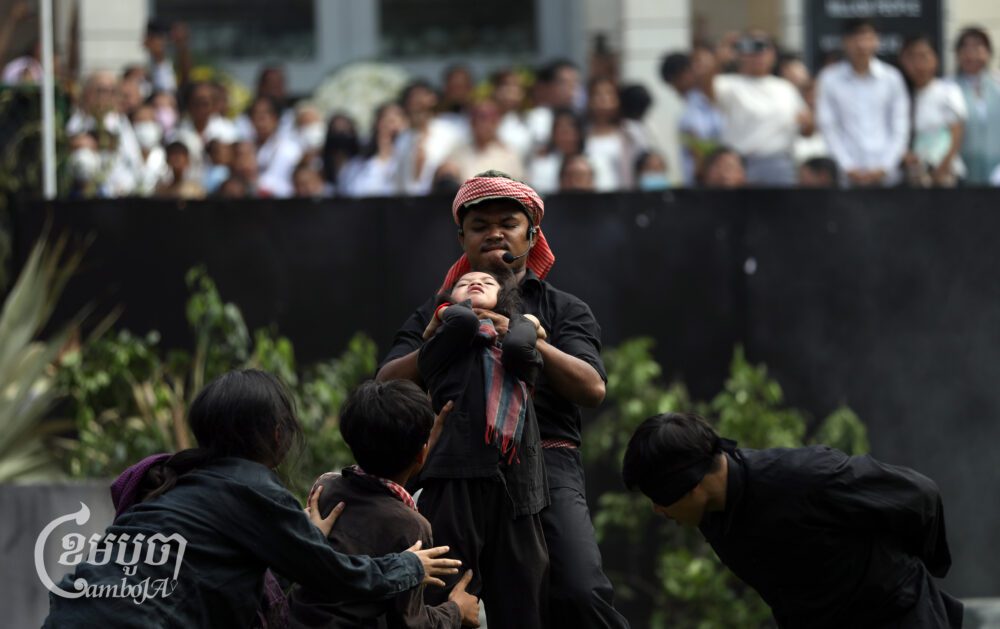
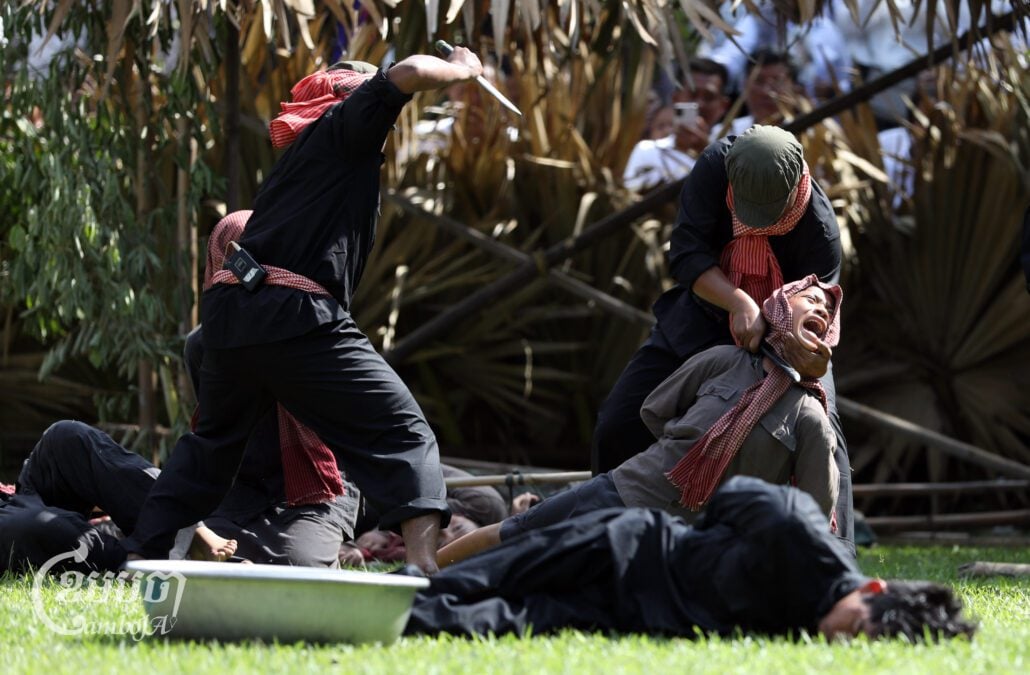
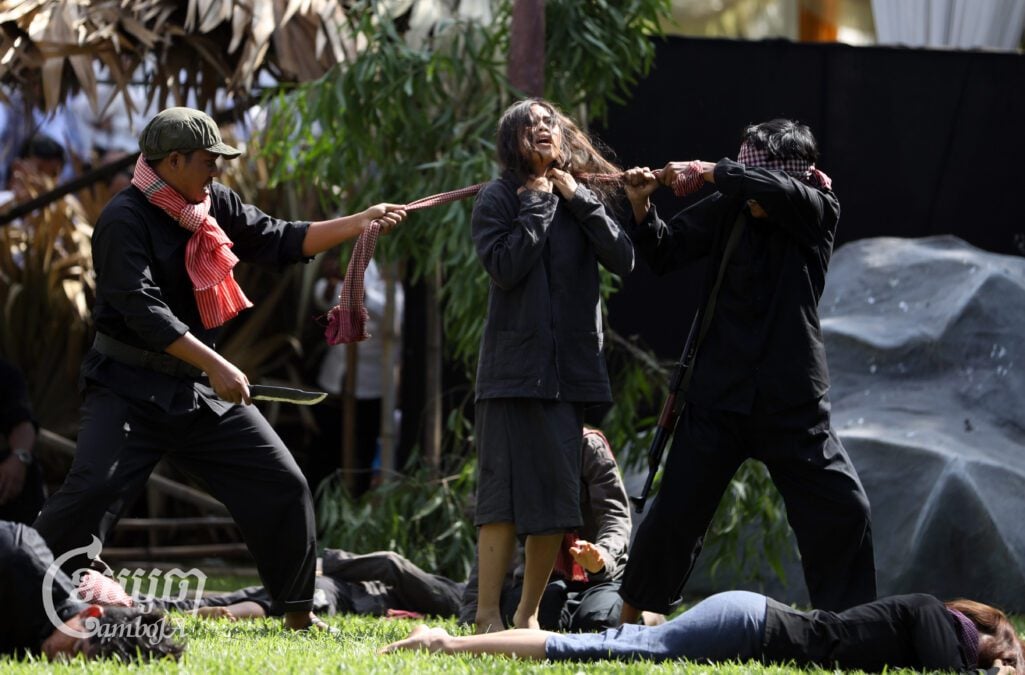
In the annual ceremony, a dozen actors dressed in black lightweight suits, red kramas and caps, carrying AK-47 assault rifles, re-enacted harrowing scenes of violence under the Khmer Rouge regime on the grounds of Choeung Ek Genocidal Center in Dangkao district, Phnom Penh on Tuesday.
At the event, hundreds of locals, including monks, government officials, as well as Phnom Penh Municipal governor Khuong Sreng, bowed their heads in prayer for the souls of those who lost their lives during the Pol Pot’s regime. About 1.7 million people died from starvation, torture, execution and forced labor.
Sreng read out a message from Prime Minister Hun Manet, stating the purpose of National Day of Remembrance, which was to honor the victims who died throughout the Democratic Kampuchea regime. The commemoration is meant to pay respect to the honor and dignity of victims, as well as to remind people that such brutality will never happen again.
Ouch Sim, 63, a farmer, who attended the event, told CamboJA News that she was a teenager at the time; forced to leave Phnom Penh to join the “Children’s Mobile Unit” in Battambang province, which was a labor force comprising children who worked in the fields.
“[It] was a very painful [experience] being in the children’s mobile unit. Anyone who picked up an orange would have a plastic bag put over their head, making it hard to breathe, their hands tied and hung upside down. I saw that with my own eyes,” she said.
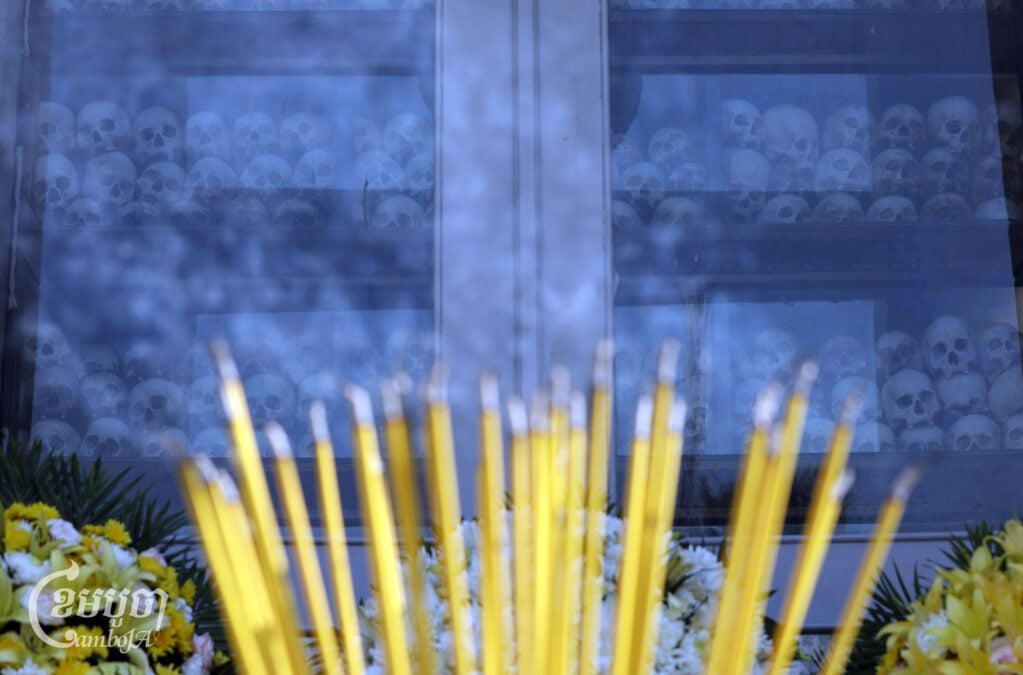
“I feel pain whenever I think back […] and when I came here [Choeung Ek Genocidal Center] and saw the skulls, the pain felt even worse,” Sim said.
She described the children’s units as groups of children who were separated from their parents and were forced to carry out work such as working in the fields, growing crops, taking of livestock, and collecting animal manure for agriculture fertilizer.
“Children were forced to pound the soil with hammers even at midnight. After I finished work in the children’s unit, they assigned me to carry dirt. I was given only one ladle of rice porridge mixed with corn. There was never enough food to eat,” she recalled.
“The Khmer Rouge regime was very cruel, [they] used their power and caused great suffering to the people. We will never forget this in our lifetime,” she continued.
She returned to Phnom Penh after the fall of Khmer Rouge in 1979.
Morn Srey, 62, who was also at the event, shared a similar experience during the Pol Pot regime, when she was forced to join the children’s unit in Battambang.
“When I was sent to Battambang, It was extremely difficult. They starved us, didn’t let us eat, and many people died. They gave only one tablespoon of rice [to share with] three people. Sometimes we were only given rice husks to eat,” she said.
She felt traumatised from having to eat porridge everyday, and given rice only once a year.
“I have not eaten porridge since then because I feel traumatized [of the food],” Srey said, adding that she does not want the dark regime to return as citizens are enjoying a peaceful life now.
The Day of Anger, first staged in 1984, was originally known as The Day of Hatred Against the Genocidal Pol Pot-Ieng Sary-Khieu Samphan.
After 1993, the government changed it to The Day of Remembrance, and in 2018 when the government declared it a national holiday, it was renamed the National Day of Remembrance.
Documentation Center of Cambodia executive director Youk Chhang described the Extraordinary Chambers in the Courts of Cambodia (ECCC) proceedings of the head of state Khieu Samphan and deputy communist party secretary Nuon Chea Khmer Rouge leaders as a “matter of satisfaction”. He said it could also be taken to mean “justice” in the quest for genocide justice in Cambodia.
“After 16 years of the ECCC proceedings, it shows that it has a limitation. We faced a narrow jurisdiction,” he said.
However, he believes that the ECCC process is a crucial step in justice for Cambodian genocide survivors despite its “limitation” and “imperfections”.
“The ECCC’s experience pushes us to continue the journey to invest in historical memory, genocide education and justice in Cambodia,” he said.
The UN-backed Khmer Rouge Tribunal convicted Samphan and Chea, who were sentenced to life, after being found guilty in 2018 of genocide crime against humanity, and ethnic Vietnamese in Cambodia. Chea died in 2019.