Listen to the audio version of this article (generated by AI).
UPDATES:
Update: Cambodia reaffirmed its commitment to end people’s suffering, prevent destruction and protect territorial integrity, said Cambodian People’s Party president Hun Sen on the 47th anniversary of Victory Day.
“Cambodia will not make any concession on its sovereignty,” he remarked, referring to Thailand’s “brutal aggression” against Cambodia’s territorial integrity along the border.
“I ask every compatriot to continue promoting the spirit of patriotism, self-reliance and self-effort and strengthening ownership to ensure the protection of our nation,” Hun Sen said in a statement on Wednesday.
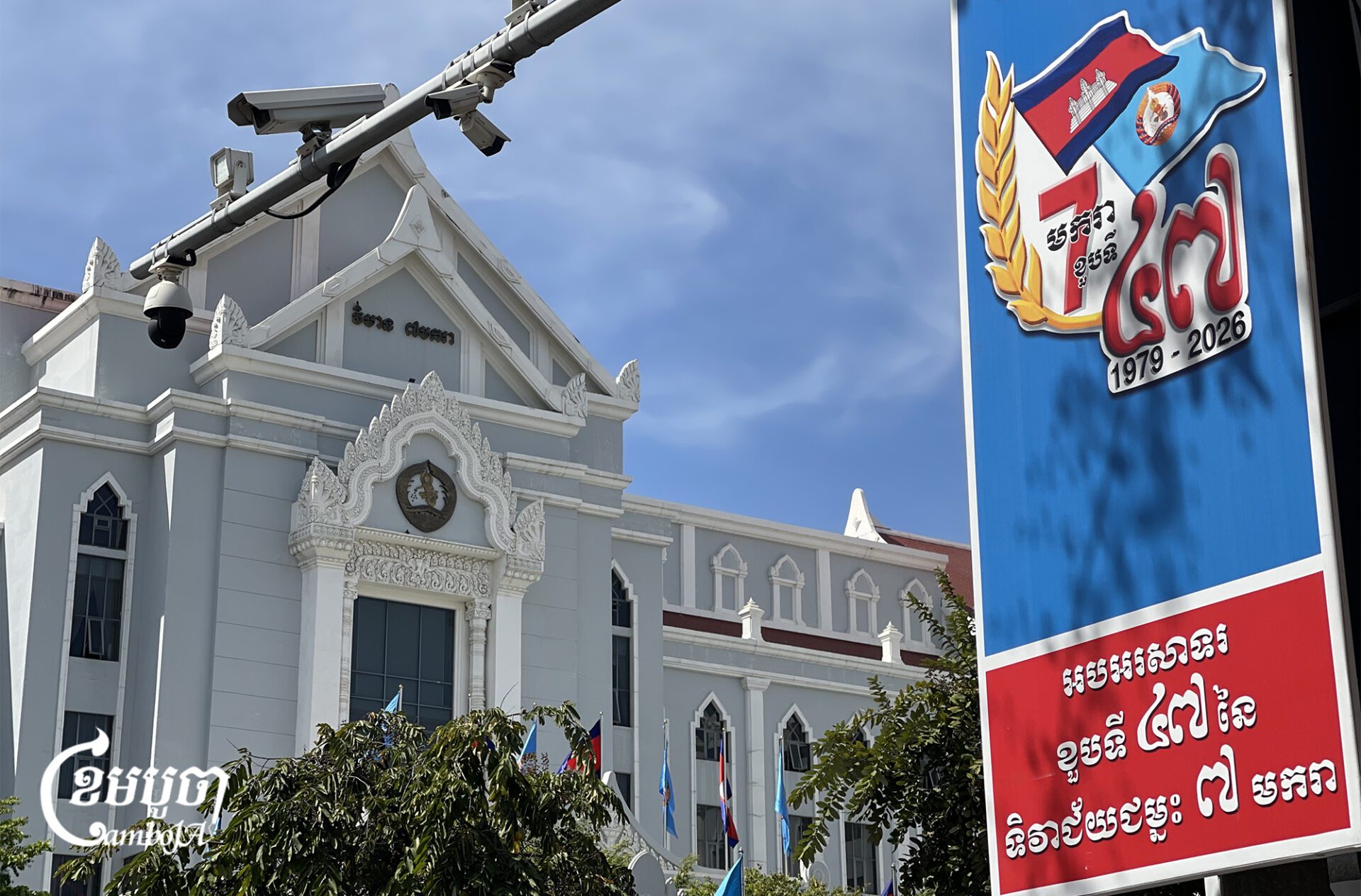
The Cambodian People’s Party (CPP) has decided not to celebrate the 47th “Victory Day” anniversary, also known as “7 January” given the ongoing conflict with Thailand.
The anniversary, which commemorates the fall of the Khmer Rouge regime, is viewed as politically sensitive and continues to draw criticism from liberal and opposition parties in Cambodia.
The anniversary is usually held on January 7 at the CPP headquarters in Phnom Penh but cancelled this year because of the conflict with Thailand which led to the displacement of over 640,000 Cambodians.
“Due to the conflict and Thailand’s invasion, we would not organize the annual event. Instead, we will only deliver a political message from party president Samdech Techo [Hun Sen],” ruling CPP spokesperson Chea Thyrith said.
The anniversary celebrates the victory over Khmer Rouge on January 7, 1979.
On March 18, 1970 a coup by Lon Nol led a peaceful nation into the throes of war, where more than half a million people died. On April 17, 1975, Cambodia descended further into a genocidal catastrophe because of Pol Pot’s regime, according to the Office of the Council Minister.

For opposition parties, however, Victory Day carries a different meaning, as they view it as the day Vietnam allegedly “intervened” in Cambodia.
“Usually, 7 January is the biggest event for the CPP, and it is their right to make decisions,” said Kimsour Phirith, spokesperson for the opposition Candlelight Party.
The ruling CPP has held power for 47 years since the fall of the Khmer Rouge regime. However, Phearith said that democracy and political space was “shrinking” and called for the release of political prisoners.
He also urged the government to reinstate October 23 as a national holiday to mark the Paris Peace Agreements, which united Khmer people and ensured national reconciliation.
The agreements were signed in Paris on October 23, 1991, by 18 nations and witnessed by the UN Secretary-General. They paved the way for the establishment of the UN Transitional Authority in Cambodia, the first national election in 1993, and the adoption of the Cambodian Constitution.
However, he agreed with the decision not to celebrate the event this year because of the conflict.
Ou Chanrath, vice president of the Cambodia Reform Party, echoed Phirith, saying that Khmer people must unite in the spirit of the Paris Peace Agreements.
“While 7 January is a historical event, there are differing views surrounding it,” he said, pointing to Vietnam’s alleged intervention in Cambodia at the time.