Listen to the audio version of this article (generated by AI).
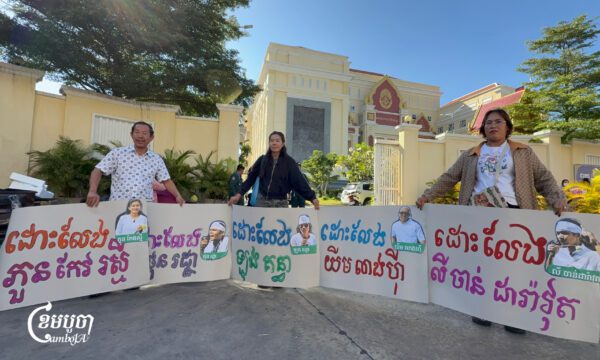
The Supreme Court on Monday ruled against releasing five Mother Nature environmental activists who were convicted of plotting to overthrow the government. Rights groups say that prolonging their detention affects their rights and fundamental freedoms.
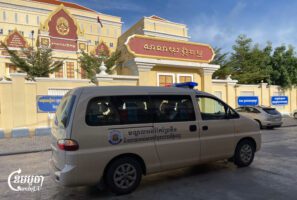
A motion from the activists’ legal team was heard on February 23 requesting their release from prison pending trial at Appeal Court. However, Supreme Court Judge Saly Theara on Monday upheld the verdict of the Court of Appeal, deciding against releasing Ly Chandaravuth, Phuon Keoreaksmey, Long Kunthea, Thon Ratha, and Yim Leanghy. He did not provide any further explanation for the ruling.
“I cannot accept being detained even for one day. As of now, I have been held for 18 months in prison,” Leanghy said outside the courtroom after the verdict.
The activists were sentenced to six to eight years in jail for “plotting” and “insulting the King” after being charged following their arrest in July 2024 when they launched a campaign to protect the environment resources. National and international human rights groups decried the decision, calling it a blow to Cambodia’s civil society.
Pat Reaksmey, Ratha’s wife, expressed disappointment that the court continued to detain her husband, noting that keeping them behind bars would impact the image of the government.
“It is unfair that my husband and other activists were imprisoned for protecting the environment,” she said.
Licadho operation director Am Sam Ath also expressed regret over the Supreme Court’s denial of a motion to release the five.
“Environmental protection is not a crime. They should not be punished for their activism in defending the environment,” he said. “This decision may cause fear in other environmental activities or youth to take part in environmental protection efforts and negatively impact the work of activists and civil society groups.”
CCHR project coordinator Ruos Sarat who attended court, echoed Sam Ath, saying that their efforts to ensure a clean environment and protect natural resources for the benefit of Cambodians would be misunderstood as criminal activities although they expose the state of the environment.
He also noticed that only one of the defendants was present for the entire hearing on Monday, with two others being brought late and another two not brought at all. “This impacts their right to be present at trial, as guaranteed by international law,” Sarath said.
He said that CCHR previously pointed out the significant delay in hearing their appeal trial 19 months since their conviction seriously undermines their right to be tried without undue delay, and right to be presumed innocent.
Licadho recorded 2025 as a dark year for freedom of expression. At least 82 arrests were related to freedom of expression, with 76 people still detained in prisons, as of last December. They were arrested after expressing their opinion, mostly on social media.