Listen to the audio version of this article (generated by AI).
Three years after Cambodia redrew its conservation map, Indigenous communities around Virachey National Park in the northeast are still adjusting to the changes.
In 2023, the government expanded around 20 protected areas nationwide, converting more than 860,000 hectares (over 2.1 million acres) across 14 provinces into protected land. Virachey alone grew to more than 400,000 hectares (about 988,000 acres), up from about 332,500 hectares (nearly 822,000 acres) the year before.
The policy was hailed by the government as a win for biodiversity. But in Ratanakiri province, communities say the changes have come at a cost, with reduced access to land, persistent barriers to securing Indigenous land titles and ongoing legal action against residents.
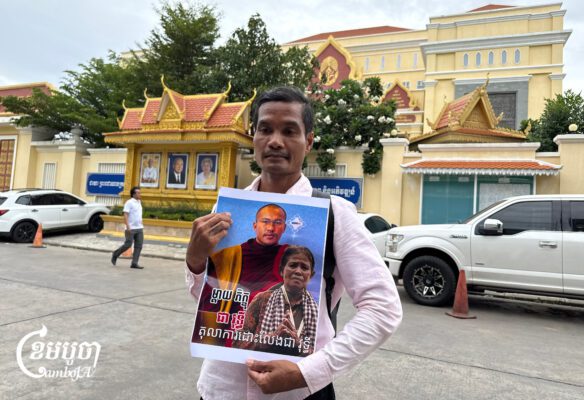
“They [Ministry of Environment officials] accused me of clearing large trees,” said Trin Hip, a 52-year-old Indigenous Brao farmer from Ta Bok village, less than a kilometer from Virachey’s new boundary. “But I only cut small trees on my farmland to grow rice. I farm only on existing land.”
Hip said his family has relied on the same land since his childhood. After the expansion, authorities accused him and others last year of clearing and occupying forest land inside the park when they tried to till it for rice.
A court warrant dated June 5, 2025, which Hip shared with CamboJA News, shows he was charged with encroaching on protected areas. He said he was questioned later that month and released.

About 90 other Indigenous people in Taveng district, which includes Ta Bok, now face legal action for alleged encroachment, with a group of 15 still under court supervision, said village chief Krachhin Cham.
Environment Ministry spokesperson Khvay Atitya did not respond to multiple requests for comment.
Cham said around 120 families in Ta Bok, many Brao, lost access to farmland they had long cultivated after it was absorbed into the expanded protected zone.
Before the expansion, Hip said, his family was self-sufficient. Now, like several other residents interviewed by CamboJA News in March, they rely on seasonal work clearing plantations or collecting cashew nuts.
“We don’t have enough to eat like we used to,” he said.
At the center of the dispute is a lack of land titles for areas where the community has long practiced rotational farming. Indigenous communities in Cambodia often apply for communal land titles for this practice, a process that is complex and frequently stalls, according to Indigenous rights groups.
The Cambodian Center for Human Rights said the government has fallen “far below” its 2017 target of granting collective land titles to 10 Indigenous communities each year. It said only 43 of 458 Indigenous communities had received titles between 2011 and 2024.
Cham said Ta Bok residents began applying for a communal land title after the expansion.
Researchers say the expansion folded tens of thousands of hectares of long-used Indigenous land into protected areas.
Bill Masters, an American Ph.D. student who has researched Indigenous communities in Ratanakiri province for the past three years, said the expansion of Virachey added about 45,000 hectares in Veun Sai and Taveng district, land he described as largely consisting of traditional swidden farms, cashew plantations and sacred sites of Brao, Kavet and Kachok communities.

Based on more than 200 interviews, Masters said most Indigenous land registration efforts have stalled over the past two decades, with only five of 14 proposed communal land titles approved, covering roughly 15% of the land originally claimed. As a result, he said, many communities are now “effectively criminalized” for farming on land they have long used.
Other villages near Virachey face similar pressures amid a lack of land titles.
Phao village chief Kham Daen said his community is attempting to register communal land, but many residents feel intimidated by criminal charges against community members. Requests have been submitted to provincial authorities and the Ministry of Environment, he said.
He said about 500 hectares (around 1,200 acres) of former farmland had been affected, rising to around 20,000 hectares (over 49,000 acres) when including rotational farms and “spirit” forests, areas used by the community for ancestral rituals.
The village leader called on the ministry to return the land, saying it is vital to livelihoods, culture and future generations. Communities were not informed about the expansion, he added, calling it a violation of Indigenous rights.

Masters said about 95% of residents his research team surveyed said they had not received proper information or been consulted before the boundary was changed in 2023.
“More than 90% of people reported being threatened or facing extortion while farming or collecting forest products,” he said. “It is hard to overstate the scale of the crisis Indigenous communities are facing.”
He called on donors and conservation groups to reconsider their support for the expansion.
Local officials have also acknowledged the impacts.
Loy Sothoueng, second deputy chief of Taveng Leu commune, said while the expansion of protected corridors has strengthened forest and wildlife protection, it has also reduced farmland and disrupted traditional practices.
She said newly cleared land from 2023 to 2024 has been confiscated, while older farmland remains. Authorities may measure land for redistribution, and local officials will support communal land registration, she said, urging the government to better protect Indigenous land rights and livelihoods.
When asked about the balance between environmental protection and Indigenous rights, Ratanakiri provincial Department of Environment director Phon Khemarin said the expansion of Virachey considered both.
He declined to answer follow-up questions, saying he was in a meeting. “I would like to say that the government always considers the interests of the people,” he said.
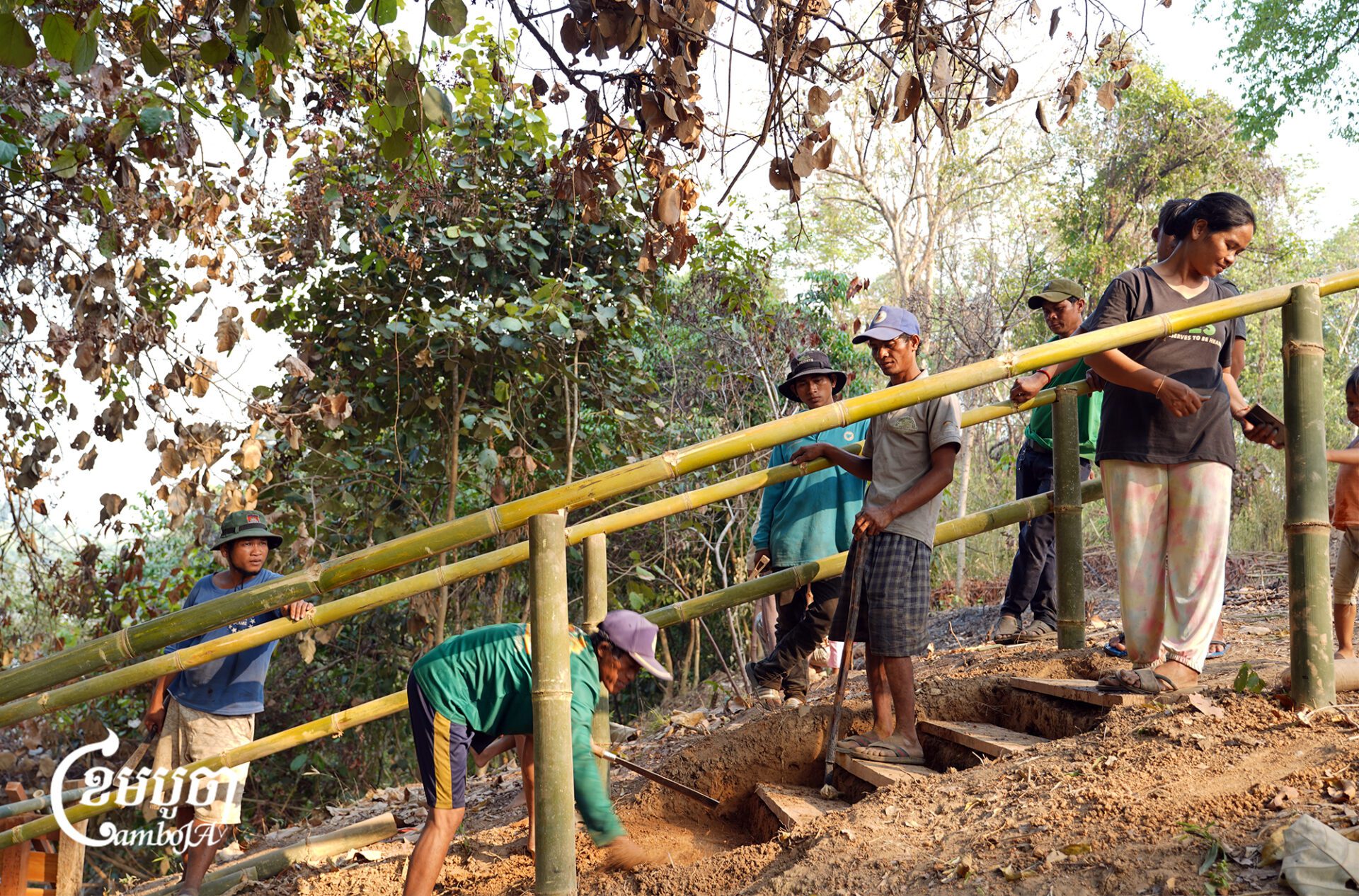
When CamboJA News visited Ta Bok in March, villagers, including Hip, who said they had lost land, were working together on a mixed-crop collective farm near the park boundary and a nearby plowed rice field.
They said they feared authorities would not allow them to use that land for seasonal crops. Authorities meanwhile, have defended the legal action.
Mong Viseth, head of the Virachey park office in Taveng district, said violations occurred when residents, who he did not specify, cleared forest land to claim ownership.
“If they were farming only old land, why would authorities act?” he said.
Thon Soukhon, deputy director of Virachey, said that before the expansion, authorities collected data on farmland used by communities and that there are no plans for further expansion. He said legal action was taken in response to recent encroachment on “newly” cleared land, but noted that communal land titles had previously been registered in Taveng.
A provincial court spokesperson declined to provide details on the cases.
Hip said the uncertainty over land and legal action weighs heavily on him
“Please return land to us so we can farm again. Without [enough] land, we cannot survive. We do not have machinery, only basic tools to work our old fields,” he said. “I live in constant fear of arrest.”