Listen to the audio version of this article (generated by AI).
Cambodia’s State Secretariat of Border Affairs on Thursday rejected a Thai Senate committee recommendation, reported by Thai media, to revoke a decades-old border survey agreement that regained relevance after deadly clashes between the neighbors last year.
Analysts warned the move could undermine stability if it goes ahead.
Thai media said the committee described the agreement, known as Memorandum of Understanding 2000 (MoU 2000), as flawed and accused Cambodia of using improper maps.
In a statement, Cambodia’s border affairs secretariat said the MoU 2000 is a legally binding bilateral agreement registered with the United Nations, obliging both countries under international law to resolve border issues through the Joint Boundary Commission (JBC).
It said the proposal, expected to go before the Thai Senate in April before being forwarded to the cabinet, was driven by “political motives” to undermine “the achievements made by the JBC.”
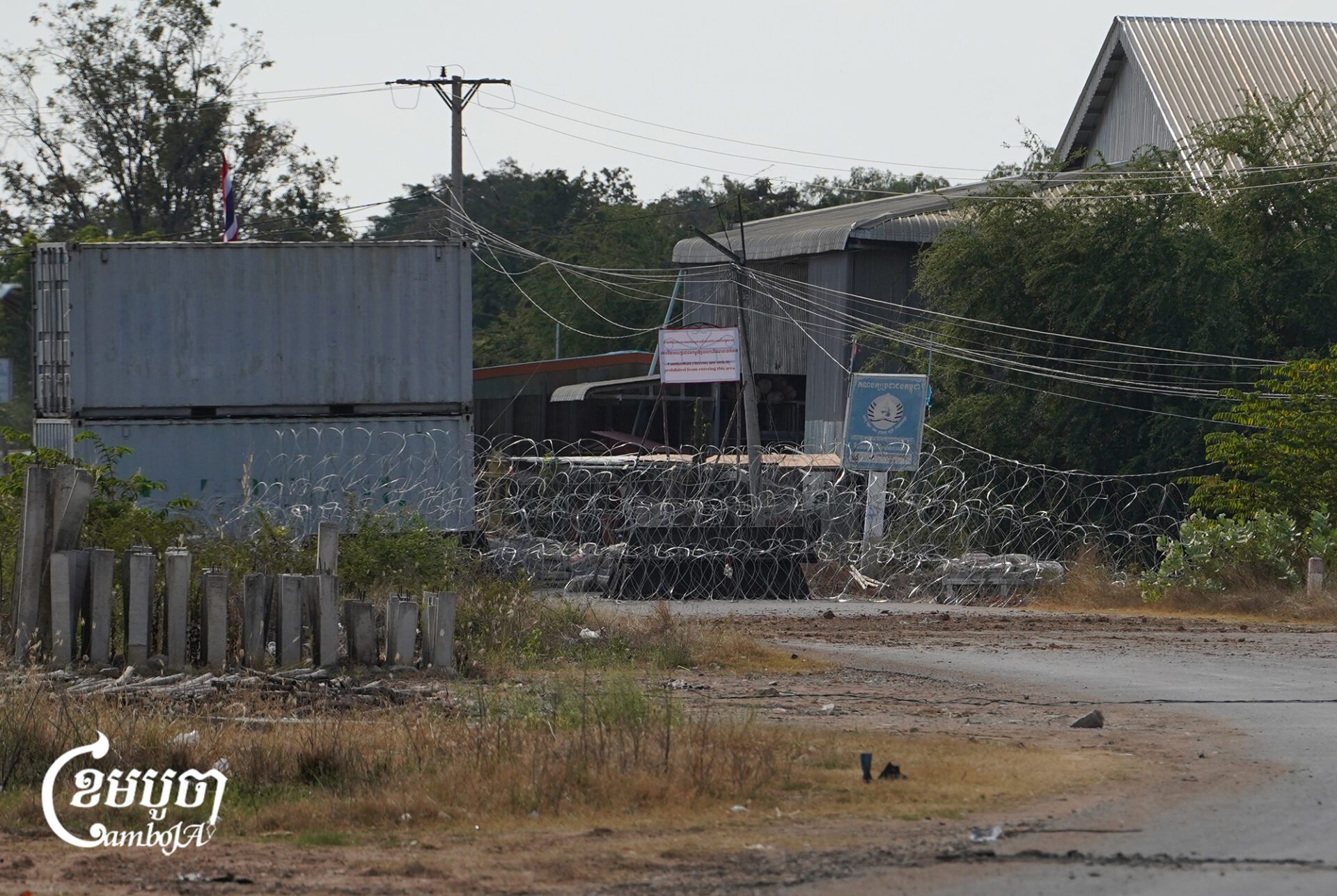
Since a ceasefire in December ended weeks of clashes along much of the countries’ shared border that killed more than 100 people and displaced nearly a million on both sides, Phnom Penh has repeatedly accused Thai forces of occupying Cambodian territory in several border zones and has sought a JBC meeting, which Bangkok has postponed.
Thousands of Cambodians from frontier villages remain displaced, with authorities now building temporary housing for those affected.
Separately, a Royal Thai Army intelligence officer also claimed this week the Cambodian military was stockpiling weapons and did not rule out renewed fighting.
Cambodia’s Defense Ministry spokesperson Maly Socheata said the insinuation that Cambodia was preparing for a return to hostilities was “incorrect and baseless.”
The Thai embassy in Phnom Penh did not immediately respond to a request for comment.
Analysts from both countries say the potential loss of the MoU could be a threat to restoring ties.
Cambodian Asia-Pacific geopolitical analyst Seng Vanly said the tension reflected more than a legal dispute, pointing to a deep divide in “cartographic interpretation” – the differing maps and methods each side uses to define the border – between the two countries.
“I observe Thai conservative factions treating these documents as a historical mistake that concedes too much,” he said.
If the agreement were to collapse, Vanly warned of a legal vacuum in which responsibility for the border could shift from diplomats to local military commanders.
“This is a recipe for disaster, as localized interpretations of the terrain could easily spark accidental skirmishes that neither capital truly wants,” he said.
Echoing that view, Pavin Chachavalpongpun, a Thai professor of politics and international relations at Kyoto University’s Center for Southeast Asian Studies, said without the MoU both sides would have to rely on general international law principles, which do not define exact boundaries.
He described the committee’s proposal as largely symbolic, using a “loss of territory” narrative to pressure the current government.
“My view is that the rhetoric is currently peaked by domestic politics in Thailand rather than a fundamental shift in international diplomacy,” he said.
Chachavalpongpun also raised concerns about how the collapse of the MoU would affect management of overlapping claims in a more than 26,000-square-kilometer area in the Gulf of Thailand believed to hold trillions of cubic feet of natural gas and oil.
An energy crunch affecting both countries and the wider region has heightened the stakes, following disruptions linked to the closure of the Strait of Hormuz amid the U.S.-Israeli conflict with Iran.