Nearly six months after officials recorded the assets of the first residents set to be displaced by the $1.2 billion Funan Techo Canal project, communities say they still have not received updates on compensation or when excavators might arrive.
The uncertainty has left many weighing whether to plant new crops for the season, which for some are a critical source of subsistence.
The Funan Techo Canal, officially known as the Tonle Bassac Navigation Road and Logistics System Project, is a planned 180-kilometer waterway linking a port in Phnom Penh to the Gulf of Thailand.
Originally price tagged at $1.7 billion before being scaled back to $1.156 billion, the canal has drawn contention over environmental and geopolitical concerns.
Since a groundbreaking ceremony more than a year ago, there has been little visible development. This comes as Chinese financial commitments remain uncertain despite strong rhetoric of support but no official figures, and after Cambodian leaders announced that local development firms would take the lead and hold a majority stake to dispel concerns about the canal’s ownership.
While the project faced hiccups at the national level, those living along its planned route say uncertainty is already affecting their lives.
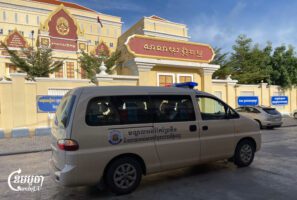
Villagers in Kien Svay district, Kandal province, site of the project’s first phase linking the Mekong to the Bassac river, told CamboJA News that their assets were recorded by officials in April, but they have yet to receive any updates on their compensation package for their expected displacement.
With the planting season approaching, many villages, most of whom are farmers, are now taking financial risks by buying seeds, uncertain whether their crops might be destroyed if construction suddenly begins.
“People are worried because it’s time to plant crops,” said Dim Mech, who has lived along the proposed canal route in Kandal for nearly three decades. “If they buy the seeds and start planting, and then construction begins in November, all the crops will be destroyed. But if they do not plant, they will have nothing to eat.”
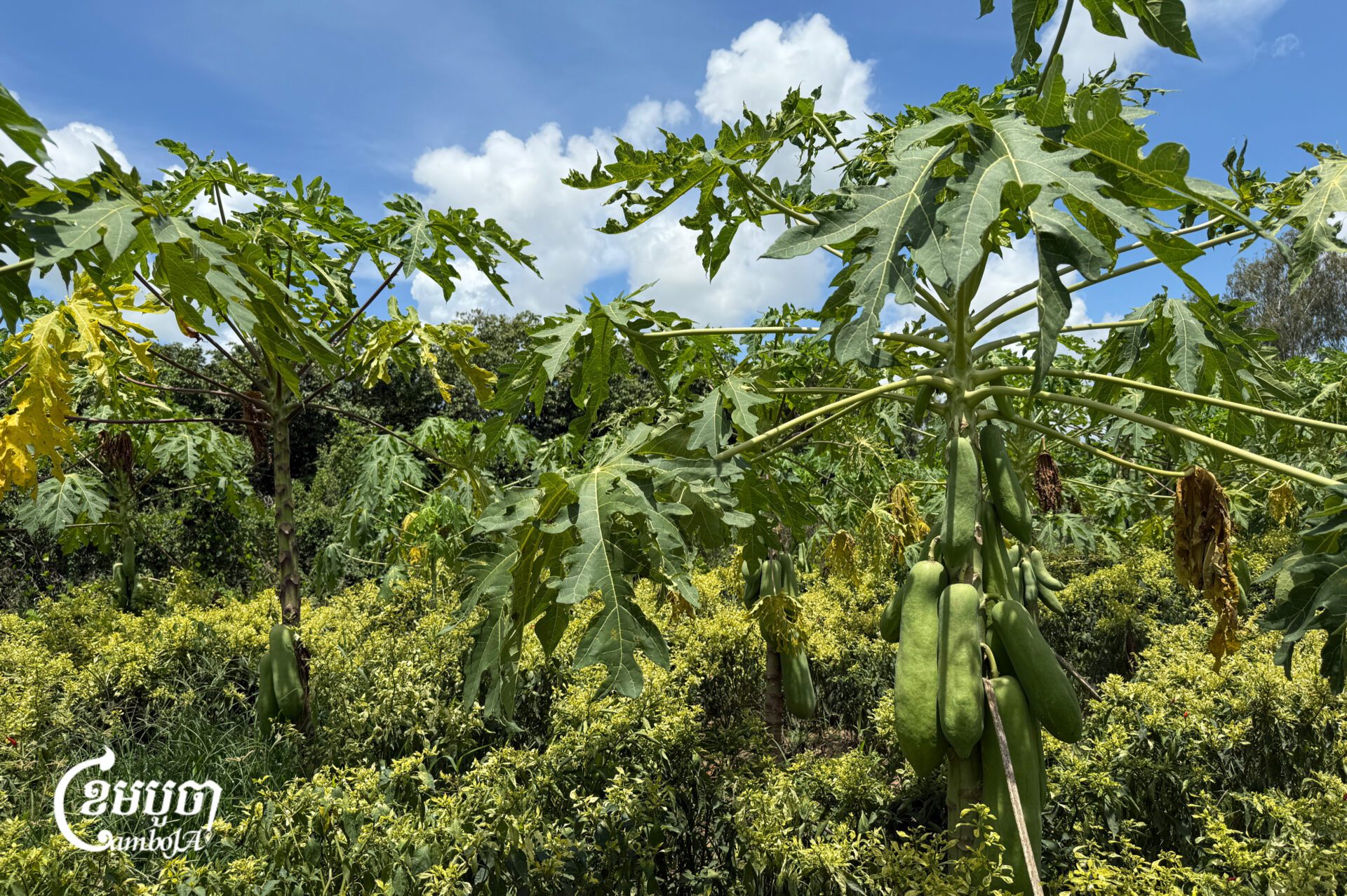
Mech said he and other villagers have heard rumors that construction could start in November, but there has been no official confirmation. The uncertainty, he said, has left residents anxious after spending millions of riels on seeds for crops such as papaya, eggplant and chili. He urged authorities to announce a clear construction date so villagers can avoid further losses from farming investments.
Residents are also worried that new crops planted after the April recording might not be included in compensation calculations.
“We are still in the dark about compensation,” Mech said.

Official communication on compensation has been terse. Deputy Prime Minister Sun Chanthol, who also serves as first vice chairman of the Council for the Development of Cambodia (CDC), said during the canal’s groundbreaking ceremony that thorough assessments had been made to ensure suitable compensation for affected households.
For Kien Svay district resident Tim Tong Eng, more than a year of silence about compensation has left him anxious and having trouble sleeping.
“I just hope the compensation will be fair,” he said.
According to the official Funan Techo Canal Facebook page, construction is planned to begin during the “low-water season at the end of 2025,” with completion earmarked for sometime in 2028.
Demarcation of the route was completed on July 25, with technical teams now reportedly recording properties along the second section, which runs through Kandal, Takeo, Kampot and Kep provinces.
CamboJA News sought comment from spokespersons for the Ministry of Public Works and Transport (MPWT), which handles demarcation of state development projects, and the Ministry of Economy and Finance, which typically manages compensation for households affected by such projects. Neither ministry immediately responded.
A CamboJA News reporter, however, received read receipts on Telegram messages sent to MPWT spokesperson Phan Rim seeking clarity on why residents have not received updates.
“The government should regularly update the public on the project’s progress and timeline, while local residents should also be encouraged to voice their concerns,” said Seang Muoylay, program manager for the Right to the City initiative at Sahmakum Teang Tnaut (STT). He stressed the importance of transparency in state projects.