The Ministry of Health has once again advised Cambodians to get the Covid-19 vaccine and increase their vigilance following concerns about the new JN.1 variant which has seen new cases rise to 21 within two weeks of May.
The concern is that the virus has mutated and has spread rapidly in the world, and most recently in Thailand, with the World Health Organization classifying it as a “variant of interest” given its pace and biological characteristics.
By mid-March this year, the JN.1 variant accounted for more than 15 percent of the Covid-19 cases detected worldwide.
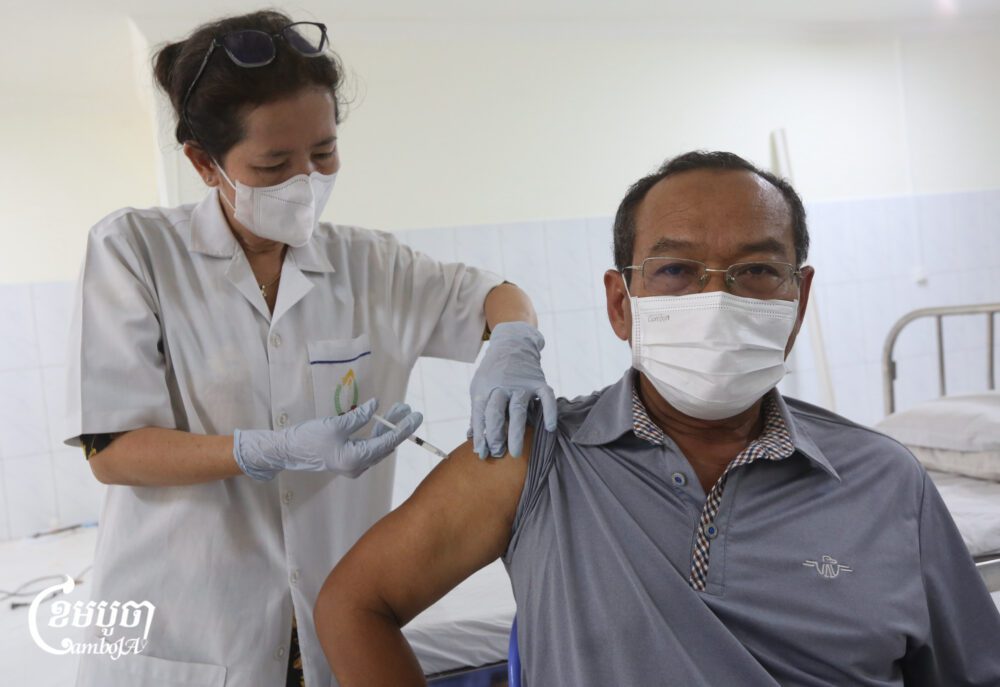
Owing to this, the ministry announced to the public to get vaccinated against Covid-19 and continue to exercise caution, especially high risk individuals who have a propensity of contracting the virus, including those with weakened immune systems, chronic diseases, the elderly, and pregnant women.
The new variant has similar symptoms to previous Covid-19 variants, which are fever, dry cough, sore throat, runny nose, nausea, and vomiting, said the ministry, noting its similarity to the common cold.
However, the ministry stressed that JN.1 is “more contagious, spreads faster, and can easily affect the human immune system”. “Although JN.1 poses a low global public health risk, continued caution is necessary.”
On a Facebook post on May 17, Or Vandine, secretary of state and ministry spokesperson, strongly encouraged people to get their Covid-19 vaccination to mitigate a potential surge, as well as adhere to the “3 Do’s and 3 Don’ts” measures. Her call follows the ministry’s statement on May 12.
“It is essential for everyone, especially those with higher risks, including older adults, individuals with pre-existing health conditions, and weak immunities, to remain proactive, and get vaccinated,” Vandine said.
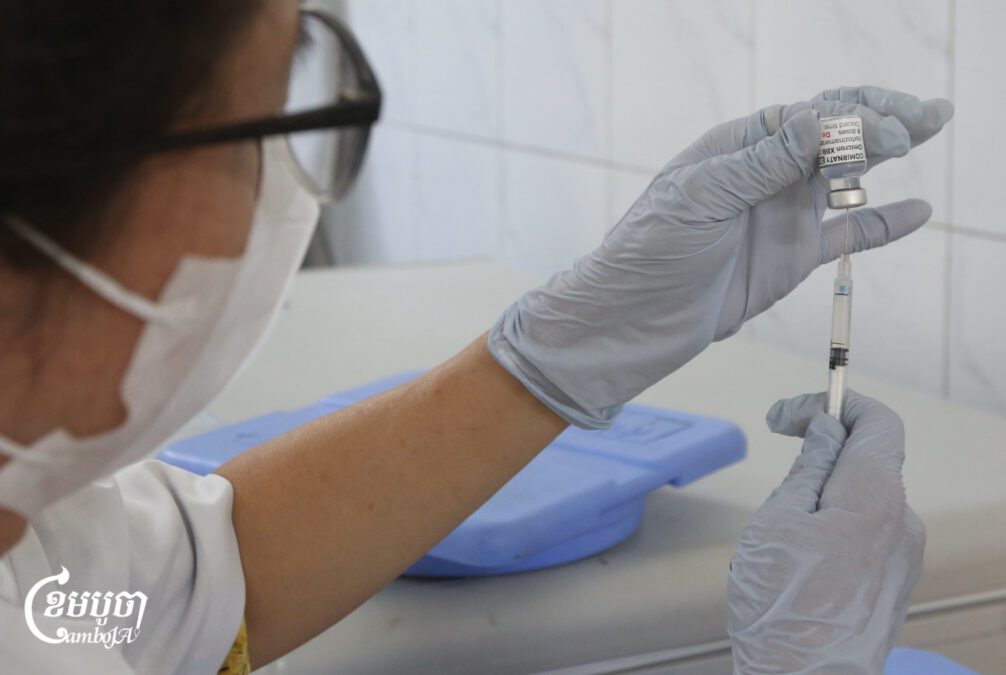
“To safeguard ourselves and the community, especially the most vulnerable [people], from a future Covid-19 surge, everyone should accept the vaccine. The Pfizer vaccine will be widely available in local health centres and state hospitals in every province and municipalities,” she added.
Since the beginning of the pandemic in 2019, around 136,285 Covid-19 cases have been reported in Cambodia, with 3,056 deaths.
The Thai government’s Covid-19 Information Center revealed that 71,067 cases and 19 fatalities were recorded between January 1 and May 14, 2025 in the country, indicating a sharp increase in Covid-19 cases.
Phnom Penh resident Sopheak Kakada expressed concern about the re-infection of Covid-19 due to “careless citizens” who might fail to protect themselves or take care of their health. Kakada believes that the new variant is infectious, and will not only affect public health, but also the economy and children’s education.
The ministry’s announcement is important, she said, adding that people should participate in preventing the spread and protecting themselves, seeing that everyone has experienced the disease. The past experience will make the situation better and not as serious as before.
“We have been through lockdowns in the past, so all people must know how to take care of their health and adhere to the 3-Do’s and 3 Don’ts which have been put in place by the ministry,” Kakada said.

Back in 2020, the UN Development Program said the Covid-19 pandemic impacted the global economy, with the escalating crisis affecting developing countries through a health emergency and severely damaging their social and economic development.
The World Bank also noted the severe disruption to Cambodia’s economic activity in various areas of development and society, especially the education sector.
At the time, students needed stable internet connections via technological devices to access online education. These needs widened the gap between students in rural and urban areas.
According to the Ministry of Education, Youth and Sport, in the 2018-2019 school year, an estimated 210,000 students studied in 1,222 private schools, compared to 3.2 million students in public schools.