
Listen to the audio version of this article (generated by AI).
Prime Minister Hun Manet on Monday urged the Ministry of Labor and Vocational Training to prioritize the quality of technical and vocational education rather than focus on enrollment numbers, stressing that students must graduate with strong practical skills that can lead to employment.
Speaking at the 9th National Technical and Vocational Education and Training (TVET) Day 2026, themed “TVET Provides Skills, Jobs and Income”, he said the TVET’s long-term success depends on the quality of training.
“TVET programs should not focus only on image and quantity,” he said. “We must pay greater attention to quality in order to attract more students to enroll and ensure they gain the skills needed for employment.”
He said quality training begins with qualified teachers, effective lesson plans and strong discipline within institutions.
During an unannounced visit to a training course last week, he said he found setbacks in the way lessons were being delivered. While training materials had been prepared by one group of teachers, instructors who received them were not familiar with the content or had limited experience teaching the subject.
“The most important thing is the preparation by the ministry, preparing teachers clearly and accurately, and lessons thoroughly,” he said. “[We] must ensure the quality of teachers. If the student gains good knowledge, they will be able to get a job and more companies will come.”
To measure the effectiveness of the TVET programs, Hun Manet instructed the Labor Ministry to conduct surveys to determine the number of graduates securing employment after training.
He also urged the ministry to continue working with the Ministry of Education, Youth and Sport (MoEYS) to create more educational pathways for young people and allow students to choose between general education and vocational training based on their interests and career goals.
At the same time, he called the public to shift their perception about vocational education.
“TVET should no longer be viewed as a second choice for weak students,” he said. “TVET skills are equal in value to other forms of education and play an important role in driving economic growth.”
TVET is essential to Cambodia’s economic development, he remarked, noting that the World Bank also highlighted the need for young Cambodians to acquire quality education and skill jobs to help Cambodia become a high-income country.
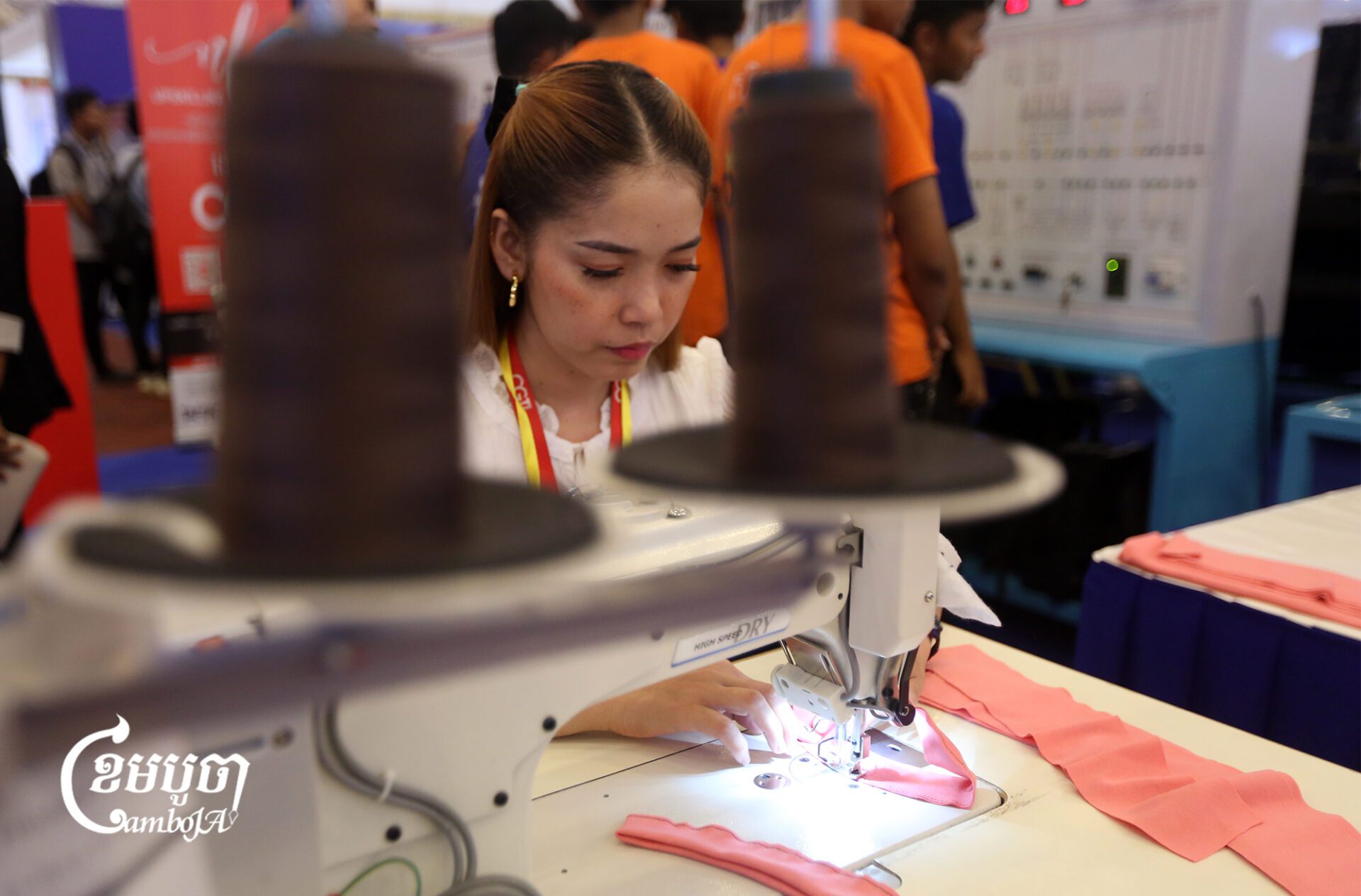
Speaking at the conference, Labor and Vocational Training Minister Heng Sour said there are 262 TVET institutions under their supervision, including 37 public institutions, 201 private institutions and 24 operated by organisations and associations.
About 270,000 youths obtained technical and vocational training between 2024 and May 2026 with more than 85 percent of graduates having either secured employment or started their own businesses.
Sour said the ministry also introduced mobile vocational training units that bring technical education directly to rural communities.
“This mobile training program brings schools closer to the people and ensures that no youth or vulnerable person is left behind because of geographical barriers or lack of transportation,” he said.
The ministry is also collaborating with MoEYS to develop vocational training programs in 49 secondary schools, focusing on accounting and information technology.
Sour described the initiative as a significant step toward integrating general education with vocational training. During the 2026–2027 academic year, the program will expand to five schools located near special economic zones to develop a skilled workforce for local industries.
The ministry is also strengthening partnerships with private sector employers so that students have access to internships and workplace experience.
“The Ministry of Labor will continue collaborating with development partners and the private sector to ensure training programs meet labor market demand and support supply chain development,” Sour said.
For many students, vocational education has offered a pathway to employment.

Chham Lyhour, a student at the Institute of Technology of Cambodia specializing in automobile assembly and repair, said she chose the field because of the rapid growth of Cambodia’s automotive sector.
She acknowledged that learning complex vehicle systems and components can be challenging but said the program has provided valuable hands-on experience.
Lyhour, who received information about the course through her brother and was awarded a scholarship, believes the sector offers promising career opportunities.
“The automotive industry is growing, and these skills are increasingly important,” she said. “It is encouraging to see more promotion of technical skills and greater support for women entering the field.”
Another student, Phen Sivma, who studies at Pour un Sourire d’Enfant (PSE), said that coming from a low-income family, vocational education has given her hope for a better future.
“I am confident that I will be able to find a job because the school works closely with private companies and has internship opportunities,” she said.
Sivma encouraged young people from disadvantaged backgrounds not to abandon their education.
“We can find opportunities by searching for information online, including short vocational courses,” she said. “TVET offers many options, including short-term programs and long-term courses that can help us gain skills and find employment.”
Economist Ky Sereyvath, and director of the Institute of China Studies at the Royal Academy of Cambodia, said TVET plays a vital role in improving workers’ skills and productivity – essential for economic growth.
“TVET plays an important role in increasing the value of production,” he said.
Sereyvath noted that public interest in vocational training was limited in the past because skilled and unskilled workers often earned similar wages. As demand for skilled labor rises, people are recognizing the value of technical training, although there should be increased efforts to encourage young people to pursue TVET.