Listen to the audio version of this article (generated by AI).
Former opposition Nation Power Party (NPP) leader Sun Chanthy is uncertain about returning to the political arena as he is not clear whether his royal pardon restores his political freedom after his right to stand for election was stripped by court.
Chanthy was released from prison on February 25 this year after a royal pardon was granted, quashing his conviction for inciting social disorder in 2024.
“I just received information that my release is related to a Royal Pardon by the King, but I have yet to see the official document,” he said.
He served two years of his sentence, as well as receiving an additional sentence depriving him of his right to stand for election.
“Regarding that [the deprivation of citizen rights], I cannot yet confirm whether I will be able to return to the political arena,” Chanthy said.
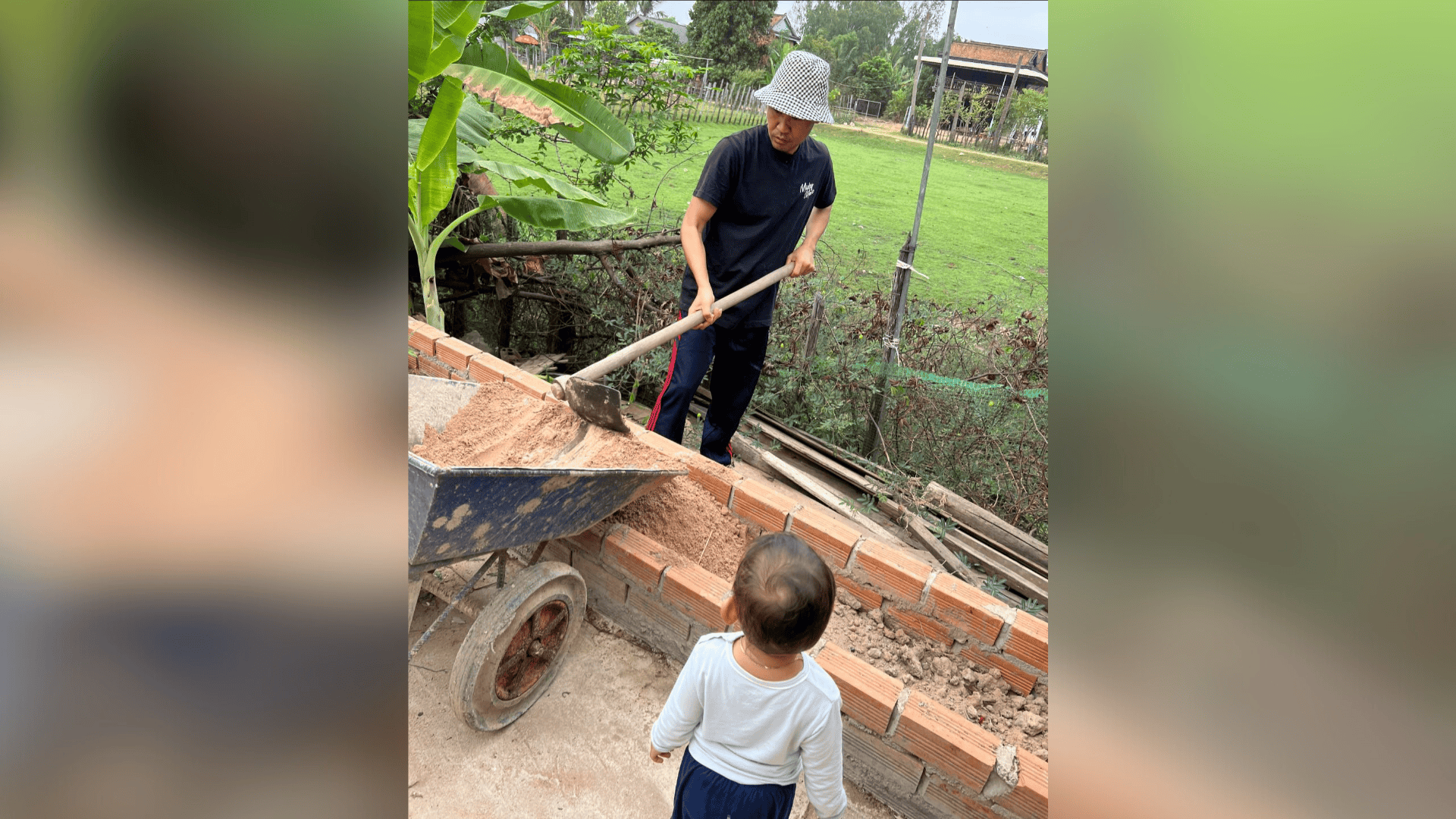
“I am now reunited with my family and I plan to engage in agriculture by growing cassava and other crops to support my livelihood,” he told CamboJA News.
“I have served nearly two years in prison. I was unable to help my family during that time. I want to spend some time with my family now,” he said.
Chanthy was arrested in May 2024 at the Phnom Penh International Airport upon returning from Japan where he had met Cambodian migrant workers. The charges stemmed from social media posts criticizing the ruling Cambodian People’s Party, including its policy on issuing IDPoor cards. The card allows low-income citizens access to free medical care and other welfare benefits.
Furthermore, he said, he is facing another charge of plotting, with a hearing set for February 12 but was deferred to a later date. “After I clarify my case with the court, I will publicly announce my stance,” he said.
Chanthy added that he lost control of the party’s legitimate structure while he was in prison, and that the party has elected a new leader in accordance with its party statute.
Korn Savang, monitoring and advocacy program coordinator at Committee for Free and Fair Elections in Cambodia (Comfrel), explained that when the King grants a royal pardon, it means the individual’s conviction is nullified.
“When a verdict becomes final and effective, a royal pardon ends all related legal consequences.”
He observed that political parties are facing challenges related to the arrest of their activists and various charges, calling for a better political environment and for authorities to stop harassing political activists and opposition figures.
“Relevant parties, especially the government and the ruling party, should reconsider their actions and help create a better political atmosphere to ensure free and fair commune elections, particularly with regard to the right to freedom of expression and right to engage in political activities.”
Kin Phea, director-general of the International Relations Institute at the Royal Academy of Cambodia, said a royal pardon is granted at the request of the prime minister following a review by the Ministry of Justice of prisoners who have served two-third of their sentence.
Prisoners cannot directly request a pardon, he said. Instead, the Justice Ministry reviews the prison term and reports to the prime minister, who then seeks a royal pardon from the King.
NPP adviser Rong Chhun expressed that the new charge of “plotting” against Chanthy is another obstacle preventing him from engaging in politics.
“We have seen that his activities do not reflect the plotting charge. I have known Sun Chanthy, and his only purpose is to promote free and fair elections,” he said.
He pointed out that both national and international observers have criticized legal measures against opposition activists as “politically motivated.”
Chhun said that the party would welcome the return of Sun Chanthy if he is ready to continue his political activities.
Cambodia ranks low on international scorecards measuring civic space and the rule of law.
Rights groups have criticized incitement charges as being “vague” and “overly broad”, and for being used to stifle dissent. Licadho has listed 97 “prisoners of interest” in Cambodia, including politicians, environmentalists, activists, unionists and journalists, who remain in jail on what it says are “unfounded charges that criminalize their activism or speech”.
Justice Ministry spokesperson Seng Dyna could not be reached for comment.