Listen to the audio version of this article (generated by AI).
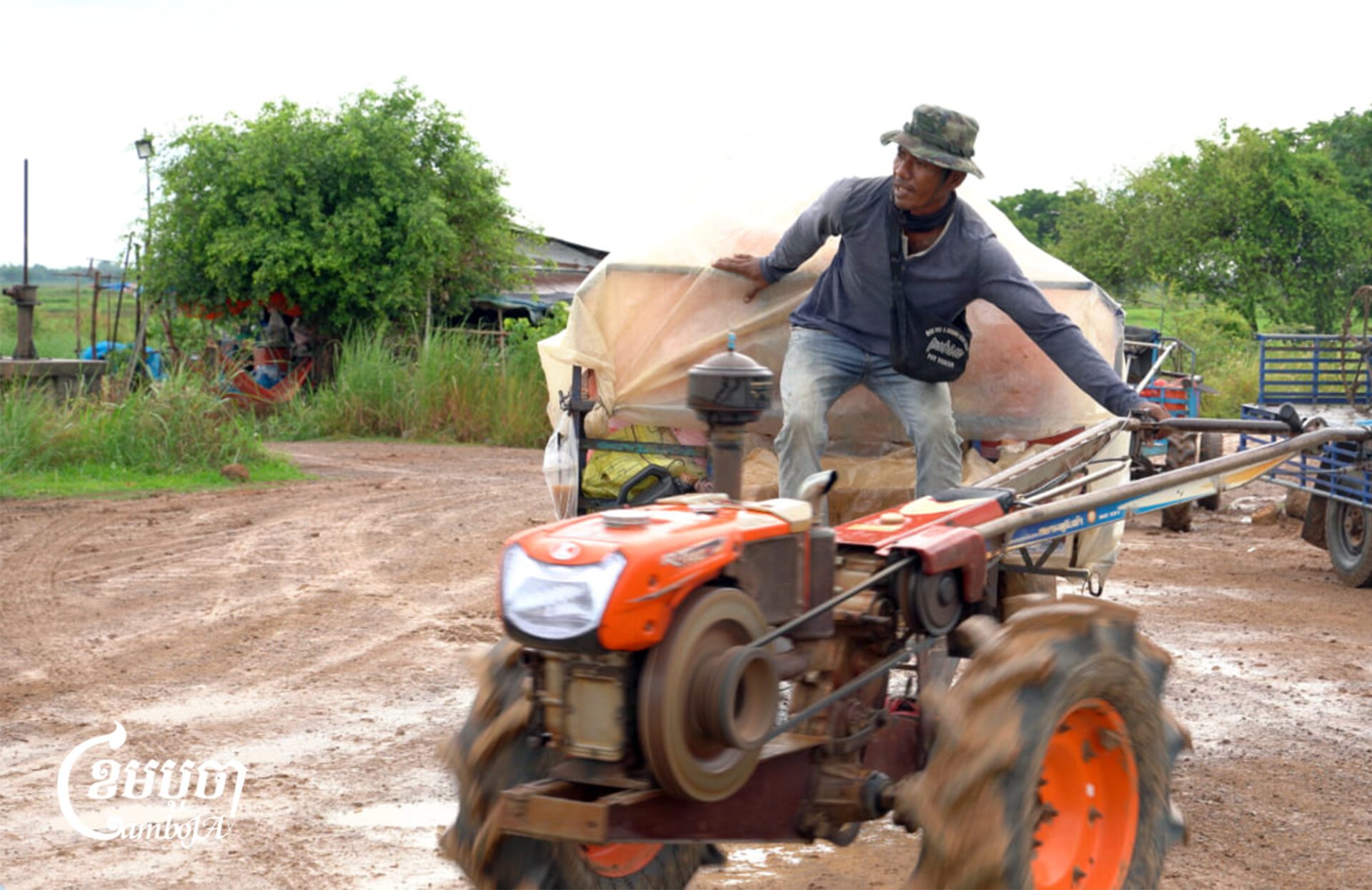
Thmar Koul, Battambang – Tractors rumbled down dirt roads and past fallow rice fields in Cambodia’s Battambang province as farmers began another planting season in the country’s “rice bowl.”
During the prep for this year’s dry season harvest, though, the mood is uneasy.
Farmers say soaring fuel and fertilizer costs linked to the United States and Israel’s war against Iran are squeezing already thin margins. Despite a fragile ceasefire, disruptions to supply routes through the Strait of Hormuz and damage to Gulf gas infrastructure have slowed – or completely halted – exports of fuel and urea, a key fertilizer ingredient.
The shock has rippled across Asia, reaching agriculture communities in Cambodia, who are heavily reliant on imported fertilizer and fuel.
Ou Puy, a 74-year-old farmer in Brakieb village in Battambang province, said he was exhausted after spending the day plowing and seeding nearly 60 hectares (148 acres) of rice land.
Every cost tied to cultivating his land has risen from a year ago, he said.
“This year, I have reduced the cultivation of dry season rice due to cost production as diesel, fertilizer are very expensive,” Puy said. “Fuel, fertilizer and pesticides are not consistent with the low price of rice paddy.”
The Commerce Ministry announced on May 19 that regular gasoline prices were capped at 5,400 riel ($1.34) per liter, a nearly 5% increase from the previous week. Diesel prices rose to 5,450 riel ($1.36) per liter, also up about 5%.

Cambodia imports most of its fuel and fertilizer. Government data showed the country imported about $420 million worth of fertilizer and nearly $218 million worth of pesticides last year, with fertilizer imports rising by about $26 million from a year earlier.
It also imported nearly $220 million worth of fuel in January alone this year.
Puy said the fertilizer he buys from private vendors importing from Vietnam now costs as much as $42 for a 50-kilogram (110-pound) sack, nearly double the price from the same time last year.
Each hectare requires five to six sacks, meaning fertilizer alone could cost him more than $15,000 for the entire plot, which he said he rents for $180 per hectare.
To limit expected losses, Puy said he has switched half his land to rainy-season jasmine rice, a higher-value variety grown for export markets that requires less fertilizer but more water. But unlike dry-season rice, the crop will not be ready for harvest until November, cutting in half the output he had expected in the coming months.
But rising fuel and fertilizer costs are not the only pressures weighing on rice farmers in Battambang and across Cambodia, where more than half of households engage in agriculture.
Over the past year, farmers have grappled with falling domestic rice prices and repeatedly called for government intervention and market support.
With some growers scaling back cultivation because of rising costs, traders and farmers say supply shortages and further price swings now appear increasingly likely.
Rice prices in Cambodia averaged around 800 riel ($0.20) per kilogram last year. Puy said a fair price would be between 900 riel and 1,000 riel ($0.22-$0.25) per kilogram.
The government has said it is monitoring the impact of higher energy costs on farmers to prevent irregular price increases and has instructed local agriculture departments to report supply concerns.
Ministry of Agriculture spokesperson Khim Finan did not respond to a request for comment before publication.
Cambodia does not have a national fertilizer reserve and halted imports from Thailand – formerly its largest supplier of chemical fertilizer – last year following border clashes.
Keo Rottanak, Minister of Mines and Energy, said in March the country had enough gasoline reserves to last about 21 days. The size of Cambodia’s diesel reserves remains unclear.
Ban Chenda, another farmer from Brakieb village, said she has stored 90 liters of diesel as a safeguard in case prices rise further.
She said she typically cultivates eight hectares (20 acres) of dry-season rice and uses about 200 liters of diesel throughout the growing process.
Chenda is uncertain whether she will recover her costs after harvest, she said, citing volatile rice prices and mounting fuel and fertilizer costs.

Buon Narin, another rice farmer in Battambang, said he plans to follow Puy’s approach on his smaller 10-hectare (25-acre) plot by planting jasmine rice varieties with a later harvest period.
Asked whether they planned to seek day labor jobs – a common fallback for struggling Cambodian farmers – to supplement income this season, both Chenda and Puy said they saw little alternative.
Fertilizer traders, meanwhile, said that although prices remain high, imports from Vietnam have replaced supplies once sourced from Thailand, keeping stocks stable for now.
In Soth, a foreman at a fertilizer warehouse in Battambang’s Thmar Koul district, said prices first spiked briefly after border tensions with Thailand erupted last summer.
He said disruptions to fuel and fertilizer supply chains linked to tensions in the Middle East had added further pressure, but that imports from Vietnam had so far kept supply in Battambang stable.
Still, he fears rice yields could fall this year.
“When fertilizer becomes expensive, farmers ultimately reduce their fertilizer usage,” he said.

Another vendor, Suon Sopheap, said she has been reluctant to import more fertilizer because prices are high and she is concerned it may not sell quickly. She hopes that demand will ramp back up in August.
To help ease the burden of fuel and fertilizer costs, You Soeum, chief of Reoung Chrey commune, where Puy’s farmland and thousands of other farming households are located, encouraged farmers to join “modern agricultural communities,” a government-promoted system aimed at shifting smallholder farmers toward more organized production with shared management.
He said about 1,000 households in the commune had already joined the system, which helps farmers access diesel at lower prices than those offered by private sellers, reducing overall farming costs.
But the scheme has drawn criticism. Some research has suggested mixed results, with improved incomes for some farmers but continued exposure to volatile input and rice prices, debt burdens and environmental pressure linked to increased chemical use.

Cambodia’s Agriculture Ministry reportedly said in a 2022 report that the effectiveness of agricultural cooperatives had been limited, with only 17.5% considered to be “performing well.”
With uncertainty looming not only for Cambodian farmers but also for global energy markets amid what the head of the International Energy Agency has called the world’s largest energy crisis, local economists are increasingly focused on food supply.
“What we should consider is food security, which is very important,” said Hong Vannak, an economist at the Royal Academy of Cambodia. “I think the government has good agricultural policies on rice, cassava, and other crops, but the implementation is still limited.”
Vannak said Cambodia should increase investment in agriculture and expand cooperative farming systems, but he also urged the government to consider developing domestic fertilizer production.
“I think the government should consider producing fertilizer domestically and reducing the use of imported chemical fertilizers and pesticides by promoting products made in Cambodia so that we can ensure food security and stable prices,” he said.
Puy, meanwhile, said he sees few options.
“We don’t have a choice. There are no other jobs besides rice farming,” he said. “No matter the difficulties, losses or profits, we still have to keep farming.”