Listen to the audio version of this article (generated by AI).
*This story contains descriptions of violence and human trafficking that may be distressing to some readers.
After thousands of people, mostly foreigners and many believed to be trafficking victims, fled or were freed from scam compounds across Cambodia in recent days, many remain stranded without passports or money to return home.
The exodus followed the arrest and extradition to China of alleged scam kingpin Chen Zhi and has run into the thousands from at least 10 long-suspected compounds nationwide, according to Amnesty International, as international pressure mounts on Cambodia to crack down on the multibillion-dollar industry.
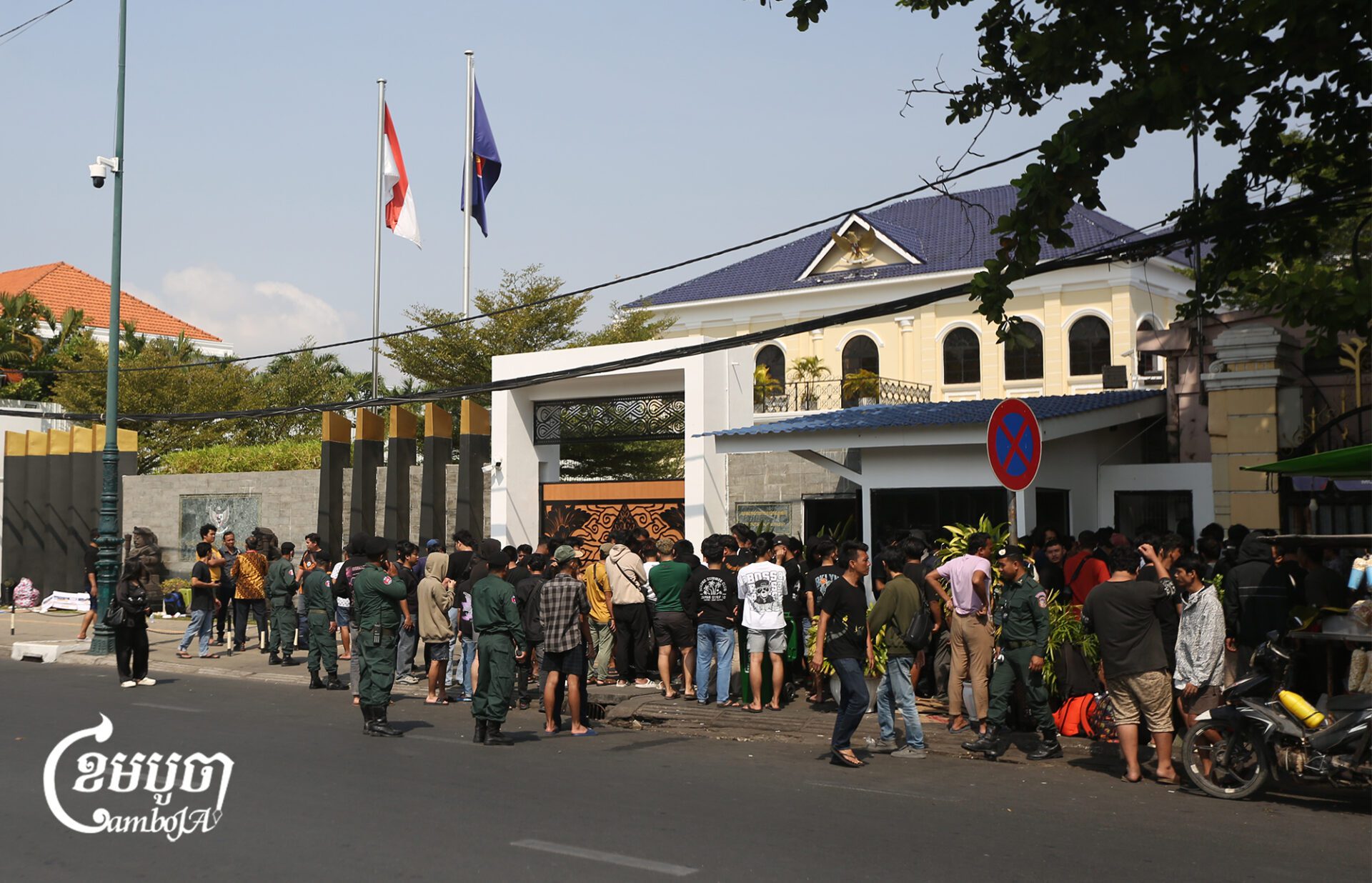
The Indonesian embassy in Phnom Penh said this week it had received reports of at least 1,440 of its nationals freed from scam centers since the start of the month. Hundreds of people, several of whom spoke to CamboJA News, were seen encamped outside the embassy on Wednesday, while long queues have also formed at the Chinese embassy.
Several of those stranded outside the embassy told reporters about their alleged time in the online scam industry, which has proliferated across the region, including in Cambodia, where the U.N. estimates at least 100,000 people have been coerced or forced to work in such compounds.
Their accounts echoed those of other escapees over the years, describing abuse in what rights groups have called a form of modern slavery, and underscoring the lack of protection and support for trafficking victims who manage to flee.
One of them, Rizal Putra, hopes that by speaking publicly he can help prevent others from falling victim.
From Promised Job to “Hell” Inside a Scam Compound
Thirty-five-year-old Rizal, the eldest and former breadwinner of his family in Batam Province, Indonesia, was persuaded by an online agent late last year to take a job at a restaurant in Cambodia paying $600 a month with room and board. That was more than double what he earned as a truck driver at the time.
He traveled first to Malaysia by ship, then flew to Phnom Penh. It was his first time abroad.
When he arrived at the workplace along the Vietnam border in November, Rizal realized he had been deceived. The five-story building was not a restaurant but an online scam center, he said, known colloquially as “CT” among workers.
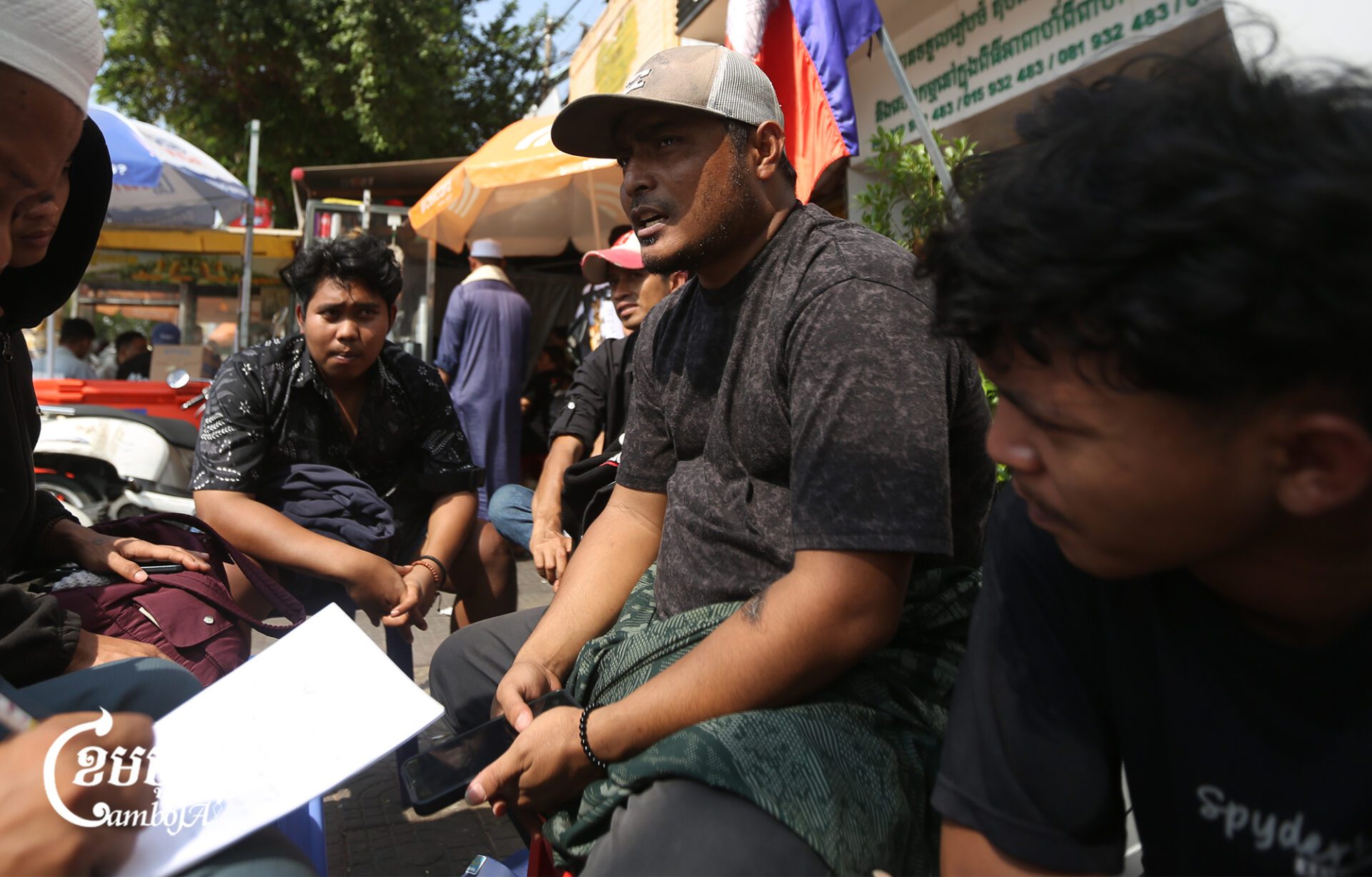
Another Indonesian man outside the embassy said he had also been forced to work at CT. He confirmed it was the same location identified by Cyber Scam Monitor, an investigative group tracking transnational crime in the region, as a scam center operating under multiple names in Kandal province.
Rizal said he was forced to carry out romance and investment scams, known as “pig butchering.” If he refused, he said, he would be tortured or transferred to an even harsher compound.
“Everyone had to change their name to one assigned by the company and could not use their passport name,” Rizal said. His passport and phone were confiscated soon after he arrived.
Rizal’s contract, written in English and Chinese, promised $70 a month, which he said he never received after more than a month.
“The workplace is like hell,” he said. Rizal and others were required to work 15-hour days without time off. “The target was $5,000 revenue per person per month. Failure meant penalties and no pay. Every day we had to get at least three new WhatsApp contacts. If you failed, the fine was $30 plus physical punishment.”
Every day, four or five employees were punished for failing to meet quotas, including slapping, punching, kicking, shocks from electric batons, and being forced to stand or kneel for hours, Rizal said. He added that he has yet to receive assistance from the embassy or rights groups in Cambodia after escaping the compound on Jan. 16, when workers realized the guards and supervisors had fled.
Rizal said he witnessed two other Indonesian employees being severely tortured by their Chinese supervisors during his nearly two months in the compound. One reportedly died, and the location of the body is unknown.
Violence and reports of dismembered bodies linked to nearby suspected scam compounds have been regularly documented as the industry expanded across Cambodia.
Rizal said he was also severely beaten for falling asleep during work hours after not getting enough rest the night before.
“They grabbed my hair, dragged me, and slammed my face into the glass door several times, until the glass cut my nose and forehead, causing me to bleed.”

Similar accounts of brutality came from others encamped outside the embassy.
Habib Nazruddin, 27, from Medan Province, said he was also trafficked into a scam compound along the Vietnam border late last year under the pretense of working in a restaurant for a salary well above Indonesia’s minimum wage.
His experience, he said, mirrored Rizal’s: long hours with no days off, quotas to generate at least $5,000 a month from unsuspecting overseas Indonesians, and physical punishment for falling short. He added that the food provided was not halal, despite his practicing Muslim faith.
The compound he said he worked at, known as Yong Yuan, has been identified by Cyber Scam Monitor as a licensed casino in Kandal province that also operates a large scam center linked to trafficking and several deaths. The group says it is owned by a “Chinese-born casino mogul who built his casino empire in Myanmar before expanding to Laos and Cambodia.”
After Escape, Nowhere to Go
After escaping when the site was left unguarded, Habib said he hoped to return home to his wife and children and urged the embassy to help him obtain a new passport, documents and a flight ticket. He has no money, not even for bottled water.
He said he has been sleeping on the street for more than five days while waiting for assistance, with the embassy telling him only to “wait.”
The Indonesian and Chinese embassies did not immediately respond to a request for comment.
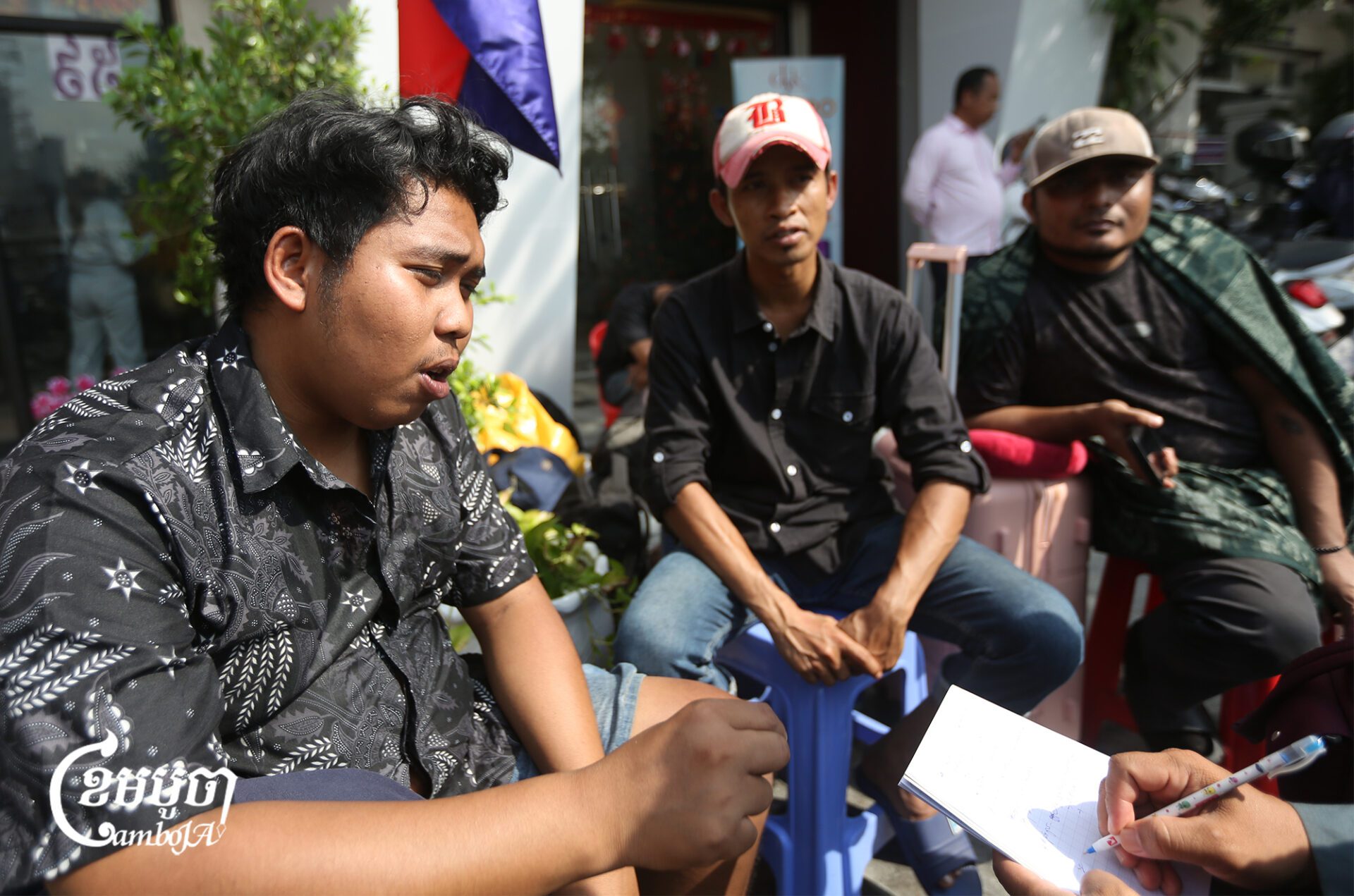
Like Habib and Rizal, hundreds of others appear to be in similar circumstances, with the most vulnerable seeking refuge at their embassies. Other foreign nationals who fled have reportedly been able to pay for rooms at homestays, while local authorities have reported occasional raids on foreign scammers in recent days.
Authorities and international migrant protection groups have remained largely silent on what observers describe as a humanitarian crisis.
National Police spokesperson Chhay Kim Khoeun and General Department of Immigration spokesperson Sok Soumeaknea could not be reached for comment. Sok Sambo, director of the Anti-Human Trafficking Department, also could not be reached.
The U.N. International Organization for Migration in Cambodia did not immediately respond to a request for comment on whether it is assisting those recently freed or who fled scam compounds.
Cambodian law enforcement agencies have previously been criticised for failing to screen foreign nationals rounded up in raids on scam centers for signs of human trafficking, with many treated as criminal suspects rather than victims during repatriation.
With Prime Minister Hun Manet vowing that the fight against scam networks is now a national priority, groups tracking the industry say the plight of stranded workers tests whether that pledge will translate into protection and accountability.
(Additional reporting by Khuon Narim)