Listen to the audio version of this article (generated by AI).
The government’s crackdown on online scams is exposing weaknesses in the country’s mobile phone registration and banking verification systems that experts say have helped fraud networks flourish.
One example surfaced last week when Cambodia’s telecommunications regulator said an unknown person had allegedly used another individual’s identity card to register three SIM cards with Metfone, the local unit of Vietnamese telecoms giant Viettel. One of the numbers was later linked to a financial fraud case, according to the regulator, which accused the mobile provider of failing to comply with registration rules.
Authorities have uncovered similar vulnerabilities in other investigations. This month, the Interior Ministry’s Anti-Cyber Crime Department announced crackdowns on cases involving hacked WhatsApp accounts, suspects posing as bank employees to trick victims and networks buying and selling bank accounts used to move illicit funds.
The cases illustrate gaps in Cambodia’s rapidly expanding digital infrastructure as authorities also say they are also dismantling the industrial-scale scam compounds that have made the country a global hub for online fraud, according to a digital security expert.
But domestic victims of online scams have received far less attention than the transnational scam industry, which has defrauded victims worldwide of tens of billions of dollars.
Cambodians lost more than $45 million to online scams targeting domestic victims in 2025, according to Interior Ministry data. Authorities recovered less than $20 million.
The government is now trying to tighten identity verification for mobile phone and banking services through a planned “super app.” But experts and victims say a broader effort is needed to strengthen regulations, protect personal data and track down fraudsters.
Loopholes in SIM Card Registration
Independent digital security consultant Ngeth Moses said some people in Cambodia have built businesses around creating and selling social media and messaging accounts.
By obtaining SIM cards in large quantities or temporarily renting phone numbers, they register accounts on platforms such as Facebook, Telegram and WhatsApp, as well as email services, before reselling them, he said.
As a result, the person using an account is not always the original registrant, making it harder to identify who is behind fraudulent activity. In some cases, consumers who later buy a SIM card discover that the number has already been used to register online accounts.
“That is the way scammers can hide their real identity behind the computer screen,” he said.
The scale of the challenge became clear when Minister of Posts and Telecommunications Chea Vandeth estimated that, of Cambodia’s more than 13 million mobile phone users, only about 8 million use numbers registered under their own names.
For victims, those gaps can mean little recourse once the money is gone.
Morm Moniroth, a Phnom Penh resident, said he was scammed in February out of $5,000 by a fraudulent car dealership service that used a fake Facebook page and several Telegram accounts with people posing as company representatives.
“I filed a complaint to the Department of Anti-Cyber Crime, but since then there has been no update on the process,” he said. “I also filed a complaint to ask for the money back from the bank, but the bank said there is no hope. So it means there is no answer to all the ways we tried to find justice.”
Khem Sopheab, a farmer in Battambang province, said she was also targeted by a scammer. In May, she was contacted by an individual posing as a Hattha bank officer who demanded repayment on a loan she took out. She ultimately lost hundreds of dollars.
Sopheab said she quickly filed a complaint with the Ministry of Interior but has yet to receive an update. She said ABA Bank, where the scammers held the account that received her funds, was unable to provide a solution.
She recalled asking an official handling her complaint whether there was any chance of recovering her money.
“He told me there was no clear answer,” she said. “He said that my loss was small compared with other cases, where some victims had lost tens of thousands of dollars.”
“I lost hope. I did not eat for five days because I am poor,” Sopheab said.
A review by CamboJA News of comments posted on the Department of Anti-Cyber Crime’s Facebook page between January and June found hundreds of complaints from users reporting financial losses from fake online loans, scammers posing as bank employees, hacked Telegram accounts and fraudulent online businesses.
Many users publicly shared phone numbers, bank account details, screenshots and other information they said were linked to the scammers. Yet several people interviewed by CamboJA News said they never received updates after filing complaints, despite providing information that could help identify those responsible.
Moses said the complaints also highlight weak coordination between banks and law enforcement.
He said similar weaknesses exist in the banking system. People with low incomes and limited digital or financial literacy are sometimes persuaded to rent out their bank accounts or open accounts for others in exchange for money, making those accounts available for criminal activity.
Government Response
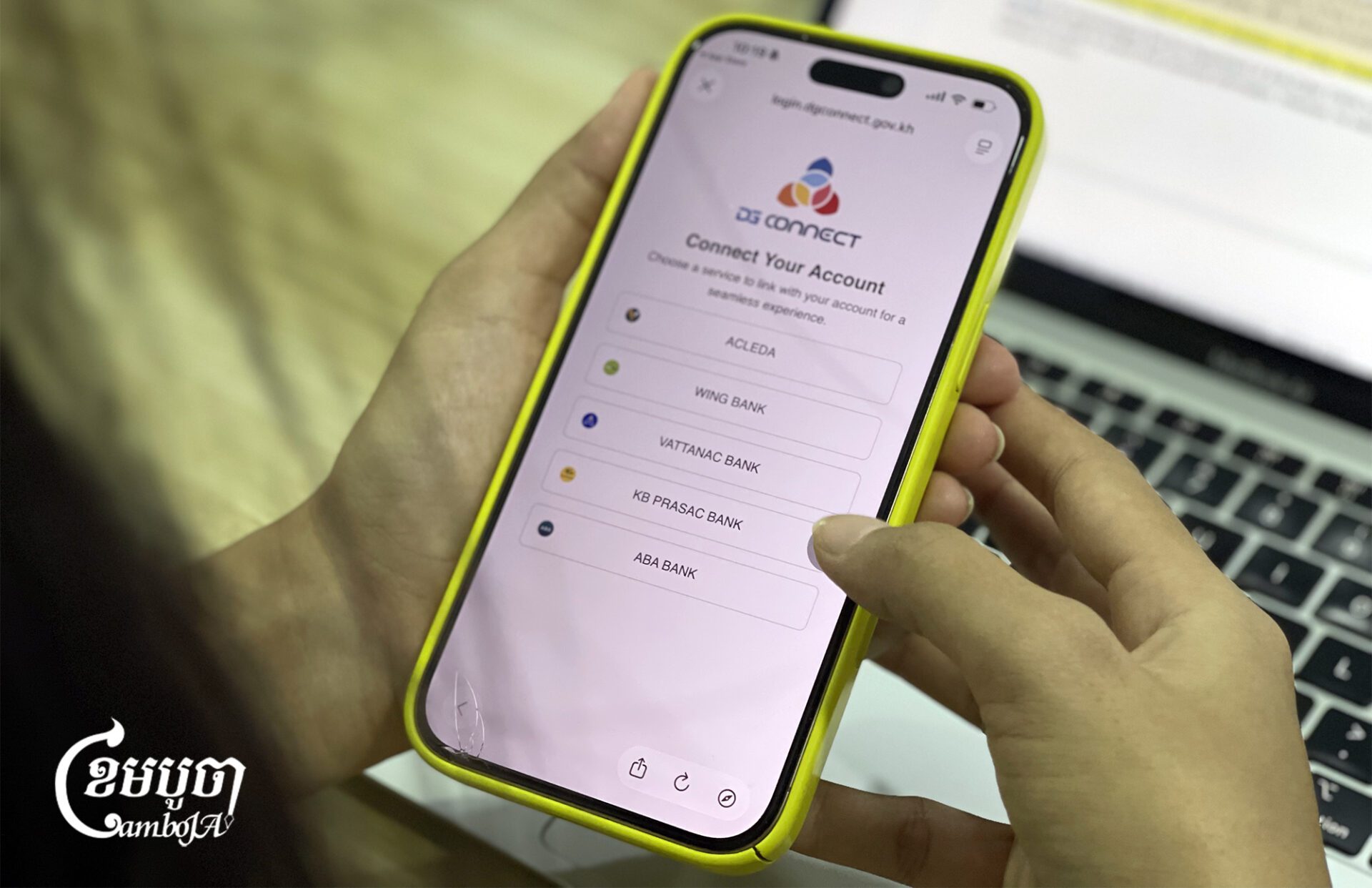
In response, the Ministry of Posts and Telecommunications and the National Bank of Cambodia last week launched a campaign requiring users to verify SIM card registrations against bank or payment accounts through the DG SuperApp.
Officials say the initiative is intended to reduce identity fraud by preventing criminals from using stolen or fake identities to register SIM cards and financial accounts. The campaign is scheduled to run through the end of 2026.
While the verification system is still being rolled out, Moses said mobile operators should immediately review SIM cards previously distributed in bulk to retailers and resellers.
“The SIM card should be sold only in the official MNO [mobile network operator] shops,” he said.
But Moses warned that tighter controls on SIM card registration alone will not solve the problem. Stronger protections for personal data are also needed, he said.
One factory worker in Phnom Penh, who asked not to be named because of privacy concerns, said he became a victim of identity theft last year after providing his national identification card and phone number to what turned out to be a fraudulent online lottery.
Weeks later, Wing Bank contacted him about the status of a loan he said he had never taken out. After he reported the identity fraud, the bank told him the money had already been transferred to an account at another bank. He said he has yet to file a complaint with authorities because he is unsure how the process works and remains without answers nearly a year later.
Ministry of Posts and Telecommunications spokesperson Liv Sophanarith, Interior Ministry spokesperson Touch Sokhak and Anti-Cyber Crime Department Director Chea Pov did not respond to repeated requests for comment.
While stronger enforcement, regulation and public awareness are important safeguards against fraud, civil society groups say other vulnerabilities also need to be addressed.
“The problem persists because many people face economic hardship, making them more vulnerable to scammers,” said Am Sam Ath, operations director at rights group Licadho, referring to the variety of financial pressures for millions of Cambodians, including microloan debt and limited formal employment opportunities.
Sam Ath said authorities have repeatedly warned people to protect their personal information, but unless gaps in SIM card and bank registration, identity verification and law enforcement investigations are addressed, more Cambodians will continue falling victim to increasingly sophisticated scams.