Listen to the audio version of this article (generated by AI).
The Health Ministry has urged the public to be vigilant of the Nipah virus, outlining preventive measures, as India reported an outbreak in West Bengal with five confirmed cases and more than 100 people placed under quarantine, raising regional health concerns.
There are no human cases reported so far in Cambodia, according to the ministry’s statement on Sunday. It noted that Nipah virus could be transmitted from person to person through bodily fluids, and that there is no vaccine or treatment available.
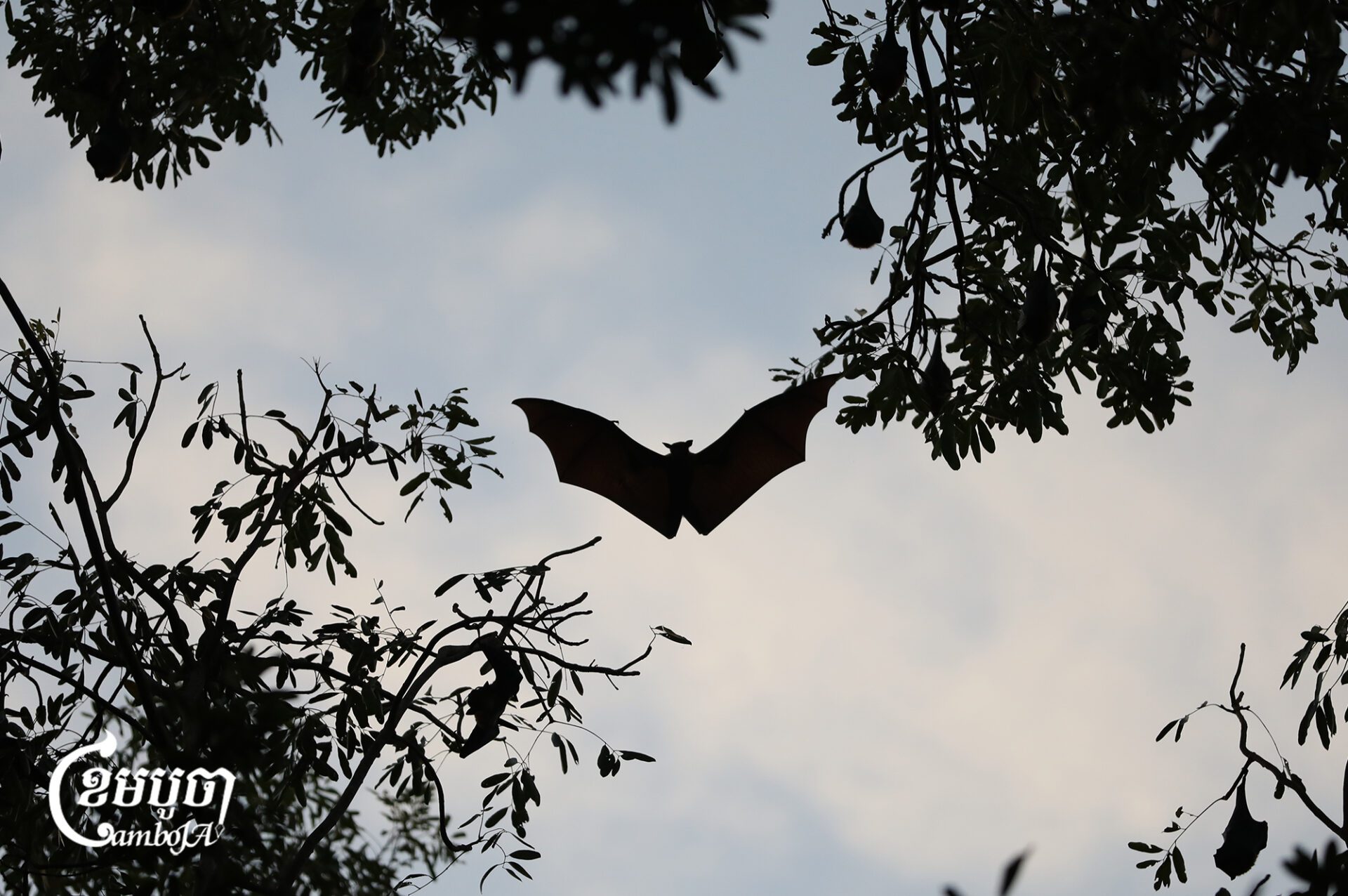
Those who are infected by the virus, which is carried by bats and rodents, could face a mortality rate of 40% to 70%. Pigs are also susceptible to the virus.
The ministry said measures are being placed to prevent the virus from entering the country.
The virus was identified in Bangladesh and India in 2001 and has been reported in Bangladesh and eastern India at regular intervals. Cambodia has not yet detected Nipah virus in humans to date, but it has been found in bats.
In India, health authorities are urgently containing the Nipah virus outbreak linked to a private hospital in Kolkata, with five confirmed cases, including two nurses in critical condition, while around 100 people have been placed in quarantine.
In an interview with India-based ANI, Dr. Rajeev Jayadevan, ex-president of the Indian Medical Association of Cochin in India, said Nipah virus can cause severe brain infection, with a fatality rate of up to 91%.
Ly Sovann, Director of the Department of Communicable Disease Control and spokesperson for the Ministry of Health, said while there are no Nipah virus cases detected in Cambodia, his department is constantly monitoring the situation and is preparing for the spread of the disease.
Cambodia is also strengthening the monitoring of travelers from India after it reported the outbreak, with immediate steps being to implement quarantine measures.
Sovann said that the disease is transmitted from animals to humans, and not like Covid-19 where the virus is airborne. The health of travelers, especially those arriving from countries where the disease was reported, would be monitored. Quarantine measures will be implemented in suspicious circumstances.
His department would continue to strengthen the surveillance system to detect suspicious cases and strengthen the capacity of experts across the country to respond to the threat anytime of the day, Sovann said, adding that they have 12 laboratories.
In situations where citizens arrive from countries or areas where the disease is spreading and suspect that they have the disease, they must report to the officials for timely prevention and treatment.
“It is the ministry’s job to monitor all passengers entering Cambodia by air, land, and water. But for new cases of infection, we focus on countries where the outbreak is occurring,” Sovann said.
Ouch Vuthy, president of the Virtuous Medical Association, told CamboJA News that citizens must increase their vigilance and implement high-level self-protection measures although there are no cases.
Relevant ministries and institutions must continue to work together to disseminate information and monitor the issue. “The disease was found in India, and we have not found it in Cambodia, but citizens must be highly vigilant and protect themselves because this virus is dangerous,” said Vuthy.
According to the World Health Organization (WHO), the Nipah virus is classified as a priority pathogen due to its epidemic potential. There are currently no vaccines or specific treatments for the Nipah virus. Infection in humans can cause a wide range of clinical outcomes, from asymptomatic (subclinical) infection to acute respiratory illness and fatal encephalitis.