Listen to the audio version of this article (generated by AI).
The appointment of Kem Monovithya, daughter of one of Cambodia’s most prominent opposition leaders, as special envoy to Prime Minister Hun Manet has left some supporters disillusioned, with analysts calling it a calculated move by the long-ruling Cambodian People’s Party to project unity.
Monovithya’s appointment, a rank equivalent to minister, came Monday after a series of high-level meetings involving Hun Manet, his father and longtime ruler Hun Sen, and her father, Kem Sokha, who received a partial pardon earlier this year quashing a 27-year house-arrest sentence on treason charges.
The move has drawn criticism from opposition supporters, who questioned whether Monovithya’s new role signals a political shift by her family.
“It has gradually made us lose hope in what we had done in the past on behalf of the leader [Kem Sokha] in making decisions,” said Chao Ratanak, a deputy commune chief for the Candlelight Party in Banteay Meanchey province.
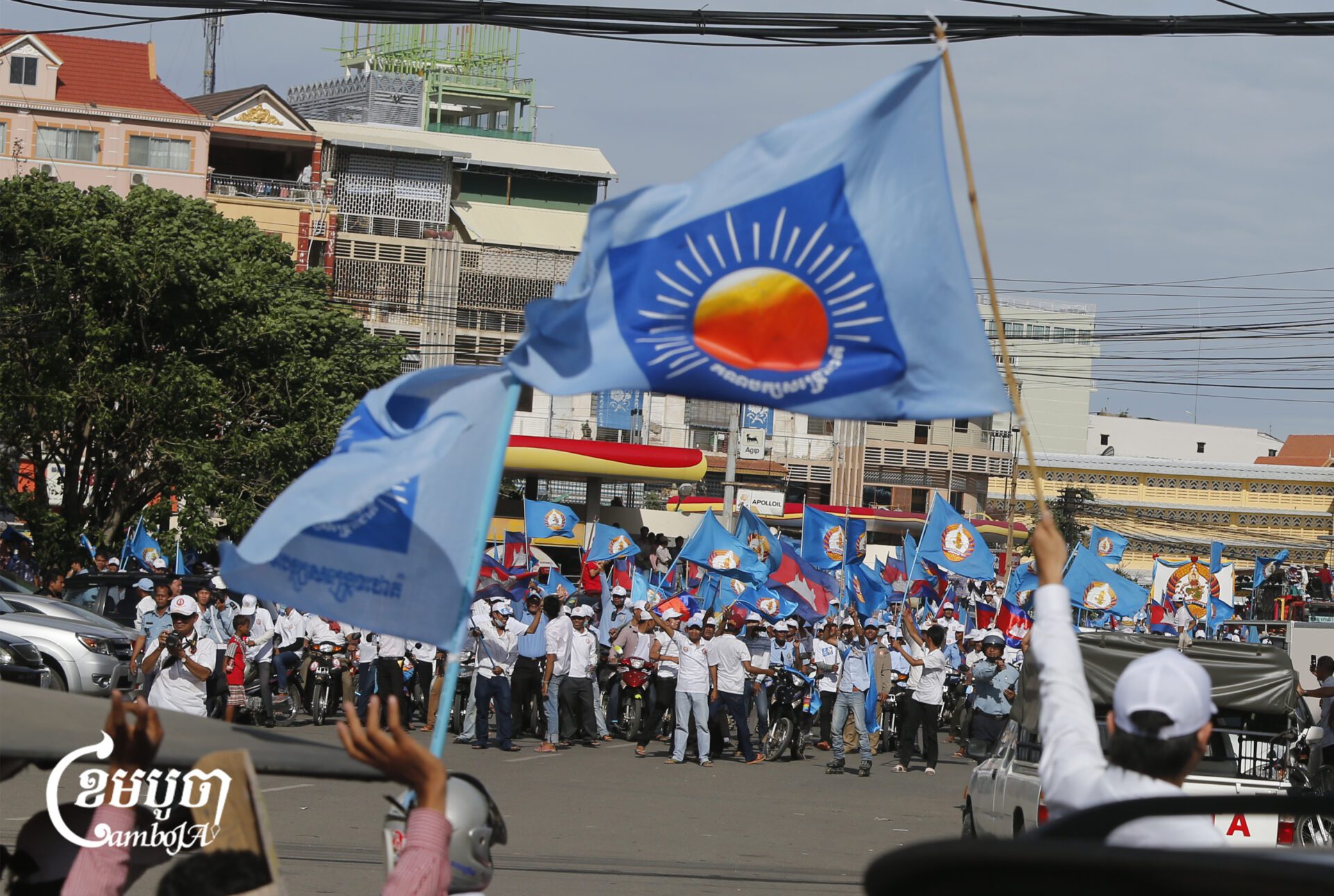
Candlelight, the de facto successor to Sokha’s Cambodia National Rescue Party (CNRP) after it was forcibly dissolved in 2017, was disqualified from the 2023 national elections over a registration technicality that rights groups called politically motivated.
“We are not jealous that they have been receiving [government] positions, but we remembered that he promised to struggle alongside democrats, and now he has changed his mind,” Ratanak said, referring to Monovithya joining a government the rival Cambodian People’s Party (CPP) has ruled for over four decades.
Former CNRP politician Yim Phally, from Siem Reap province, echoed Ratanak’s sentiments, saying Sokha’s family has shifted affiliation to the CPP.
“I can say it is an individual decision, and is the right of an individual, but [we] will continue our duty as democrats,” she said.
Monovithya, who has lived abroad in self-imposed exile and traveled internationally for advocacy since her father’s 2017 arrest, could not immediately be reached for comment.
She posted a statement on Facebook Tuesday thanking King Norodom Sihamoni for the royal decree formalizing her position. Hun Manet said her role would focus on investment promotion and Cambodia’s border dispute with Thailand.
“She has many connections,” Hun Manet said at an event Wednesday. “Now she can use those connections instead of useless insults damaging our country’s reputation. She took the time to work with us, and I welcome her. This is called the spirit of a dialogue culture.”
Sokha’s lawyer, Phen Heng, said Monovithya’s appointment is separate from her father’s case.
“I think the decision belongs to her,” he said, adding that the position does not make her a member of the CPP or of Hun Manet’s cabinet.

CPP spokesperson Chea Thyrith said the special envoy position falls under Hun Manet’s direct authority and is responsible for assisting with government affairs. He said the appointment reflects Monovithya’s willingness to contribute to the government and society, describing her as a highly educated figure who wants to help.
Analysts meanwhile caution against reading the appointment as a sign of broader political reconciliation.
“We should distinguish reconciliation between political families from reconciliation of the political system as a whole,” said Sophal Ear, a Cambodian-American political scientist and professor at Arizona State University.
The CPP gains a prominent former opposition figure with international credibility, he said, while the Kem family gains access and relief after nearly a decade of confrontation.
Sophal noted that despite his pardon, Sokha remains barred from political activity for life. Lifting that ban, he said, would signal a political settlement in which Monovithya becomes the vehicle for a new relationship between her family and the ruling party.
“From the CPP’s perspective, that would be a particularly advantageous outcome because Kem Sokha could be treated respectfully as a former national political figure without being restored as an opposition challenger,” Sophal said. “But I would not say the chapter is definitively closed until we see what happens to his remaining political restrictions.”
San Mala, executive director of the rights group Partnership for Environment and Development, also said Monovithya’s actions in the role should be watched closely.
“I think it benefits both sides,” he said. “For the government, it shows the international community that Khmer politicians are reuniting and that there is an effort to resolve the political deadlock.”
But the move may also signal to supporters dissatisfied with the Sokha family that the government is working to head off a renewed pro-democracy movement, he said.
The timing of Sokha’s pardon and his daughter’s decision to join the government has also drawn attention from analysts.
“Analytically, the timing and nature of Kem Monovithya’s high-level executive appointment point to it being a central component of a negotiated arrangement surrounding Kem Sokha’s legal relief,” said Seng Vanly, an independent political analyst.
Several opposition figures in recent years have joined the government or defected to the CPP after being released from prison, often following public apologies for comments critical of the government that had led to criminal charges.
By bringing Monovithya into the government, Vanly said, the CPP secures the Kem family’s cooperation and reduces the risk of Sokha’s former political network remobilizing, while giving the family a way out of years of legal restriction and political isolation.