Listen to the audio version of this article (generated by AI).
Cambodian farmers who lost crops to drought this summer and then to floods that damaged roughly 5% of the country’s wet-season rice now face a prolonged El Niño expected to stretch the dry season into next year.
But smallholder farmers say the weather is only part of the problem. Unreliable irrigation, rising production costs, low rice prices and mounting debt are leaving them with fewer ways to absorb another climate shock, a combination agrarian researcher Jean-Christophe Diepart, founder of the research group Peasants and Territories, calls a “polycrisis.”
Koul Ren, a farmer in Amlaeng village in Kampong Speu province’s Thpong district, said she replanted her rice field three times this year as drought dragged on, spending more than $750.
“I sowed rice three times, but I still didn’t get a good harvest because the drought was too long,” she said. “The rains only came in October, which was too late.”
Cambodia’s rainy season normally runs from about May to October, when most farmers grow their main rice crop on rain-fed fields, followed by a dry season through April. El Niño, a periodic warming of Pacific Ocean surface waters that recurs every two to seven years, tends to delay and weaken those rains.
Cambodia has been under El Niño’s influence since January, with rainfall down about 50% from 2025, Ministry of Water Resources and Meteorology spokesperson Chan Yutha said in July. While El Niño occurs naturally, it adds to warming already caused by climate change, according to the World Meteorological Organization. What rain fell was uneven, leaving some areas dry for weeks while others were inundated.
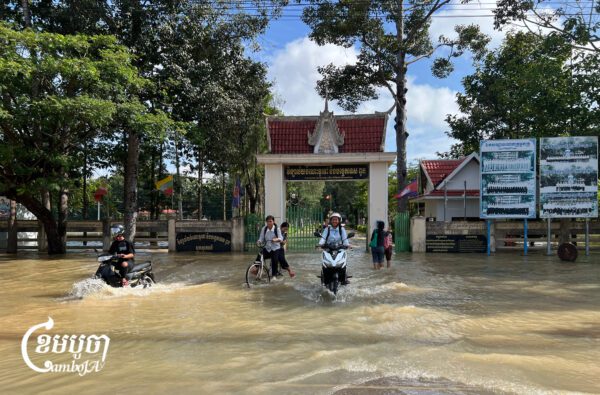
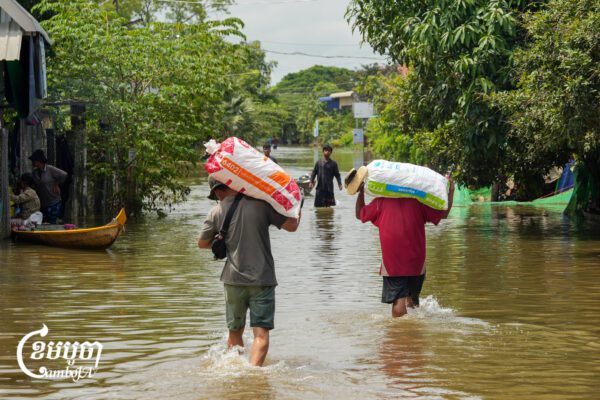
That pattern hit farmers twice in one season. As of July 30, drought had affected nearly 290,000 hectares of rice in eight provinces, according to the National Committee for Disaster Management. Two months later, heavy rains flooded 10 provinces, affecting nearly 60,000 families and forcing about 5,000 to evacuate. About 156,000 hectares of rice, roughly 5% of the 3 million hectares planted nationwide for the wet season, were damaged, the committee said.
In an Oct. 19 notice, the Ministry of Water Resources and Meteorology said the rainy season would end early and El Niño would persist through February 2027. It urged authorities and the public to conserve water, particularly in remote rural areas far from water sources.
Prime Minister Hun Manet also ordered the ministries responsible for water and agriculture to strengthen water management and prepare for shortages.

‘When The Water Runs Out’
Farmers say they are being asked to save water they do not have.
“If we let nature take its course, when the water runs out, it runs out, and we can’t save anything,” Ren said, calling on authorities to expand irrigation canals and reservoirs for the dry season.
Vong Sokong, a farmer from the same village, said this year’s drought was worse than previous years. “The rice was almost dying before the rain finally came,” she said.
Villagers have previously requested authorities build a new irrigation canal, Sokong said, since the existing system does not serve enough families. She urged authorities to respond faster to El Niño rather than simply asking people to conserve water.
About 54% of Cambodian households are engaged in agriculture, roughly two-thirds of them growing rice, and nearly 44% of agricultural holdings cover less than 1 hectare, according to government data from 2025.
Cambodia has 1,659 water reservoirs nationwide, according to the Ministry of Water Resources and Meteorology. But unreliable supply from irrigation schemes is a nationwide concern, not limited to provinces such as Kampong Speu and Takeo that have been particularly hit hard this year, said Diepart.
Farmers often invest in machinery and inputs once new irrigation projects are announced, Diepart said, and lose money when the water fails to arrive. He said extension services should advise farmers to wait until a reliable supply is proven, and that schemes need institutions to distribute water fairly and help farmers afford costly pumps.
Khim Finan, spokesperson for the Ministry of Agriculture, Forestry and Fisheries, said the ministry has prepared rice seeds to help farmers recover if drought causes widespread crop damage.

Spending More, Earning Less
Sith Siev, a farmer in Bam village in Takeo province’s Kirivong district, said rising prices for fertilizer and fuel have pushed smallholders deeper into debt.
“When we buy pesticides and fertilizer, the sellers set the price and we cannot negotiate it down. But when we sell our rice, we farmers cannot ask for a higher price,” she said.
Fertilizer costs at least $40 a bag, and each hectare needs at least five bags, Siev said.
“The longer I farm, the more debt I accumulate,” she said. She said she owed more than 1 million riel (about $250) last year and more than 2 million riel (about $490) this year.
Those costs rose sharply after U.S. and Israeli strikes on Iran in February set off a war that disrupted fuel and fertilizer shipments through the Strait of Hormuz. Chemical fertilizer prices have risen 25% to 30% this year, with some farmers reporting they pay nearly double what they did a year ago.
Rice prices, meanwhile, remain low, the farmers said. As of Nov. 4, wet Phka Rumduol paddy sold for 1,050 riel (about 26 cents) per kilogram and OM paddy for 900 riel (about 22 cents), according to the Agriculture Ministry.
“When there is no water, our rice yields are low and we may not even recover our production costs,” said Koy Klueng, another Bam village farmer.
Diepart said these pressures are interconnected. Export-oriented agriculture has exposed smallholders to price swings and growing reliance on credit, he said.
“Land access is also becoming more difficult, fueling competition and land accumulation among wealthier farmers, while land remains an important livelihood asset and safety net during crises,” he added.
Agroecology Offers a Path, but Support is Limited
Beyond farms, this year’s El Niño, which the World Meteorological Organization expects to be the strongest on record, could expose more than 1.3 million Cambodian children to climate risks, with drought threatening water supplies, food, health care and schooling, UNICEF said in October.
The government’s National Action Plan on Drought Management and Adaptation 2025-2030, launched by the Ministry of Water Resources and Meteorology in June 2025, focuses on early warning systems, climate-resilient infrastructure, water conservation and community-based adaptation.
Some groups also point to agroecology, farming that relies on crop diversity and natural nutrient cycling rather than chemical inputs, as a buffer against both drought and rising fertilizer costs.
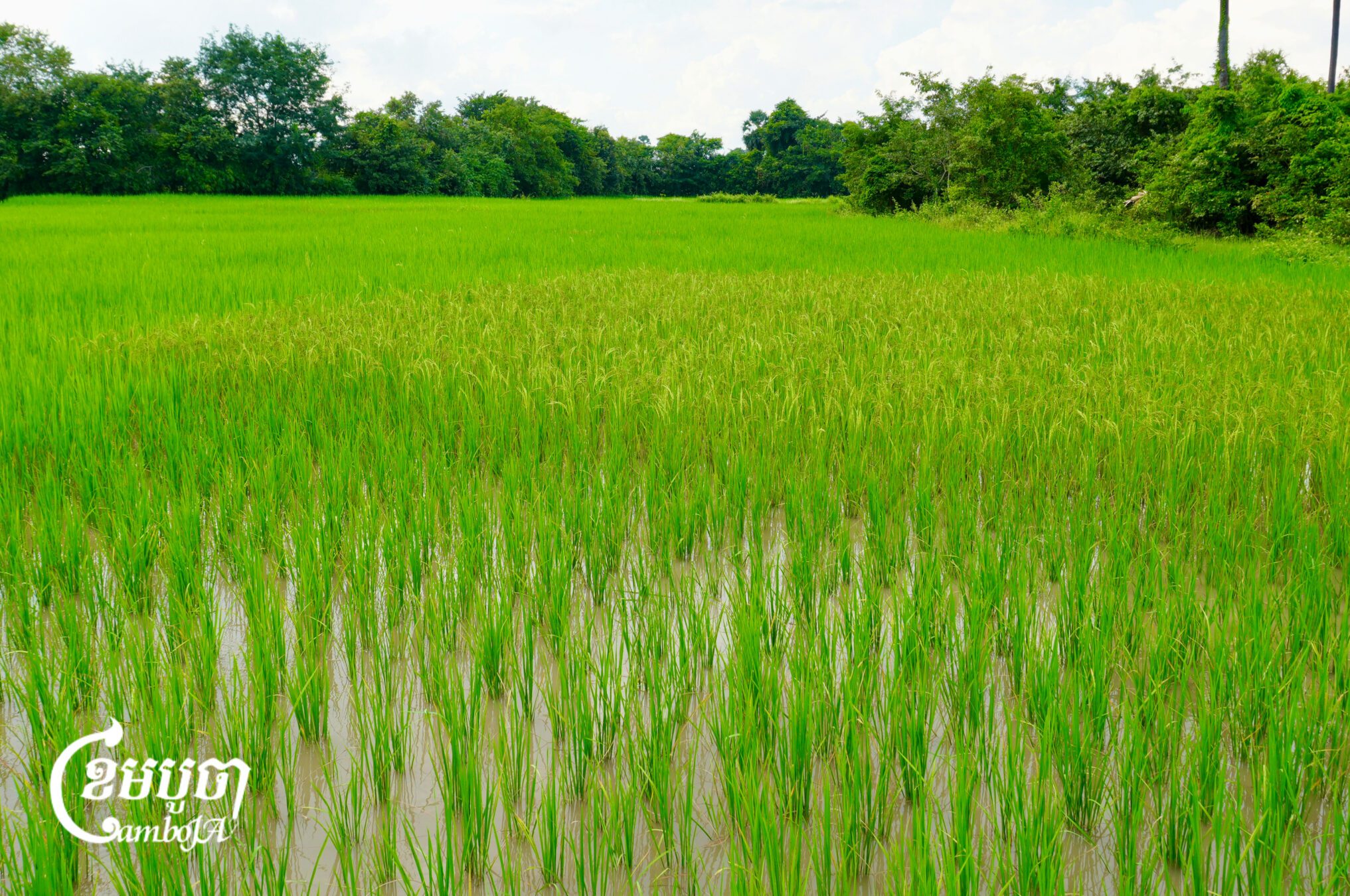
ActionAid Cambodia works with farmers in five provinces through 13 partner organizations to promote agroecological practices such as crop selection and composting, said Chan Sophoan, its program and business development lead.
The group also works with the Agriculture Ministry and local authorities to fund agroecological farming through local budgets, and since 2018 has used underground sensors to monitor groundwater levels as an early warning system.
“This phenomenon cannot end immediately. It will continue in the future, so we will continue raising awareness in the target provinces,” Sophoan said.
Diepart said agroecology could restore soil health, improve water retention and reduce farmers’ dependence on chemical inputs, but such practices “remain limited” and “need stronger political commitment and institutional support,” including from the Cambodia Conservation Agriculture and Sustainable Intensification Consortium under the Agriculture Ministry.
He also urged credit institutions to address microfinance debt that forces farmers into distress sales of land and equipment.
In Bam village, home to more than 300 farming households, chief Mey Sarou said authorities are storing water and digging wells for livestock and irrigation.
“With this El Niño phenomenon, once we finish harvesting the rice, we need to retain the water and not let it flow away because the rain will stop,” he said.
Farmers are reluctant to plant dry-season rice with so little water, Sarou said. He urged the government to help lower production costs and keep rice prices reasonable so farmers do not fall into debt.