The Cambodian government has ordered a nationwide crackdown on online scams, citing rising threats from foreign criminal networks, as international pressure mounts over alleged state complicity and Thailand ramps up its own response amid a tense border dispute.
Amnesty International, which recently accused the Cambodian government of enabling the scam industry, said it remained unconvinced the latest order would lead to real change.
“While we hope that the Prime Minister’s new approach aims to be effective, there is no reason to think this response will be any different from the previous ones which have pointed towards complicity in the scamming compounds issue,” said Montse Ferrer, Amnesty’s deputy regional director for research.
“The language we’ve seen makes no reference to human rights principles or how victims will be identified and treated. It doesn’t mention the non-punishment principle, for example,” she added, referring to the rampant use of forced labor in scam centers.
On Wednesday, Interior Minister Sar Sokha – who a transnational crime expert has recommended for sanctions over alleged ties to the scam industry – posted the directive dated July 14 on Facebook, ordering local officials and police to dismantle scam networks in their areas.
Signed by Prime Minister Hun Manet, the order calls for a coordinated crackdown involving the military, national police, border guards, gambling regulators and other agencies, targeting scam operations and related crimes such as human trafficking.
“Governors, police chiefs, and commanders must strictly implement this order,” the directive states. “Failure to comply or cooperate will result in evaluation that may affect appointment, transfer, or dismissal.”
Authorities in Phnom Penh carried out two raids on the same day the directive was posted, detaining 234 foreign nationals at a suspected scam compound, along with three Chinese nationals from a smaller alleged scam ring.
Most police officials involved in the operation declined to comment on the case, including whether the detainees were screened for human trafficking or if any suspected ringleaders were among those arrested.
Government-friendly news outlet Agence Kampuchea Presse reported that the building targeted in the raid had been “returned to its owner for continued management.”
The property, located in Phnom Penh’s Toul Kork district, remains partially under construction. Khmer construction workers were still on site as of Wednesday but declined to speak with a CamboJA News reporter.
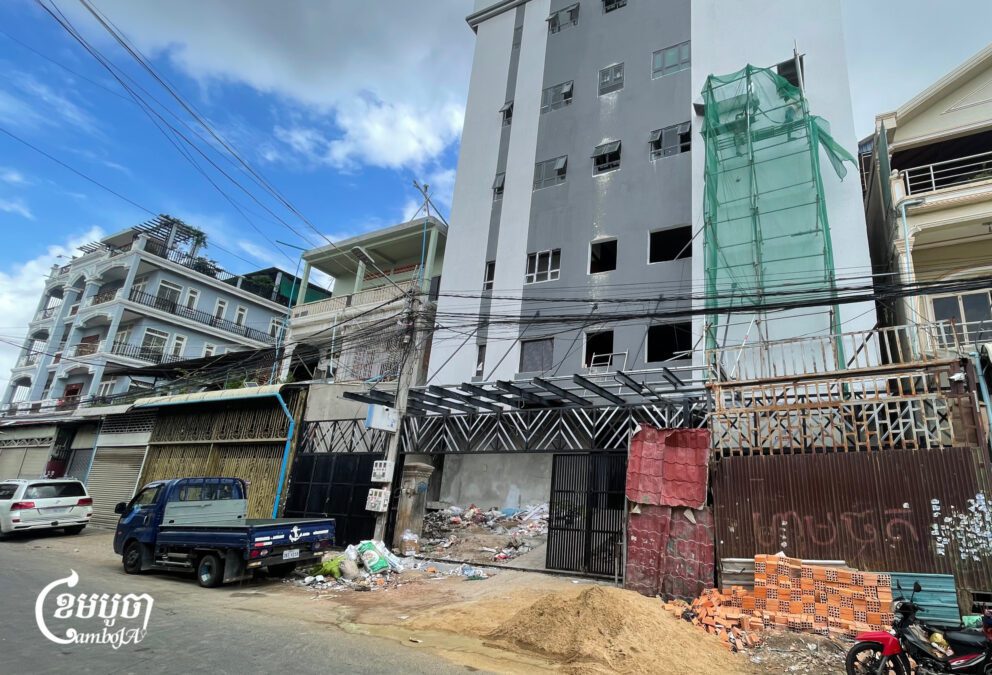
Nearby shop owners said police blocked the road and prevented onlookers from taking photos during the raid. One vendor said luxury vans frequently dropped off groups of foreigners at the compound. Another said they were stunned to see hundreds of people escorted out, claiming they had never seen anyone enter or leave the building before.
On Tuesday, Prime Minister Hun Manet met with provincial governors, police chiefs and military commanders to review progress on the fledgling anti-scam campaign.
Separately, Thailand has stepped up efforts to dismantle regional scam networks linked to Cambodia’s casino and trafficking hubs.
Earlier this month, Thai authorities issued an arrest warrant for Cambodian senator Kok An and his children, accusing them of running scam operations targeting Thai nationals out of Poipet, a border town home to An’s Crown Casino Resort. Raids on properties tied to Kok An’s family followed, leading to asset seizures and ongoing investigations.
Thai police believe Kok An has fled the country and have requested that Interpol issue a Red Notice for his arrest.
The crackdown comes amid growing tension between the two countries following a deadly border clash in May that prompted the closure of land crossings, a ban on imports, and the suspension of Thai Prime Minister Paetongtarn Shinawatra, who is under investigation for alleged ethics violations over a leaked phone call with Cambodia’s influential former leader Hun Sen.
Industrial-scale scam centers continue to operate across Cambodia, with some estimates suggesting as many as 350 are active, generating between $12 billion and $19 billion annually. Cyberscam Monitor, a regional watchdog tracking online crime networks, has identified at least 181 suspected scam sites nationwide and at least six additional compounds in districts adjacent to Toul Kork.
Amnesty International’s report from late June identified at least 50 suspected scam sites, with Montse Ferrer, the group’s deputy research director for the region, noting that in 20 cases, authorities had already visited the locations but failed to shut them down.
“Our report demonstrates the corruption of authorities, and this must be addressed. So far, there is no indication that this is a priority,” Ferrer said. “Ultimately, it will be the actions of the government that are judged, not the policy – which up until now has failed miserably.”
She urged the international community to remain vigilant, calling on foreign governments to consider redirecting funding and training away from Cambodian police and authorities, and instead channel resources to rescue and anti-trafficking NGOs.
(Additional reporting by Coby Hobbs)